

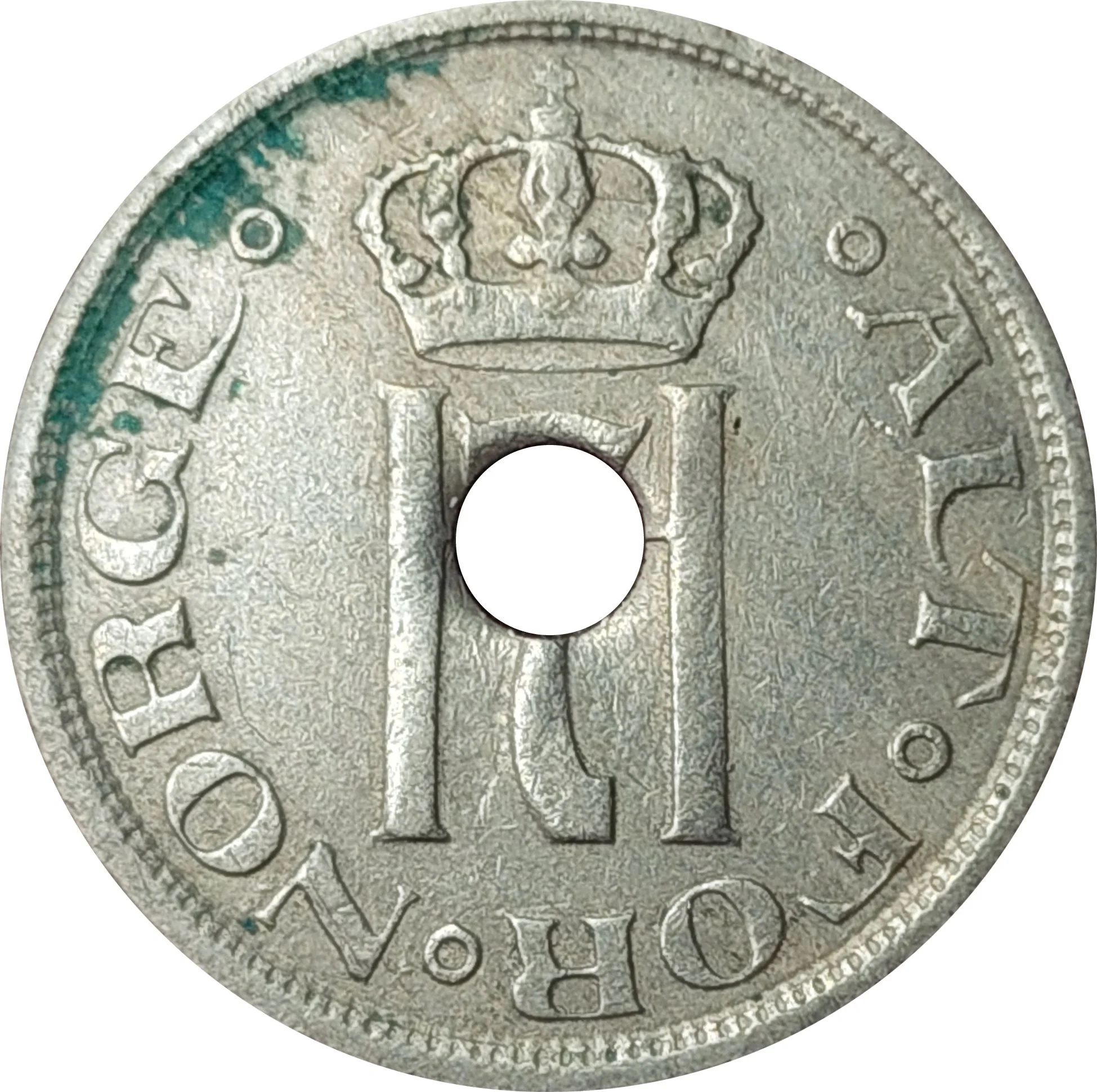
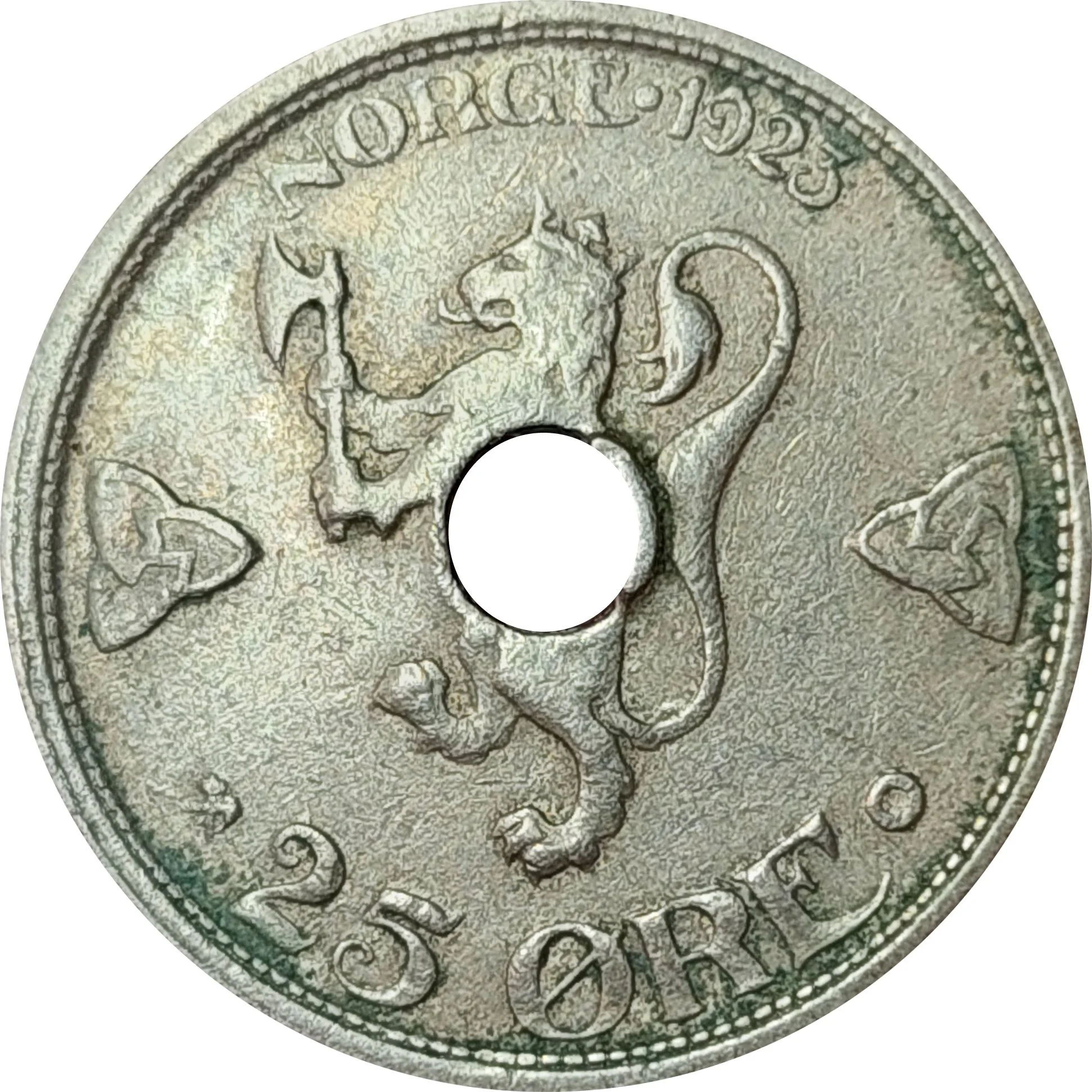
25 øre – Norway
Add to wishlist
Norway
Context
Material
Diameter: 17 mm
Weight: 2.4 g
Thickness: 1.46 mm
Shape: Round with a round hole
Composition: Copper-nickel
Technique: Milled
Alignment: Medal alignment
flip
References
KM: #
Numista: #8716
Value
Exchange value: 0.25 NOK
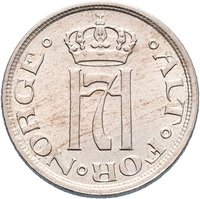
Obverse
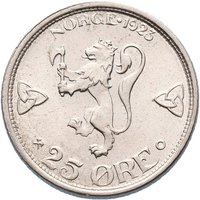
Reverse
Edge
Reeded
Mints
| Name | Mark |
|---|---|
| Norwegian Mint | — |
Mintings
| Year | Mint Mark | Mintage | Quality | Collection |
|---|---|---|---|---|
| 1921 | — | — | ||
| 1922 | — | — | ||
| 1923 | — | — |
Historical background
In 1921, Norway’s currency situation was defined by its adherence to the gold standard, a system it had returned to in 1916 after a wartime suspension. This move was unusual, as most other nations abandoned gold during World War I; Norway sought stability and international credibility by pegging the krone to gold at its pre-war parity. However, this policy proved challenging in the post-war economic climate. The mandated high value of the krone, combined with global deflation and a sharp downturn in international trade, made Norwegian exports like shipping and timber less competitive, contributing to economic strain and rising unemployment.
Domestically, the strong krone policy was fiercely debated. The central bank (Norges Bank) maintained a tight monetary stance to defend the gold peg, leading to high interest rates. This benefited creditors and savers but placed severe pressure on debt-burdened industries, farmers, and fishermen, who had expanded during the war. The resulting deflation increased the real burden of debt, sparking widespread social discontent and political calls for a devaluation to relieve the struggling economy. The conflict pitted the financial establishment in Oslo against the export-dependent periphery.
Ultimately, the deflationary pressure became unsustainable. The year 1921 served as a tense prelude to the eventual abandonment of the gold standard in 1924. The persistent economic hardship demonstrated the mismatch between Norway's rigid monetary policy and the turbulent post-war realities, setting the stage for a significant policy shift in the following years toward a devalued and managed currency to better serve the domestic economy.
Domestically, the strong krone policy was fiercely debated. The central bank (Norges Bank) maintained a tight monetary stance to defend the gold peg, leading to high interest rates. This benefited creditors and savers but placed severe pressure on debt-burdened industries, farmers, and fishermen, who had expanded during the war. The resulting deflation increased the real burden of debt, sparking widespread social discontent and political calls for a devaluation to relieve the struggling economy. The conflict pitted the financial establishment in Oslo against the export-dependent periphery.
Ultimately, the deflationary pressure became unsustainable. The year 1921 served as a tense prelude to the eventual abandonment of the gold standard in 1924. The persistent economic hardship demonstrated the mismatch between Norway's rigid monetary policy and the turbulent post-war realities, setting the stage for a significant policy shift in the following years toward a devalued and managed currency to better serve the domestic economy.
🌱 Fairly Common