

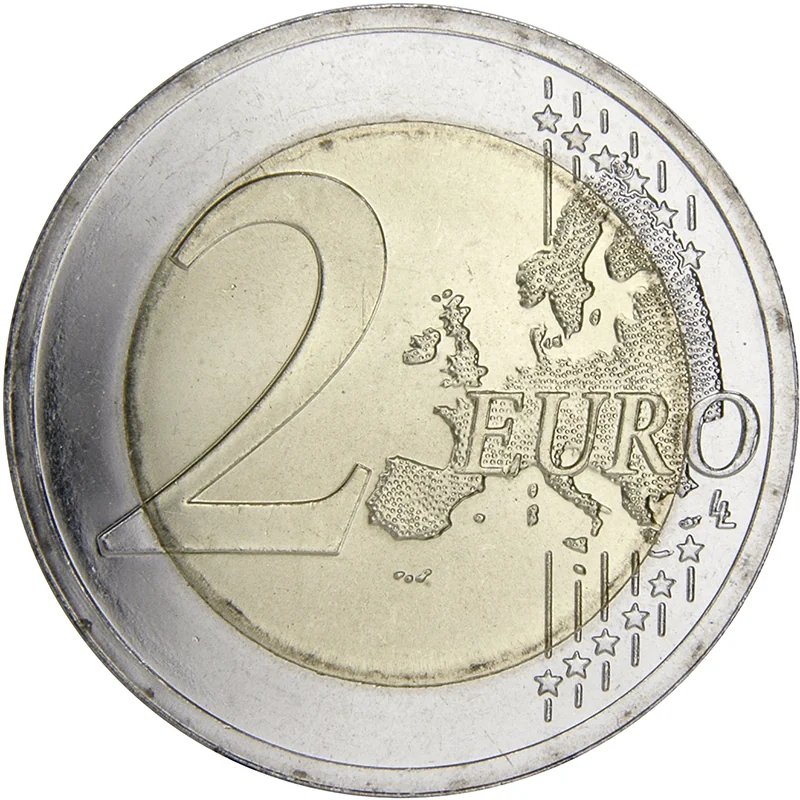
2 euro – Lithuania
Add to wishlist
Circulating commemorative coins
Commemoration: The Baltic Culture
Lithuania
Obverse
Description:
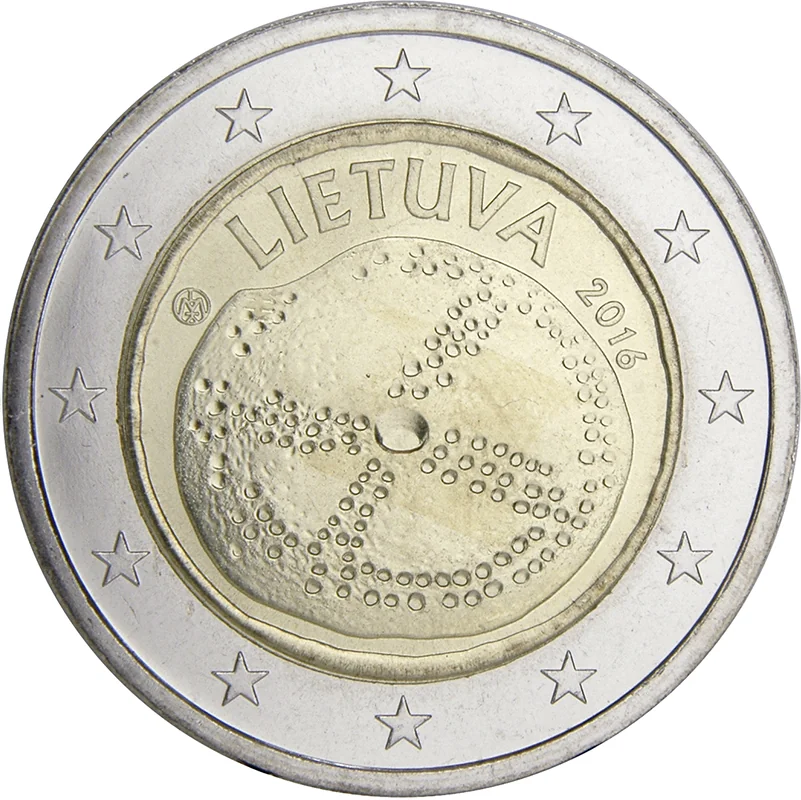
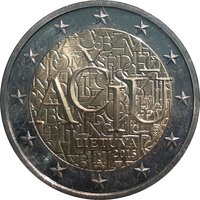
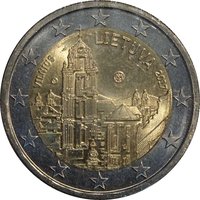
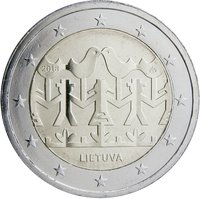
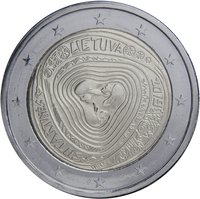
An amber disc, a Baltic cultural symbol, features a dotted crosspiece representing the world's axis. The country, mint mark, and date appear at the top, with the EU stars on the outer ring.
Inscription:
LMK
LIETUVA
2016
LIETUVA
2016
Translation:
Lithuania
2016
2016
Script: Latin
Language: Lithuanian
Designers: Jolanta Mikulskytė, Giedrius Paulauskis
Reverse
Edge
Reeded with inscription
Legend:
LAISVĖ * VIENYBĖ * GEROVĖ *
Translation:
Freedom * Unity * Prosperity *
Language: Lithuanian
Mints
| Name | Mark |
|---|---|
| Lithuanian Mint | (LMK) |
Mintings
| Year | Mint Mark | Mintage | Quality | Collection |
|---|---|---|---|---|
| 2016 | LMK | 990,000 | ||
| 2016 | LMK | 10,000 | BU |
Historical background
In 2016, Lithuania was in its second full year as a member of the eurozone, having adopted the euro on January 1, 2015. This transition marked the culmination of a long-standing strategic goal to deepen integration with Western Europe and enhance economic stability. The changeover from the litas, which had been pegged to the euro since 2002, was considered smooth and successful, with high public acceptance and no major technical disruptions. By 2016, the euro was fully embedded in daily transactions, prices, and the financial system.
The broader currency situation in 2016 was dominated by the European Central Bank's (ECB) monetary policy, to which Lithuania was now fully subject. This included the ECB's expansive quantitative easing program and historically low, even negative, interest rates aimed at stimulating inflation and growth across the euro area. For Lithuania, a small, open, and rapidly growing economy, this meant access to cheaper credit and the elimination of exchange rate risk with its main trading partners. However, it also meant relinquishing independent monetary tools, a trade-off considered worthwhile for the perceived security and benefits of euro membership.
Economically, 2016 was a year of strong performance for Lithuania, with GDP growth exceeding 2% and continued convergence with average EU income levels. The euro environment contributed to investor confidence and financial stability. Nevertheless, some domestic concerns persisted, primarily related to the one-off inflationary spike during the changeover period and the perception that euro membership limited national policy flexibility in responding to asymmetric shocks. Overall, however, the currency situation in 2016 was one of consolidated stability, with the euro firmly established as the foundation of Lithuania's financial landscape within the wider European framework.
The broader currency situation in 2016 was dominated by the European Central Bank's (ECB) monetary policy, to which Lithuania was now fully subject. This included the ECB's expansive quantitative easing program and historically low, even negative, interest rates aimed at stimulating inflation and growth across the euro area. For Lithuania, a small, open, and rapidly growing economy, this meant access to cheaper credit and the elimination of exchange rate risk with its main trading partners. However, it also meant relinquishing independent monetary tools, a trade-off considered worthwhile for the perceived security and benefits of euro membership.
Economically, 2016 was a year of strong performance for Lithuania, with GDP growth exceeding 2% and continued convergence with average EU income levels. The euro environment contributed to investor confidence and financial stability. Nevertheless, some domestic concerns persisted, primarily related to the one-off inflationary spike during the changeover period and the perception that euro membership limited national policy flexibility in responding to asymmetric shocks. Overall, however, the currency situation in 2016 was one of consolidated stability, with the euro firmly established as the foundation of Lithuania's financial landscape within the wider European framework.
Series: Lithuania 2 euro commemoratives
🌱 Very Common