

9 Dollars – Bermuda
United Kingdom
Context


Material
Shape: Reuleaux triangle
Composition: 92.5% Silver
Magnetic: No
Technique: Milled
Alignment: Medal alignment
flip
References
Numista: #86784
Value
Exchange value: 9 BMD
Inflation-adjusted value: 16.64 BMD
Obverse
Description:
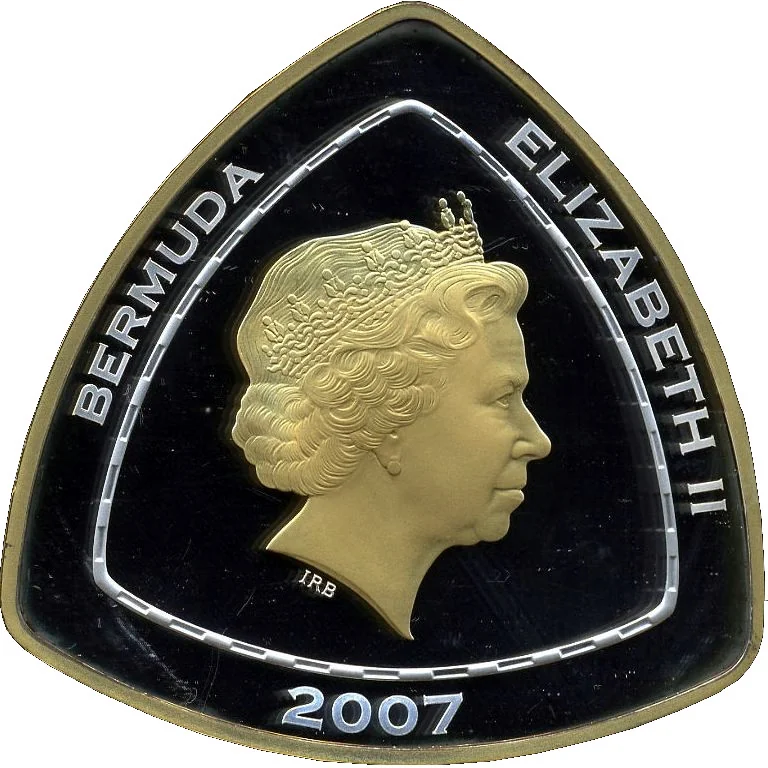
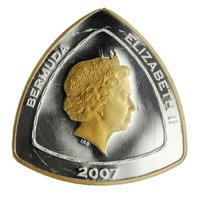
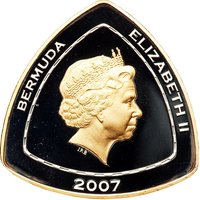
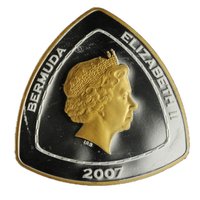
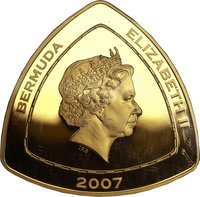
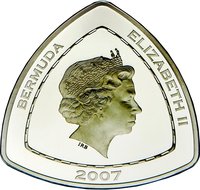
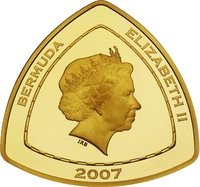
Portrait of Queen Elizabeth II in the Girls of Great Britain and Ireland Tiara, facing right.
Inscription:
BERMUDA ELIZABETH II
IRB
2007
IRB
2007
Translation:
BERMUDA ELIZABETH II
IRB
2007
IRB
2007
Script: Latin
Designer: Ian Rank-Broadley
Reverse
Description:
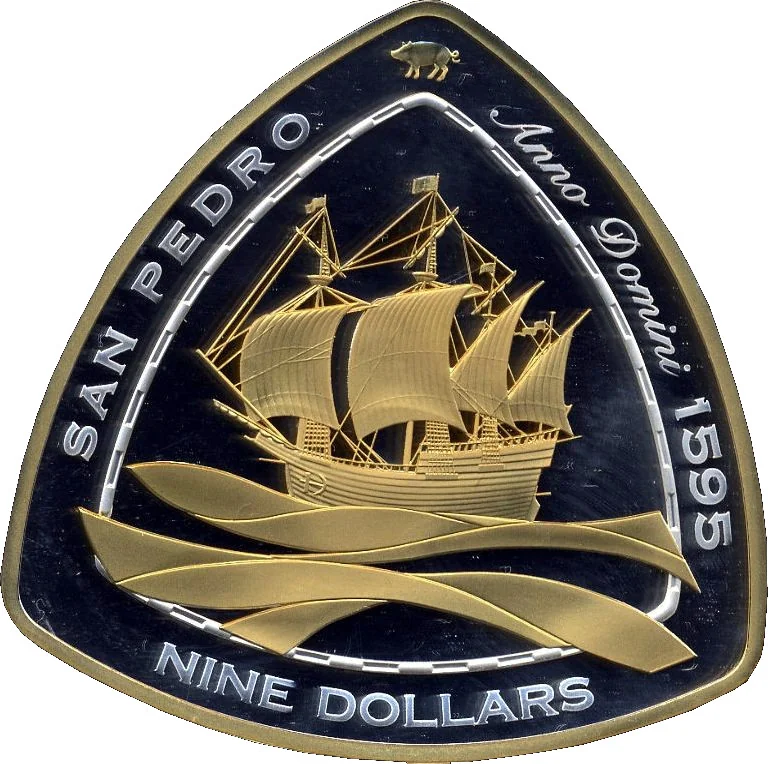
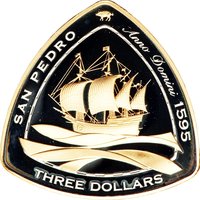
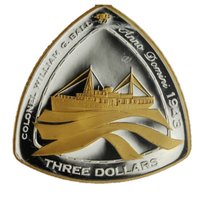
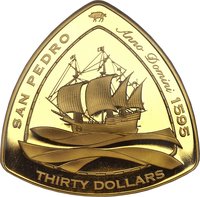
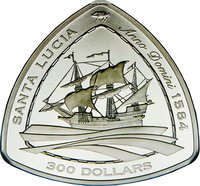
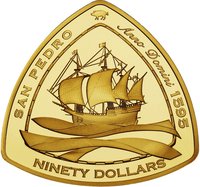
16th century Spanish galleon San Pedro, undervalued.
Inscription:
SAN PEDRO Anno Domini 1595
NINE DOLLARS
NINE DOLLARS
Script: Latin
Edge
Plain
Categories
| Transportation> Watercraft |
Mintings
| Year | Mint Mark | Mintage | Quality | Collection |
|---|---|---|---|---|
| 2007 | — | — | Proof |
Historical background
In 2007, Bermuda's currency situation was defined by its long-standing and stable peg to the United States dollar. The Bermudian dollar (BMD) was, and remains, fixed at a one-to-one parity with the USD. This peg, established in 1972, provided crucial economic stability for the island, which relies heavily on international business (primarily reinsurance and tourism) and imports nearly all its goods. The US dollar circulated alongside the local currency, and both were accepted interchangeably for all transactions within the territory, with the Bermudian dollar notes serving as the physical local counterpart.
The system functioned smoothly due to Bermuda's substantial foreign exchange reserves, held by the Bermuda Monetary Authority (BMA). These reserves, well in excess of the monetary base, backed the currency and ensured full confidence in the peg. This arrangement eliminated exchange rate risk for the key international business sector, simplified transactions for the large tourist market from the US, and helped control inflation. The economy was strong in 2007, with robust growth in the reinsurance sector following the active hurricane seasons of 2004-2005, which further solidified the currency's position.
There were no significant currency crises or debates about the peg in 2007, as its benefits for Bermuda's open, trade-dependent economy were widely accepted. The primary monetary policy focus was on maintaining the peg's credibility through prudent reserve management and regulating the thriving financial services industry. The stability of the currency peg stood in contrast to the early tremors of the global financial crisis beginning to unfold elsewhere, sheltering Bermuda from immediate currency volatility while tethering its economic fortunes closely to those of the United States.
The system functioned smoothly due to Bermuda's substantial foreign exchange reserves, held by the Bermuda Monetary Authority (BMA). These reserves, well in excess of the monetary base, backed the currency and ensured full confidence in the peg. This arrangement eliminated exchange rate risk for the key international business sector, simplified transactions for the large tourist market from the US, and helped control inflation. The economy was strong in 2007, with robust growth in the reinsurance sector following the active hurricane seasons of 2004-2005, which further solidified the currency's position.
There were no significant currency crises or debates about the peg in 2007, as its benefits for Bermuda's open, trade-dependent economy were widely accepted. The primary monetary policy focus was on maintaining the peg's credibility through prudent reserve management and regulating the thriving financial services industry. The stability of the currency peg stood in contrast to the early tremors of the global financial crisis beginning to unfold elsewhere, sheltering Bermuda from immediate currency volatility while tethering its economic fortunes closely to those of the United States.
Series: Shipwreck Series
✨ Legendary