

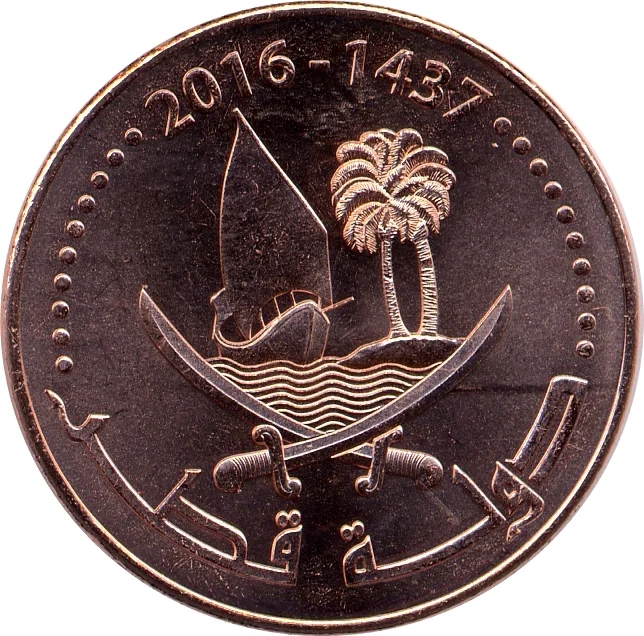
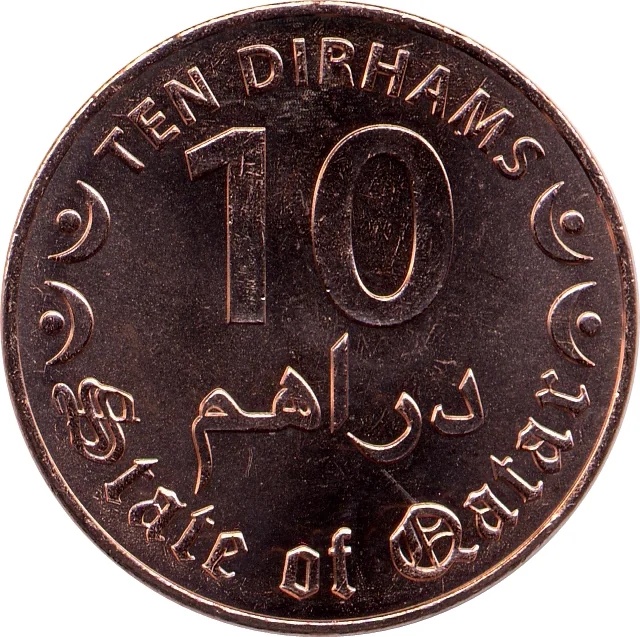
10 dirhams – Qatar
Add to wishlist
Qatar
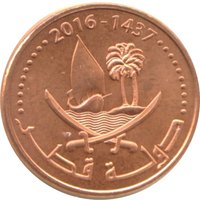
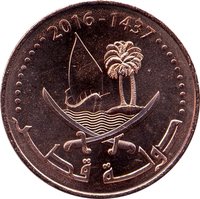
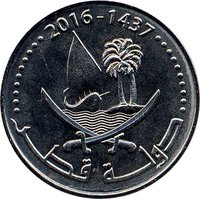
Obverse
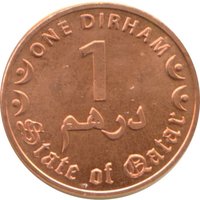
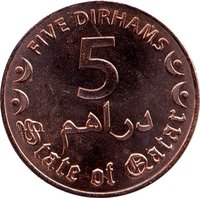
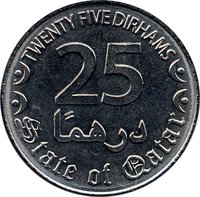
Reverse
Edge
Plain
Categories
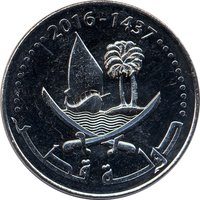
| Transportation> Watercraft |
| Plant> Tree |
| Symbols> Coat of Arms |
| Object> Cold weapons |
Mintings
| Year | Mint Mark | Mintage | Quality | Collection |
|---|---|---|---|---|
| 2016 | — | — | ||
| 2020 | — | — |
Historical background
In 2016, Qatar's currency, the Qatari Riyal (QAR), operated under a long-standing and stable peg to the US Dollar, fixed at a rate of 3.64 QAR per USD. This monetary policy framework, managed by the Qatar Central Bank (QCB), provided predictability for trade, investment, and economic planning, which was crucial for a hydrocarbon-exporting nation. The peg was underpinned by substantial foreign exchange reserves, which provided a strong buffer against external shocks and helped maintain investor confidence in the currency's stability.
The year was marked by significant economic pressure due to a prolonged period of low global oil and natural gas prices, which began in mid-2014. As hydrocarbon revenues constitute the majority of Qatar's government income and export earnings, the state budget moved into a deficit, leading to a drawdown of fiscal reserves and an increase in sovereign debt issuance. Despite these fiscal challenges, the currency peg itself was never in serious doubt, as the QCB maintained ample reserves to defend it, and the nation's immense wealth from its liquefied natural gas (LNG) exports provided a solid long-term economic foundation.
Looking ahead, financial markets and analysts in 6 were closely monitoring the sustainability of the peg in light of the fiscal deficit, but consensus held that Qatar had both the financial means and the political will to maintain it indefinitely. The focus remained on the government's broader economic strategy to navigate the lower energy price environment through fiscal consolidation and diversification initiatives, rather than on any imminent change to the exchange rate regime. The riyal's stability throughout the year stood in contrast to the volatility experienced by currencies of other emerging markets, highlighting Qatar's unique position as a high-income economy with robust external buffers.
The year was marked by significant economic pressure due to a prolonged period of low global oil and natural gas prices, which began in mid-2014. As hydrocarbon revenues constitute the majority of Qatar's government income and export earnings, the state budget moved into a deficit, leading to a drawdown of fiscal reserves and an increase in sovereign debt issuance. Despite these fiscal challenges, the currency peg itself was never in serious doubt, as the QCB maintained ample reserves to defend it, and the nation's immense wealth from its liquefied natural gas (LNG) exports provided a solid long-term economic foundation.
Looking ahead, financial markets and analysts in 6 were closely monitoring the sustainability of the peg in light of the fiscal deficit, but consensus held that Qatar had both the financial means and the political will to maintain it indefinitely. The focus remained on the government's broader economic strategy to navigate the lower energy price environment through fiscal consolidation and diversification initiatives, rather than on any imminent change to the exchange rate regime. The riyal's stability throughout the year stood in contrast to the volatility experienced by currencies of other emerging markets, highlighting Qatar's unique position as a high-income economy with robust external buffers.
Series: 2016 Qatar circulation coins
🌱 Common