

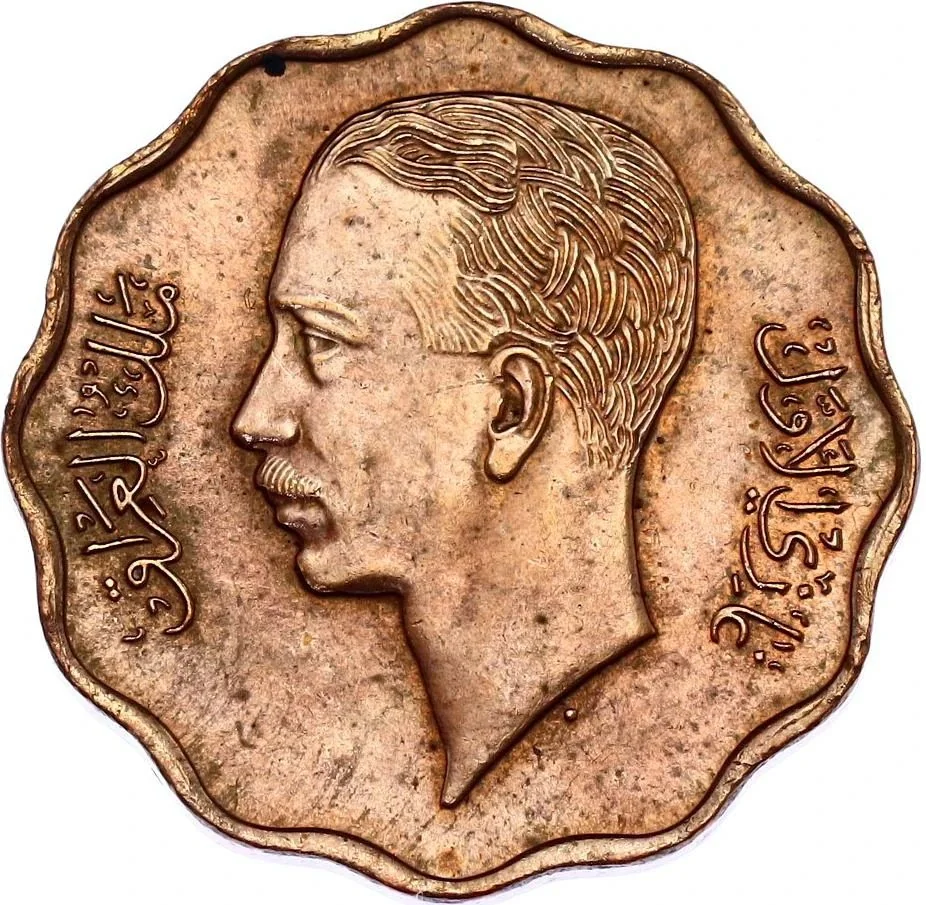
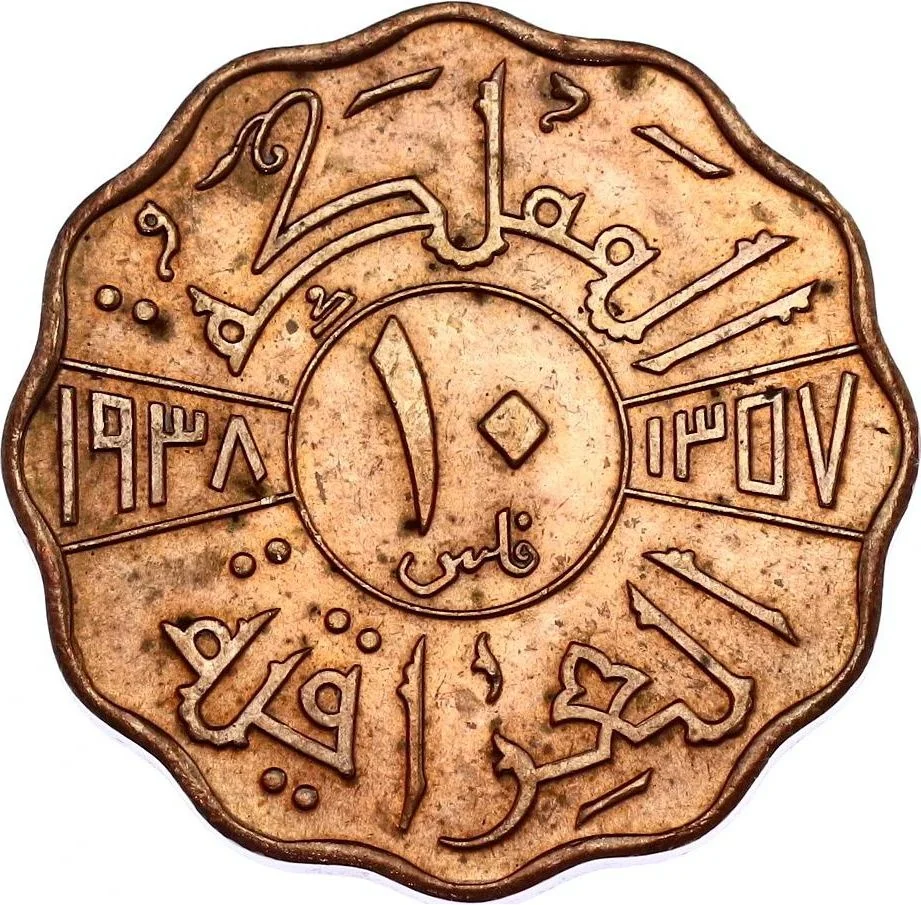
10 Fils – Hashemite Kingdom
Jordan
Context
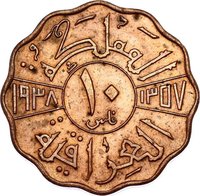
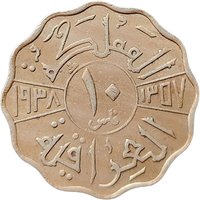
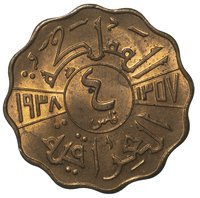
Year: 1938
Islamic (Hijri) Year: 1357
Country: Jordan 
Issuer: Hashemite Kingdom
Ruler: Ghazi I
Currency:
(since 1931)
Demonetization: 6 January 1961
Total mintage: 8,250,000
Material
References
KM: #Click to copy to clipboard103b
Numista: #8605
Value
Exchange value: 0.010 IQD
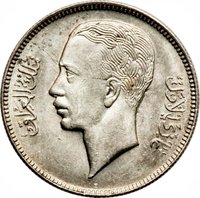
Obverse
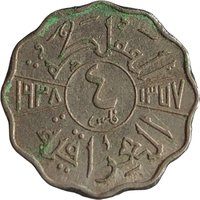
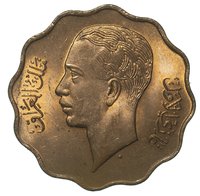
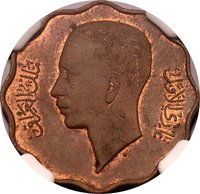
Description:
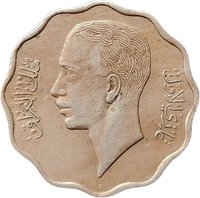
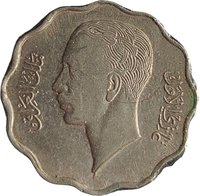
King Ghazi I (1933-1939), left-facing
Inscription:
غازي الأول
ملك العراق
ملك العراق
Translation:
Ghazi the First
King of Iraq
King of Iraq
Script: Arabic
Language: Arabic
Engraver: Percy Metcalfe
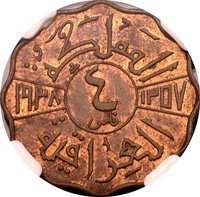
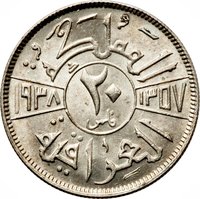
Reverse
Edge
Plain
Mints
| Name | Mark |
|---|---|
| Royal Mint (Tower Hill) | — |
Mintings
| Year | Mint Mark | Mintage | Quality | Collection |
|---|---|---|---|---|
| 1938 | — | 8,250,000 | ||
| 1938 | — | — | Proof |
Historical background
In 1938, the currency situation in the Hashemite Kingdom of Jordan (then known as the Emirate of Transjordan) was defined by its status as a British Mandate territory. The official currency was the Palestinian pound, issued by the Palestine Currency Board in London. This board maintained a strict currency board system, ensuring that every pound in circulation was fully backed by sterling reserves held in London, pegging the Palestinian pound at par with the British pound sterling. This arrangement provided monetary stability and facilitated trade within the broader British imperial system, but it also meant Transjordan had no independent monetary policy or central bank.
The circulation within Transjordan was a practical mix of the official notes and coins alongside other trusted mediums. While Palestinian pound banknotes were used for larger transactions, the smaller denomination coins in daily use were predominantly the British silver and bronze coins, such as shillings and pence. The Maria Theresa thaler, a historic silver coin, also continued to circulate in some regional trade, reflecting the area's historical economic links and the slower integration of a fully modern monetary system in more remote areas.
This currency regime underscored Transjordan's political and economic dependence on Great Britain. The system was reliable for maintaining price stability and supporting administrative functions, but it inherently tied the local economy to decisions made in London. This framework would remain largely unchanged until after Jordan gained full independence in 1946, with the country eventually introducing the Jordanian dinar in 1950 to replace the Palestinian pound and assert its monetary sovereignty.
The circulation within Transjordan was a practical mix of the official notes and coins alongside other trusted mediums. While Palestinian pound banknotes were used for larger transactions, the smaller denomination coins in daily use were predominantly the British silver and bronze coins, such as shillings and pence. The Maria Theresa thaler, a historic silver coin, also continued to circulate in some regional trade, reflecting the area's historical economic links and the slower integration of a fully modern monetary system in more remote areas.
This currency regime underscored Transjordan's political and economic dependence on Great Britain. The system was reliable for maintaining price stability and supporting administrative functions, but it inherently tied the local economy to decisions made in London. This framework would remain largely unchanged until after Jordan gained full independence in 1946, with the country eventually introducing the Jordanian dinar in 1950 to replace the Palestinian pound and assert its monetary sovereignty.
🌱 Common