

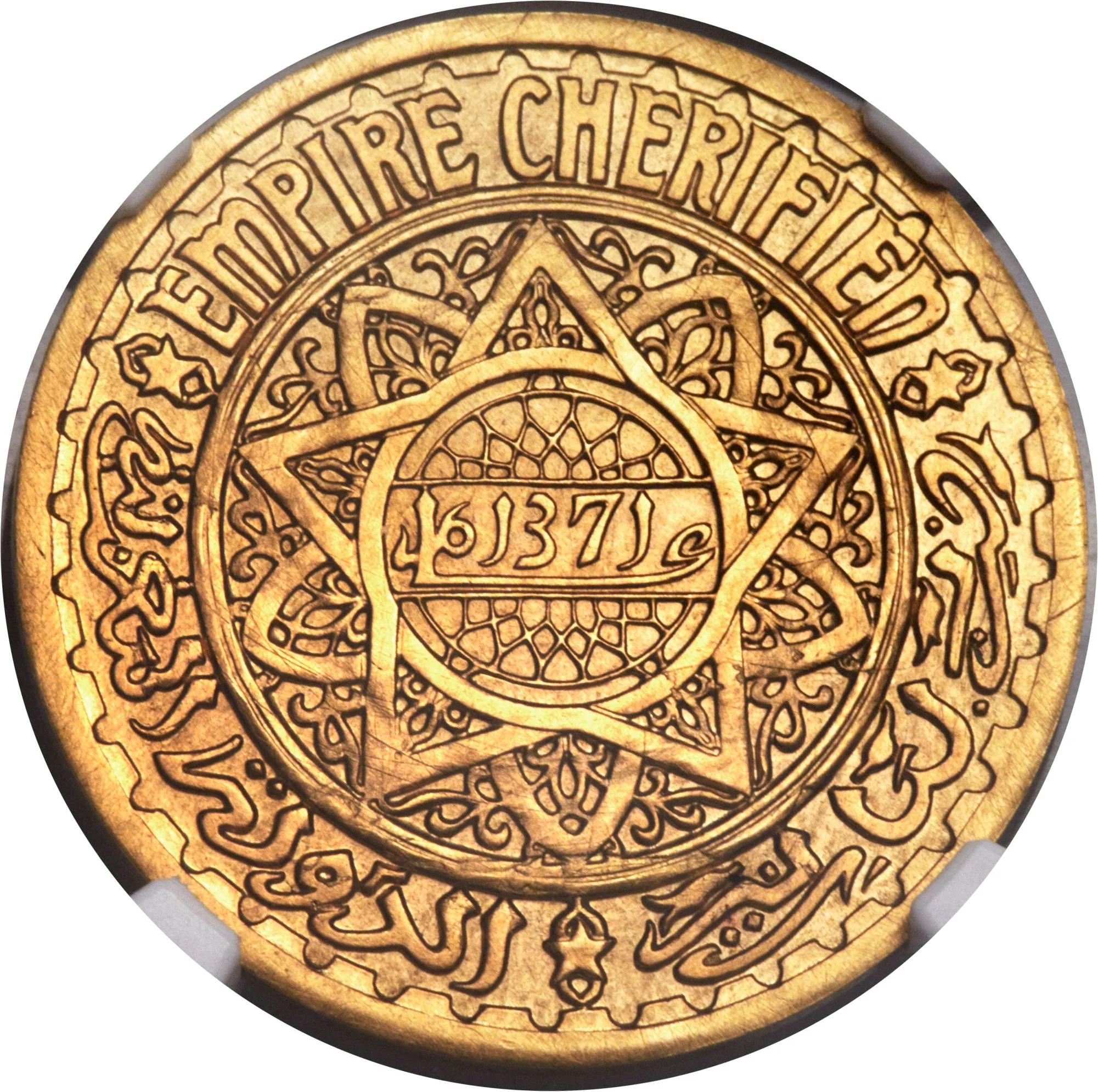
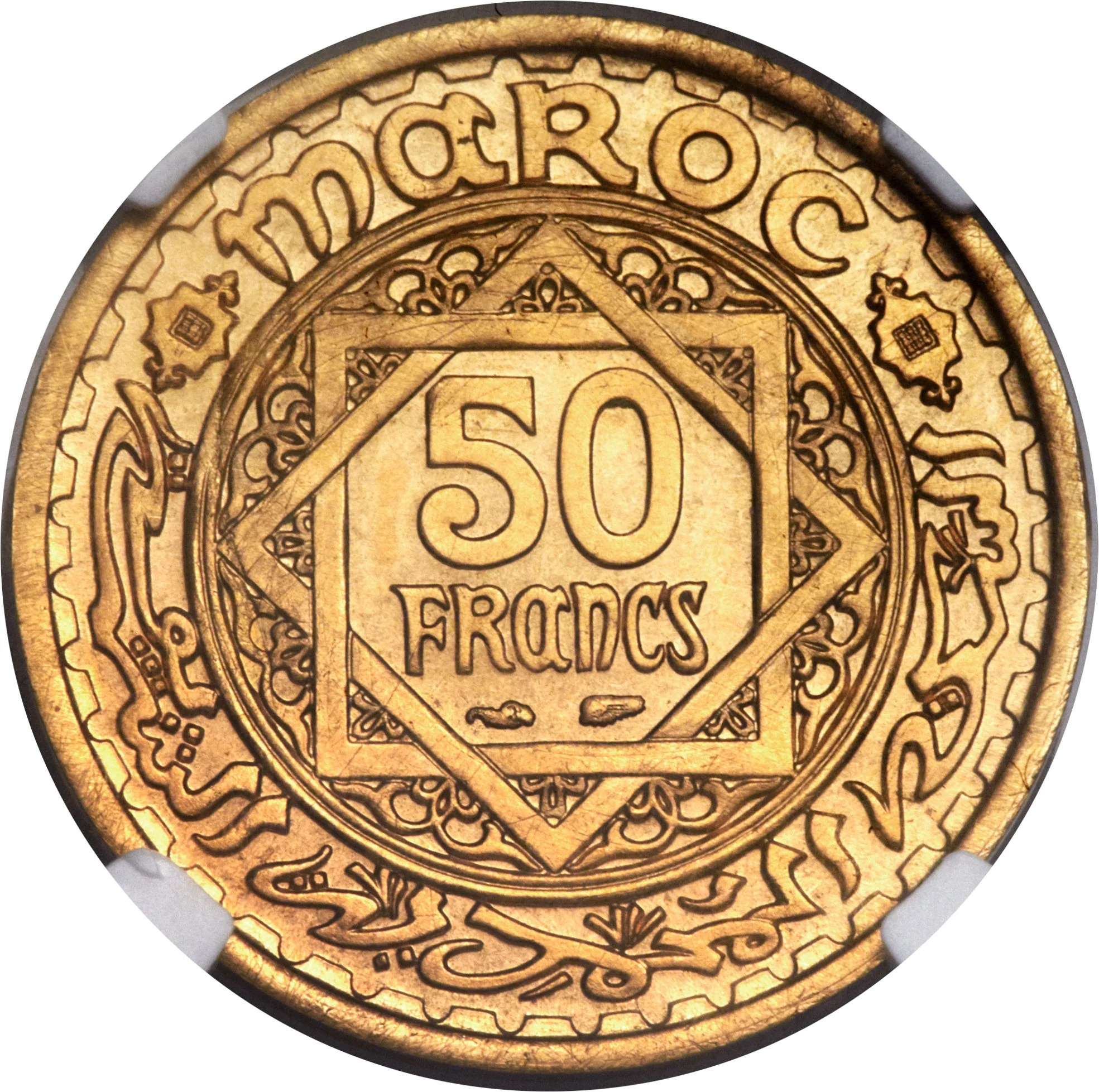
50 francs – Morocco
Add to wishlist
Morocco
Context
Year: 1952
Islamic (Hijri) Year:: 1371
Issuer: Morocco
Ruler: Mohammed V
Currency:
(1910—1959)
Demonetized: Yes
References
Y: #
Numista: #86036
Obverse
Reverse
Edge
Mints
| Name | Mark |
|---|---|
| Monnaie de Paris | — |
Mintings
| Year | Mint Mark | Mintage | Quality | Collection |
|---|---|---|---|---|
| 1952 | — | — |
Historical background
In 1952, Morocco's currency situation was a direct reflection of its complex political status as a French and Spanish protectorate, with the international zone of Tangier operating under a separate administration. The monetary landscape was fragmented and controlled by external powers. The French Protectorate zone used the Moroccan franc, which was pegged at par to the French franc and issued by a state-controlled bank, Banque d'État du Maroc. This effectively tied Morocco's economy to France's, facilitating colonial trade but limiting autonomous monetary policy. In the northern Spanish zone, the Spanish peseta was the official currency, while the Tangier International Zone used a special Tangier franc.
This fragmentation created significant economic inefficiencies and symbolized the lack of national sovereignty. The coexistence of multiple currencies hampered internal trade and movement of capital between the different zones, complicating commerce for Moroccan merchants and businesses. Furthermore, the peg to the French franc meant Morocco was susceptible to monetary decisions made in Paris for France's benefit, not Morocco's. This external control over currency was a point of growing resentment among the burgeoning Moroccan nationalist movement, which saw economic autonomy as inseparable from political independence.
By the early 1950s, the currency system, while functional for colonial administration, was increasingly unstable. The growing nationalist unrest, which would culminate in independence in 1956, inherently challenged the colonial financial architecture. The stage was being set for a major monetary reform. Indeed, shortly after gaining independence, Morocco would move decisively to establish its own national currency, introducing the Moroccan dirham in 1959 to unify the territory under a single, sovereign monetary system, thereby ending the colonial-era fragmentation.
This fragmentation created significant economic inefficiencies and symbolized the lack of national sovereignty. The coexistence of multiple currencies hampered internal trade and movement of capital between the different zones, complicating commerce for Moroccan merchants and businesses. Furthermore, the peg to the French franc meant Morocco was susceptible to monetary decisions made in Paris for France's benefit, not Morocco's. This external control over currency was a point of growing resentment among the burgeoning Moroccan nationalist movement, which saw economic autonomy as inseparable from political independence.
By the early 1950s, the currency system, while functional for colonial administration, was increasingly unstable. The growing nationalist unrest, which would culminate in independence in 1956, inherently challenged the colonial financial architecture. The stage was being set for a major monetary reform. Indeed, shortly after gaining independence, Morocco would move decisively to establish its own national currency, introducing the Moroccan dirham in 1959 to unify the territory under a single, sovereign monetary system, thereby ending the colonial-era fragmentation.

💎 Very Rare