

½ baiocco – Papal States
Add to wishlist
Vatican City
Context
Years: 1847–1850
Country: Vatican City
Issuer: Papal States
Ruler: Pius IX
Currency:
(1835—1866)
Demonetized: Yes
Total mintage: 2,752,000
Material
References
KM: #
Numista: #8592
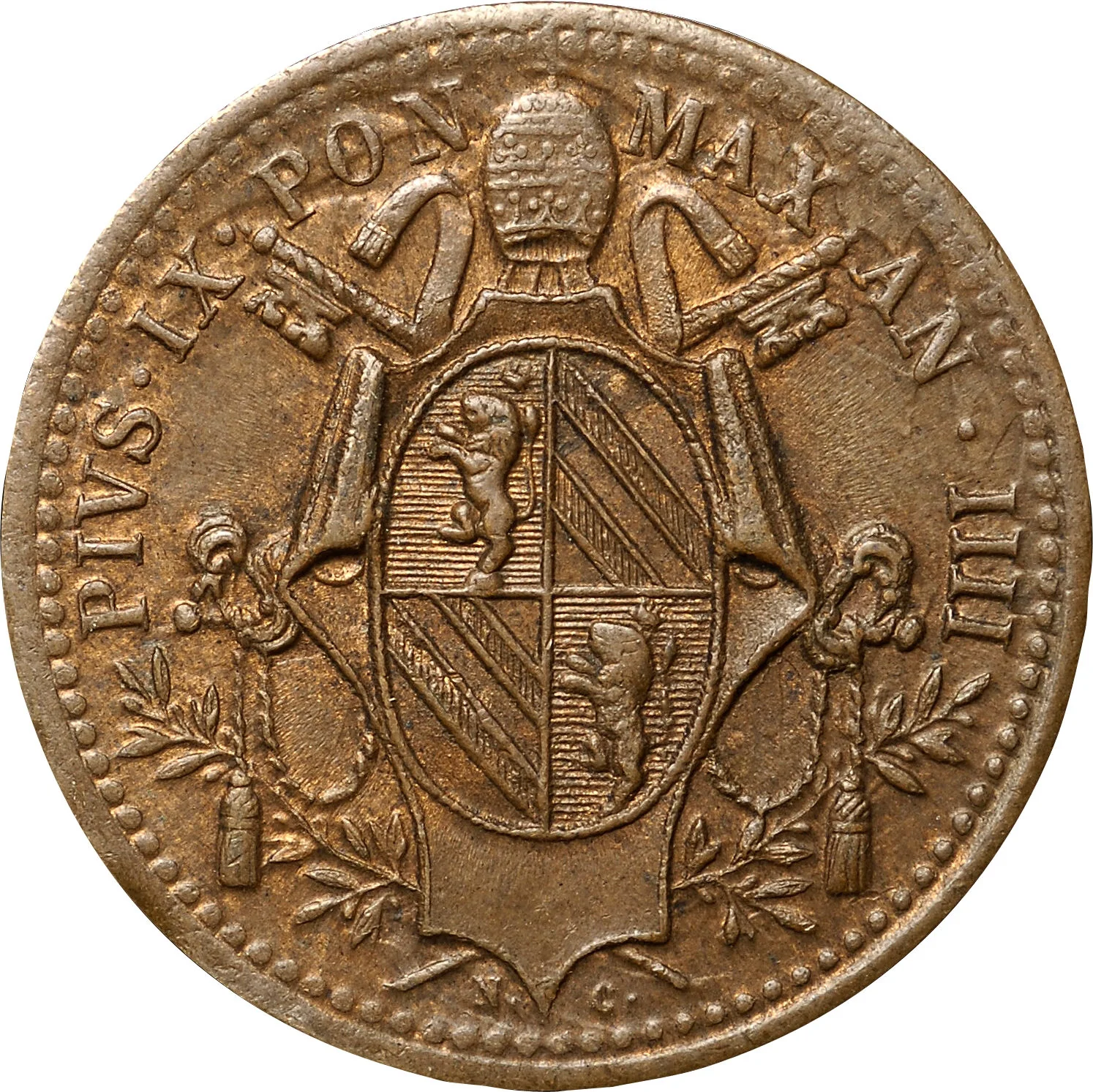
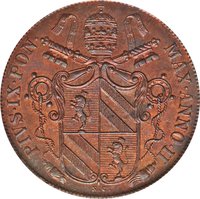
Obverse
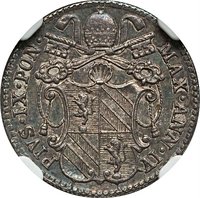
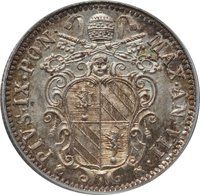
Description:
Papal coat of arms lore.
Inscription:
PIVS·IX PON MAX AN · IIII
Translation:
Pius IX, Supreme Pontiff, in the fourth year.
Script: Latin
Language: Latin
Engraver: Niccolò Cerbara
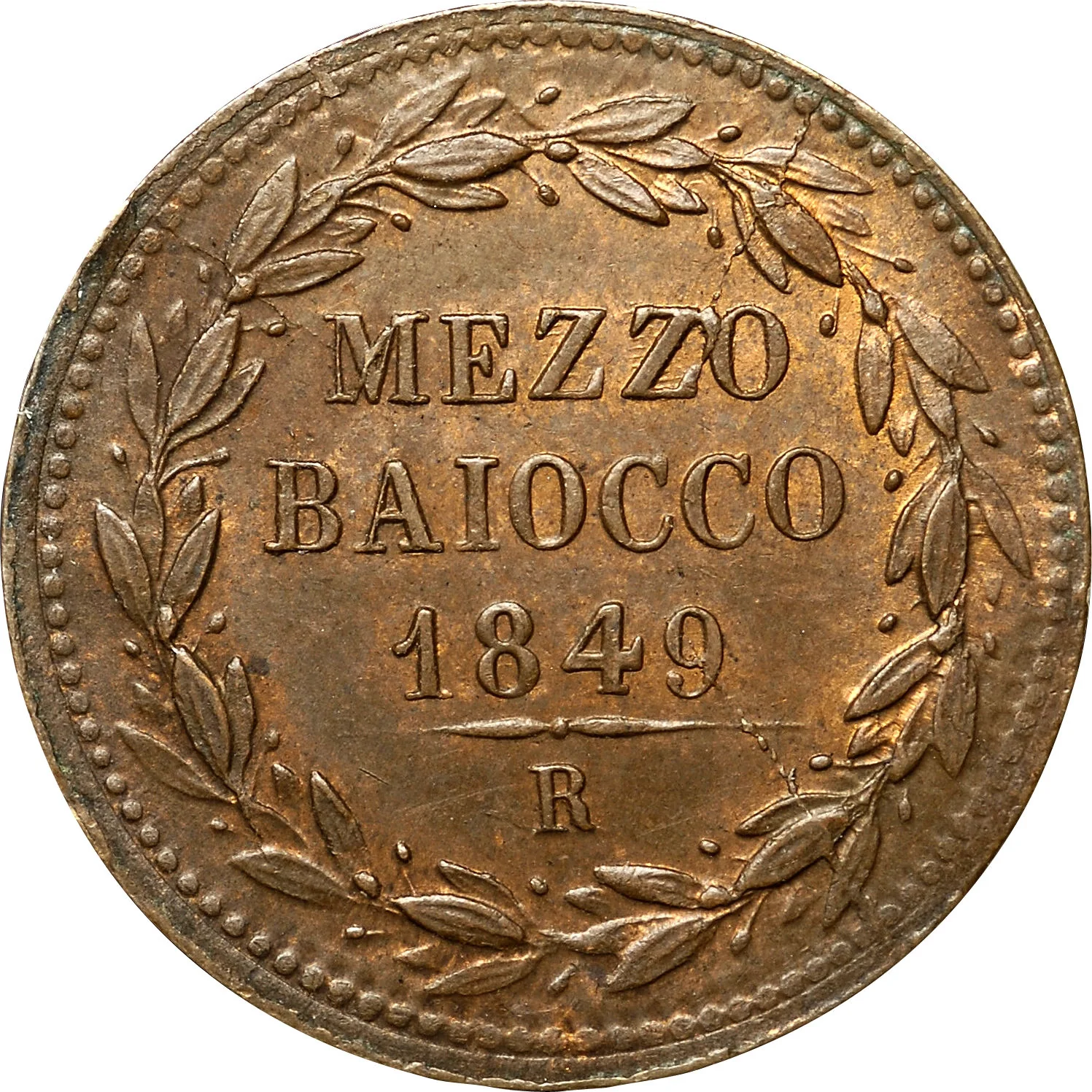
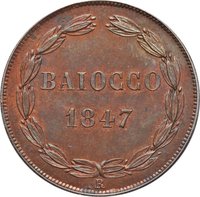
Reverse
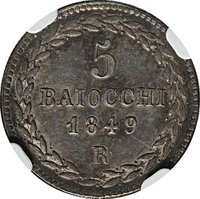
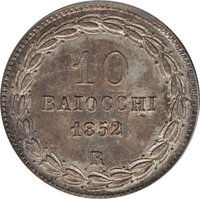
Description:
Value and date encircled
Inscription:
MEZZO
BAIOCCO
1849
R
BAIOCCO
1849
R
Script: Latin
Engraver: Niccolò Cerbara
Edge
Plain
Mintings
| Year | Mint Mark | Mintage | Quality | Collection |
|---|---|---|---|---|
| 1847 | B | 9,000 | ||
| 1847 | R | 74,000 | ||
| 1848 | R | 644,000 | ||
| 1848 | B | — | ||
| 1849 | B | 104,000 | ||
| 1849 | R | 1,921,000 | ||
| 1850 | — | — |
Historical background
In 1847, the Papal States found itself in a complex and deteriorating monetary situation, characterized by a chaotic multiplicity of currencies in circulation. The core of the problem was the absence of a unified, state-controlled coinage. Instead, a patchwork of foreign and obsolete coins circulated, including French francs, Tuscan fiorini, Neapolitan ducats, and Spanish doubloons, each with fluctuating and often disputed exchange rates. This system, largely unchanged since the medieval period, created immense confusion for commerce, facilitated fraud, and hindered economic development, as merchants and citizens faced constant uncertainty in everyday transactions.
The financial instability was exacerbated by the Papal government's chronic budget deficits, funded by borrowing and the debasement of the limited papal coinage it did produce. Years of inefficient administration and a reliance on outdated fiscal practices had left the treasury depleted. Pope Pius IX, who had begun his reign in 1846 with a wave of popular liberal reforms, recognized that monetary reform was essential for modernization. In 1847, under the guidance of his pro-reform minister, Cardinal Giacomo Antonelli, concrete plans were being developed to replace the archaic monetary mosaic.
The proposed solution was the introduction of a new, decimal-based currency aligned with the Italian lira of the Latin Monetary Union, a step intended to simplify trade and signal the Papal States' engagement with the modern economic world. However, the implementation of this reform was overtaken by the revolutionary upheavals of 1848-49. The political turmoil and the eventual military intervention by French forces to restore papal authority diverted all attention and resources, leaving the currency chaos unresolved. Thus, the monetary disarray of 1847 remained a festering symptom of the broader structural weaknesses that would contribute to the Papal States' eventual dissolution and annexation into the Kingdom of Italy in 1870.
The financial instability was exacerbated by the Papal government's chronic budget deficits, funded by borrowing and the debasement of the limited papal coinage it did produce. Years of inefficient administration and a reliance on outdated fiscal practices had left the treasury depleted. Pope Pius IX, who had begun his reign in 1846 with a wave of popular liberal reforms, recognized that monetary reform was essential for modernization. In 1847, under the guidance of his pro-reform minister, Cardinal Giacomo Antonelli, concrete plans were being developed to replace the archaic monetary mosaic.
The proposed solution was the introduction of a new, decimal-based currency aligned with the Italian lira of the Latin Monetary Union, a step intended to simplify trade and signal the Papal States' engagement with the modern economic world. However, the implementation of this reform was overtaken by the revolutionary upheavals of 1848-49. The political turmoil and the eventual military intervention by French forces to restore papal authority diverted all attention and resources, leaving the currency chaos unresolved. Thus, the monetary disarray of 1847 remained a festering symptom of the broader structural weaknesses that would contribute to the Papal States' eventual dissolution and annexation into the Kingdom of Italy in 1870.
🌱 Fairly Common