

1 Piastre – Lebanon
Lebanon
Context
Year: 1940
Issuer: Lebanon 
Period:
(1926—1945)
Currency:
(since 1939)
Demonetized: Yes
Total mintage: 2,000,000
Material
Diameter: 24.4 mm
Weight: 3.5 g
Shape: Round with a round hole
Composition: Zinc
Magnetic: No
Technique: Milled
Alignment: Coin alignment
flip
References
KM: #Click to copy to clipboard3a
Numista: #8582
Value
Exchange value: 0.01 LBP
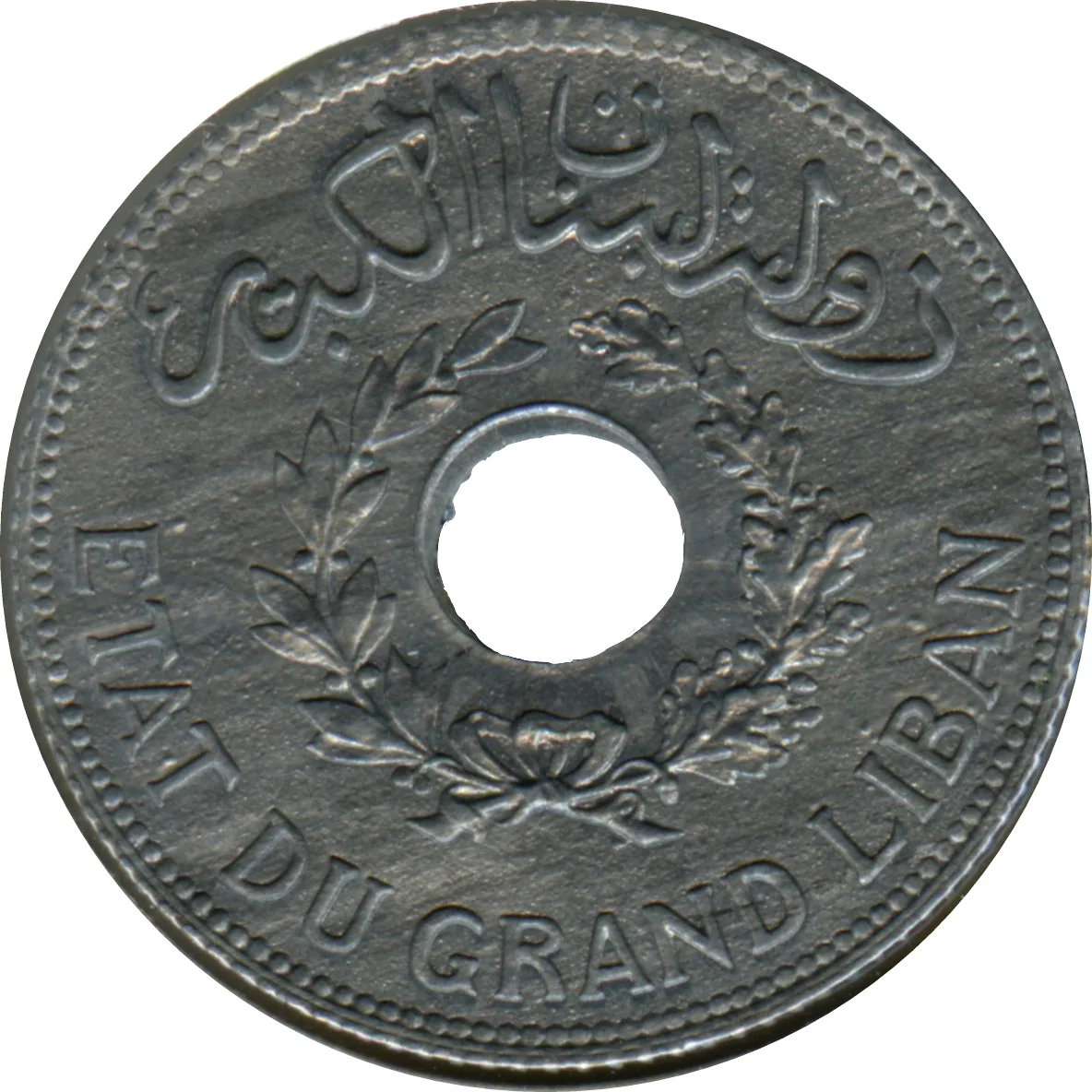
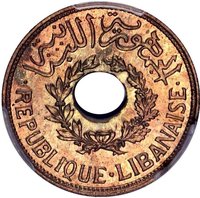
Obverse
Description:
Wreath with central opening
Inscription:
دولة لبنان الكبير
ETAT DU GRAND LIBAN
ETAT DU GRAND LIBAN
Translation:
The State of Greater Lebanon
The State of Greater Lebanon
The State of Greater Lebanon
Engraver: Lucien Georges Bazor
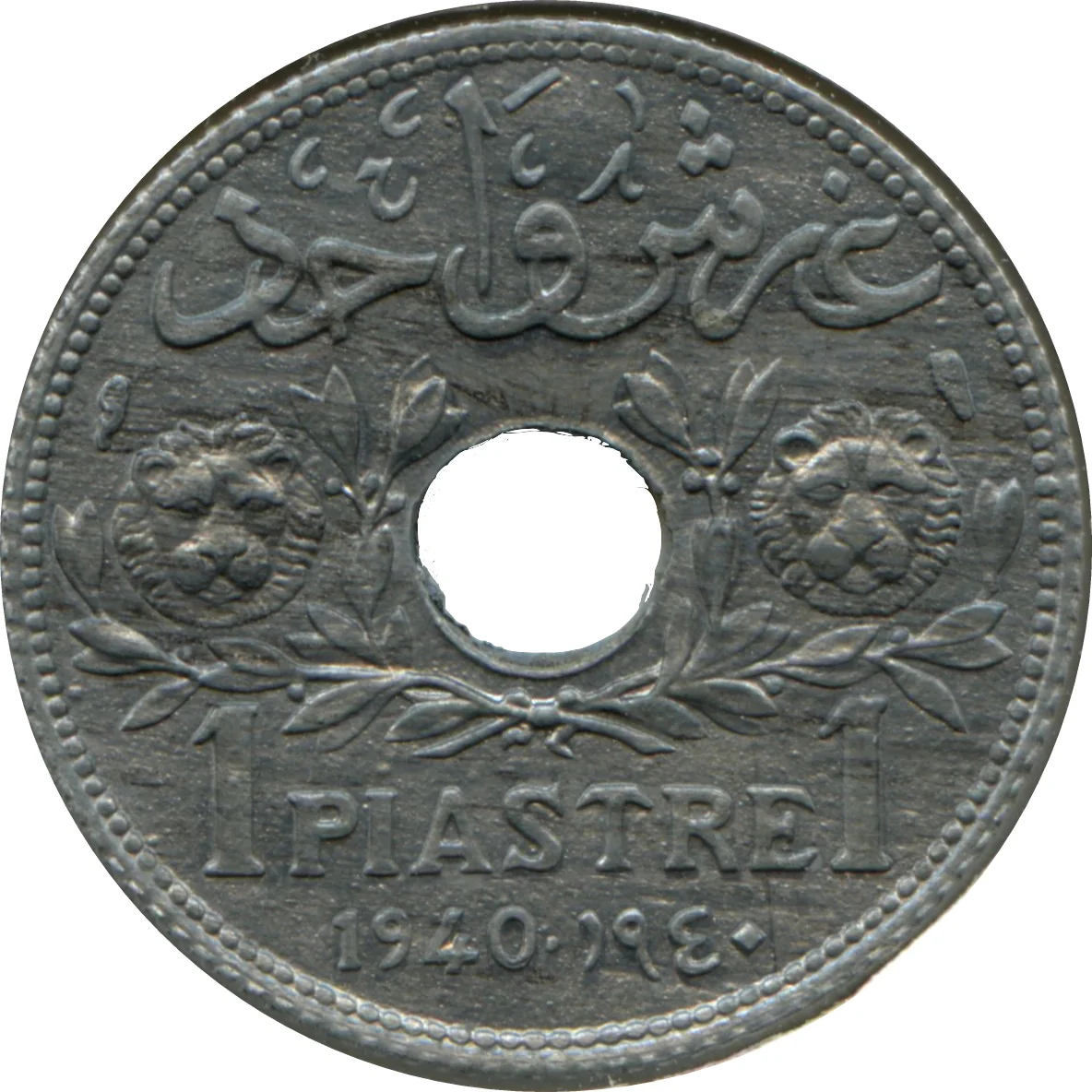
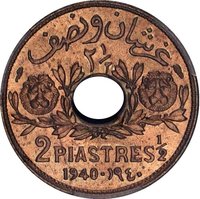
Reverse
Description:
Central hole flanked by lion heads, value and dates beneath.
Inscription:
غرش واحد
1 PIASTRE 1
1940 -١٩٤٠
1 PIASTRE 1
1940 -١٩٤٠
Translation:
One Piastre 1
1940 - 1940
1940 - 1940
Language: Arabic
Engraver: Lucien Georges Bazor
Edge
Reeded
Mints
| Name | Mark |
|---|---|
| Monnaie de Paris | — |
Mintings
| Year | Mint Mark | Mintage | Quality | Collection |
|---|---|---|---|---|
| 1940 | — | 2,000,000 |
Historical background
In 1940, Lebanon's currency situation was fundamentally shaped by its political status as a French mandate under the control of Vichy France following the fall of Paris to Nazi Germany. The country remained part of the "franc zone," with its official currency being the Lebanese-Syrian pound (or livre), which was issued by the French-controlled Banque de Syrie et du Liban. This currency was pegged to the French franc at a fixed rate, a colonial monetary arrangement that tied Lebanon's economic fate directly to that of France.
The outbreak of World War II and the subsequent French capitulation created immediate economic strain. The link to the depreciating French franc, combined with wartime disruptions to trade and rising inflation, began to undermine the currency's stability and purchasing power. Furthermore, the British naval blockade, imposed to isolate Vichy-held territories, severely restricted imports and led to shortages of essential goods, exacerbating inflationary pressures and creating a burgeoning black market for both commodities and foreign currency.
Consequently, 1940 marked the beginning of a critical period of monetary uncertainty. While the formal peg to the franc remained, confidence in the currency was eroding. This set the stage for the profound monetary shift that would follow in 1941, when British and Free French forces invaded to oust the Vichy authorities. The new administration, under Allied influence, would soon sever the link to the French franc and re-peg the Lebanese-Syrian pound to the British pound sterling, seeking greater stability in the tumultuous war economy.
The outbreak of World War II and the subsequent French capitulation created immediate economic strain. The link to the depreciating French franc, combined with wartime disruptions to trade and rising inflation, began to undermine the currency's stability and purchasing power. Furthermore, the British naval blockade, imposed to isolate Vichy-held territories, severely restricted imports and led to shortages of essential goods, exacerbating inflationary pressures and creating a burgeoning black market for both commodities and foreign currency.
Consequently, 1940 marked the beginning of a critical period of monetary uncertainty. While the formal peg to the franc remained, confidence in the currency was eroding. This set the stage for the profound monetary shift that would follow in 1941, when British and Free French forces invaded to oust the Vichy authorities. The new administration, under Allied influence, would soon sever the link to the French franc and re-peg the Lebanese-Syrian pound to the British pound sterling, seeking greater stability in the tumultuous war economy.
🌟 Limited