

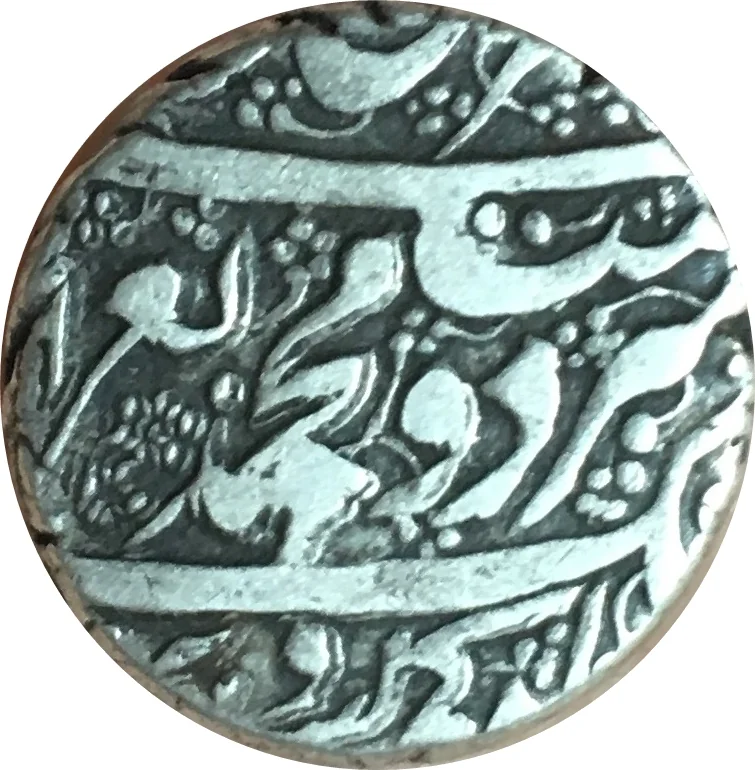
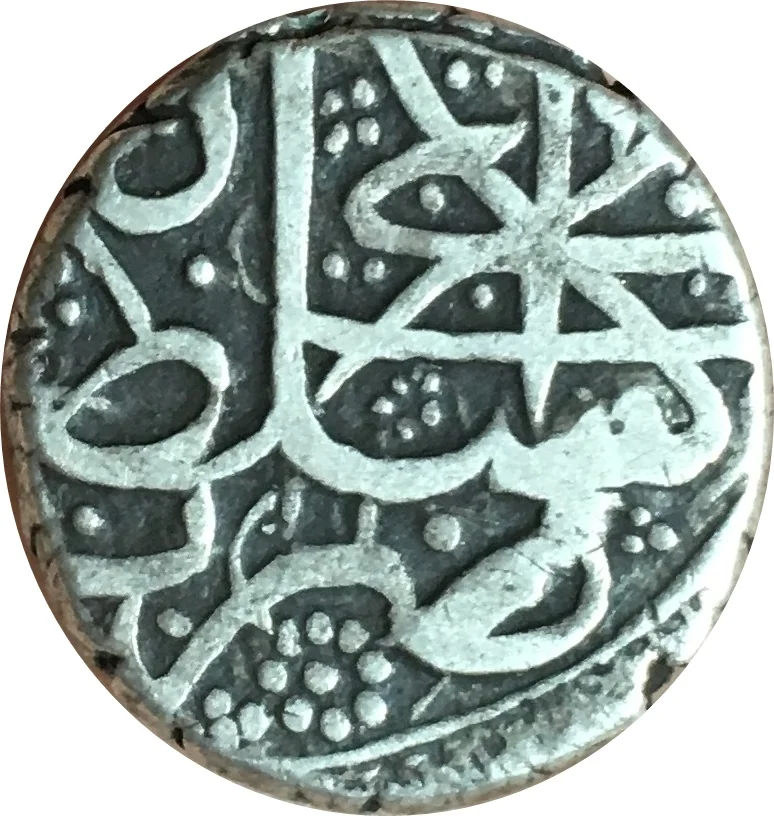
1 Rupee – Afghanistan
Afghanistan
Context

Material
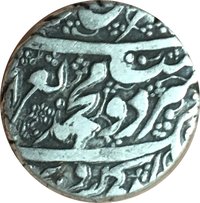
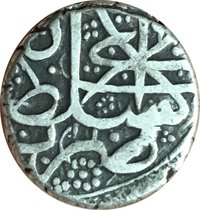
Diameter: 19 mm
Weight: 9.3 g
Silver weight: 9.30 g
Shape: Irregular round
Composition: Silver
Magnetic: No
References
KM: #Click to copy to clipboard373
Numista: #85355
Value
Bullion value: $26.41
Mintings
| Year | Mint Mark | Mintage | Quality | Collection |
|---|---|---|---|---|
| 1809 | — | — | ||
| 1811 | — | — | ||
| 1812 | — | — | ||
| 1813 | — | — | ||
| 1814 | — | — | ||
| 1815 | — | — | ||
| 1816 | — | — | ||
| 1817 | — | — | ||
| 1818 | — | — | ||
| 1819 | — | — | ||
| 1821 | — | — | ||
| 1822 | — | — | ||
| 1823 | — | — | ||
| 1824 | — | — | ||
| 1825 | — | — | ||
| 1826 | — | — | ||
| 1827 | — | — | ||
| 1828 | — | — | ||
| 1829 | — | — | ||
| 1830 | — | — | ||
| 1831 | — | — | ||
| 1832 | — | — | ||
| 1833 | — | — | ||
| 1834 | — | — | ||
| 1835 | — | — | ||
| 1836 | — | — | ||
| 1837 | — | — |
Historical background
In 1809, Afghanistan's currency situation was characterized by a fragmented and decentralized monetary system, reflecting the political reality of the era. The Durrani Empire, founded by Ahmad Shah Durrani, was in a state of decline following his death in 1772, leading to a protracted succession crisis and civil war. By the first decade of the 1800s, effective power was divided among rival princes and feudal chiefs, with Shah Mahmud Durrani ruling in Kabul but exerting limited control beyond it. Consequently, there was no single, unified national currency. Coins were minted in the names of various ruling Sadozai and Barakzai figures in major cities like Kabul, Kandahar, Herat, and Peshawar, leading to a circulation of multiple coinages of differing weights and purities.
The primary circulating medium was the silver rupee, modeled on the long-influential Mughal rupee, alongside the gold mohur and smaller copper coins. However, the value and acceptance of these coins were highly regional. The instability of the central authority meant that minting standards were inconsistent, often debased by local rulers to finance their military campaigns. This period also saw the continued circulation of older Persian (Safavid), Mughal, and even Central Asian coins, making transactions a complex matter of assaying and negotiation. The economy was predominantly agrarian and reliant on trade routes, so this heterogeneous coinage system sufficed for local bazaars and caravan trade but created inefficiencies and opportunities for fraud.
Furthermore, Afghanistan’s position on the Silk Road meant it was a crossroads for foreign currencies, particularly the British Indian rupee from the east and the Russian silver ruble and Bukharan coins from the north. British political and commercial influence was growing, especially following the 1809 treaty between Shah Shuja (briefly restored with British help) and the British East India Company against the threat of Napoleonic and Persian expansion. This set the stage for the increasing penetration of British Indian currency in later decades, but in 1809, the monetary landscape remained a patchwork of local and legacy issues, emblematic of a kingdom struggling to hold itself together.
The primary circulating medium was the silver rupee, modeled on the long-influential Mughal rupee, alongside the gold mohur and smaller copper coins. However, the value and acceptance of these coins were highly regional. The instability of the central authority meant that minting standards were inconsistent, often debased by local rulers to finance their military campaigns. This period also saw the continued circulation of older Persian (Safavid), Mughal, and even Central Asian coins, making transactions a complex matter of assaying and negotiation. The economy was predominantly agrarian and reliant on trade routes, so this heterogeneous coinage system sufficed for local bazaars and caravan trade but created inefficiencies and opportunities for fraud.
Furthermore, Afghanistan’s position on the Silk Road meant it was a crossroads for foreign currencies, particularly the British Indian rupee from the east and the Russian silver ruble and Bukharan coins from the north. British political and commercial influence was growing, especially following the 1809 treaty between Shah Shuja (briefly restored with British help) and the British East India Company against the threat of Napoleonic and Persian expansion. This set the stage for the increasing penetration of British Indian currency in later decades, but in 1809, the monetary landscape remained a patchwork of local and legacy issues, emblematic of a kingdom struggling to hold itself together.

💎 Extremely Rare