

4 reales vellon – Spain
Add to wishlist
Spain
Context
Material
References
KM: #
Numista: #8534
Value
Bullion value: $12.23
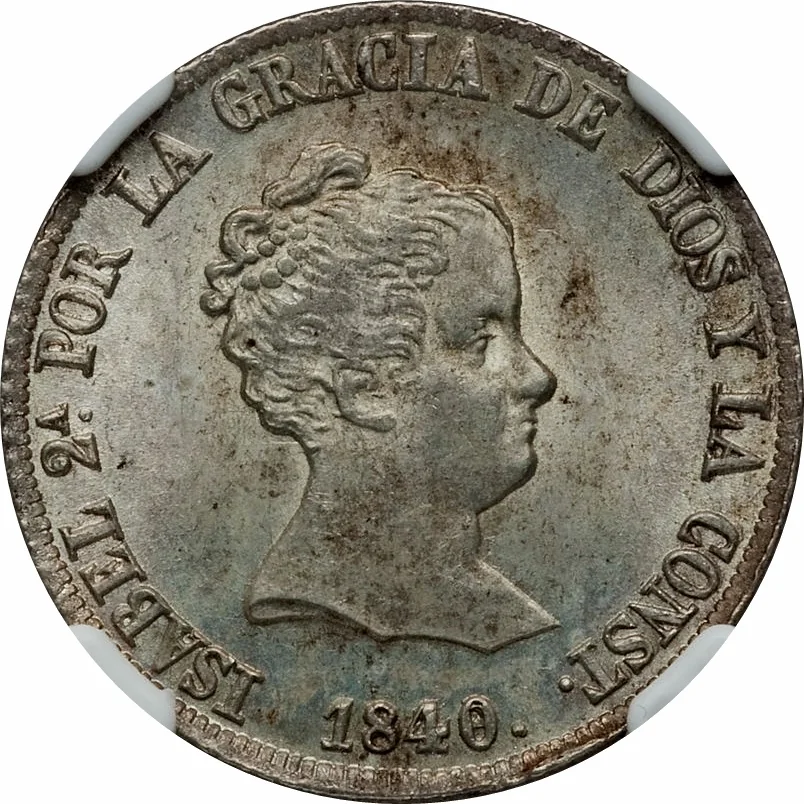
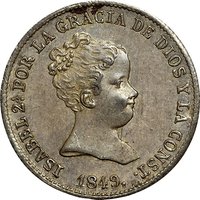
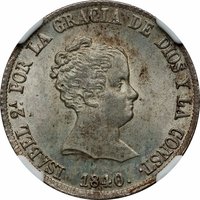
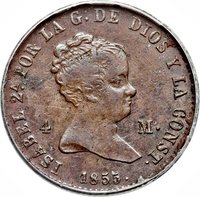
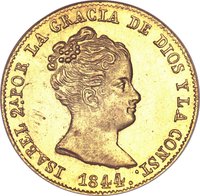
Obverse
Description:
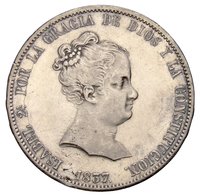
Queen Isabella II facing right.
Inscription:
ISABEL 2A. POR LA GRACIA DE DIOS Y LA CONST ·
1845.
1845.
Translation:
Isabel 2nd, by the grace of God and the Constitution.
1845.
1845.
Script: Latin
Language: Spanish
Engraver: Mariano González de Sepúlveda Salazar
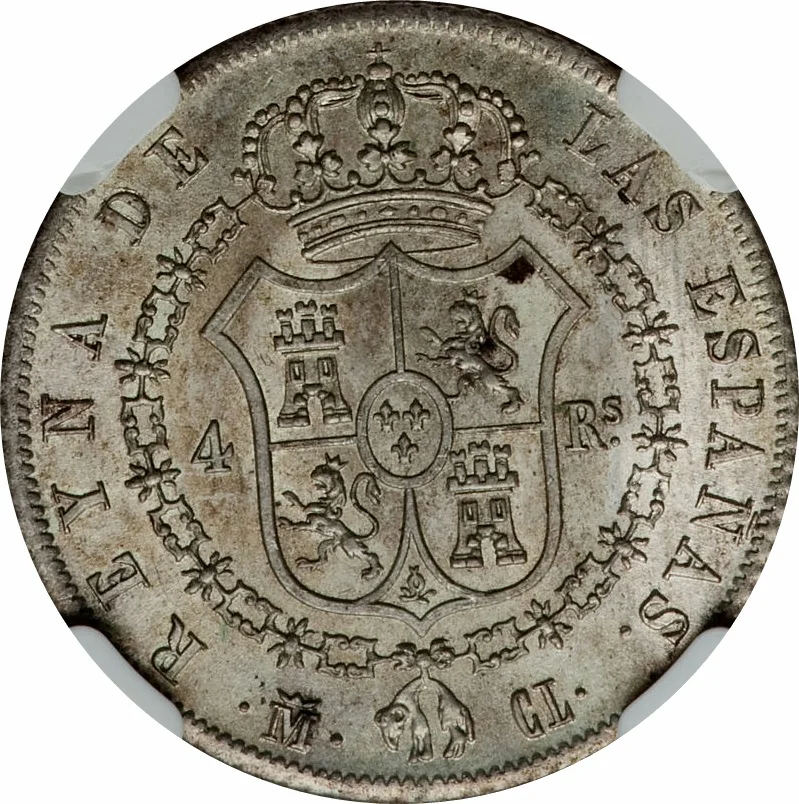
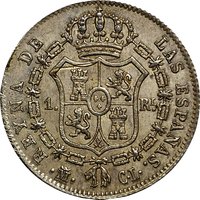
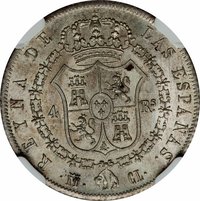
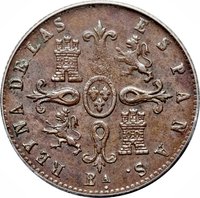
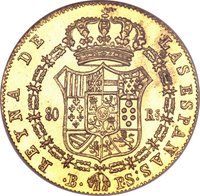
Reverse
Description:
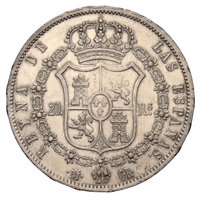
Crowned Spanish coat of arms with the Golden Fleece.
Inscription:
REYNA DE LAS ESPAÑAS.
4 RS.
· M · CL ·
4 RS.
· M · CL ·
Translation:
Queen of the Spains.
4 Reales.
· M · CL ·
4 Reales.
· M · CL ·
Script: Latin
Language: Spanish
Engraver: Mariano González de Sepúlveda Salazar
Edge
Categories
| Symbols> Coat of Arms |
Mints
| Name | Mark |
|---|---|
| Barcelona Mint / La Seca | (B) |
| Royal Mint of Madrid | (M) |
| Royal Mint of Seville | S |
Mintings
| Year | Mint Mark | Mintage | Quality | Collection |
|---|---|---|---|---|
| 1837 | MCR | — | ||
| 1837 | SDR | — | ||
| 1838 | MCL | — | ||
| 1838 | SDR | — | ||
| 1838 | SRD | — | ||
| 1839 | BPS | — | ||
| 1839 | MCL | — | ||
| 1839 | SRD | — | ||
| 1840 | MCL | — | ||
| 1840 | SRD | — | ||
| 1840 | BPS | — | ||
| 1841 | BPS | — | ||
| 1841 | MCL | — | ||
| 1841 | SRD | — | ||
| 1842 | BCC | — | BU | |
| 1842 | SRD | — | ||
| 1842 | BCC | — | ||
| 1842 | MCL | — | ||
| 1843 | BCC | — | ||
| 1843 | SRD | — | ||
| 1844 | BPS | — | ||
| 1844 | MCL | — | ||
| 1844 | SRD | — | ||
| 1845 | SRD | — | ||
| 1845 | BPS | — | ||
| 1845 | MCL | — | ||
| 1846 | BPS | — | ||
| 1847 | BPS | — | ||
| 1848 | MCL | — | ||
| 1848 | MDG | — | ||
| 1849 | MCL | — |
Historical background
In 1837, Spain was in the midst of a profound monetary crisis, a direct consequence of the First Carlist War (1833-1839). The conflict between the liberal government of Queen Isabella II and the traditionalist Carlists had drained the state treasury, leading to desperate fiscal measures. To finance the war, the liberal government in Madrid resorted to issuing vast quantities of paper money, known as vales reales (royal bonds) and other debt instruments, which circulated as a de facto currency. This uncontrolled expansion of the money supply, without sufficient metallic backing, led to severe inflation and a collapse in public confidence, creating a chaotic system where paper notes traded at a steep and volatile discount to silver.
The situation was further complicated by a fragmented and archaic monetary system inherited from the past. In practice, Spain operated on a bimetallic standard, but the official coinage in silver (real) and gold (escudo) was scarce, having been hoarded or exported due to the instability. Consequently, a bewildering variety of monetary instruments circulated simultaneously: devalued government paper, worn and clipped coins from earlier reigns, and even tokens issued by private banks and regional authorities. This lack of a uniform, trusted currency severely hampered commerce and economic recovery, as the value of money could differ drastically from one town to the next.
The year 1837 itself was a pivotal point in addressing this chaos. The government, recognizing the untenable situation, took a significant step by authorizing the issuance of a new silver coinage. These coins, minted with the portrait of the young Isabella II, were intended to restore confidence by providing a stable, tangible currency. While this did not immediately end the crisis—the war raged on and paper money continued to depreciate—it marked the beginning of a long and difficult process of monetary reform that would eventually lead to the creation of the modern Spanish peseta in 1868, establishing a unified national currency.
The situation was further complicated by a fragmented and archaic monetary system inherited from the past. In practice, Spain operated on a bimetallic standard, but the official coinage in silver (real) and gold (escudo) was scarce, having been hoarded or exported due to the instability. Consequently, a bewildering variety of monetary instruments circulated simultaneously: devalued government paper, worn and clipped coins from earlier reigns, and even tokens issued by private banks and regional authorities. This lack of a uniform, trusted currency severely hampered commerce and economic recovery, as the value of money could differ drastically from one town to the next.
The year 1837 itself was a pivotal point in addressing this chaos. The government, recognizing the untenable situation, took a significant step by authorizing the issuance of a new silver coinage. These coins, minted with the portrait of the young Isabella II, were intended to restore confidence by providing a stable, tangible currency. While this did not immediately end the crisis—the war raged on and paper money continued to depreciate—it marked the beginning of a long and difficult process of monetary reform that would eventually lead to the creation of the modern Spanish peseta in 1868, establishing a unified national currency.
Series: 1837 Spain circulation coins
🌟 Uncommon