Logo Title
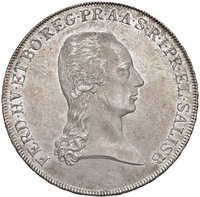
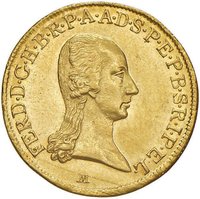
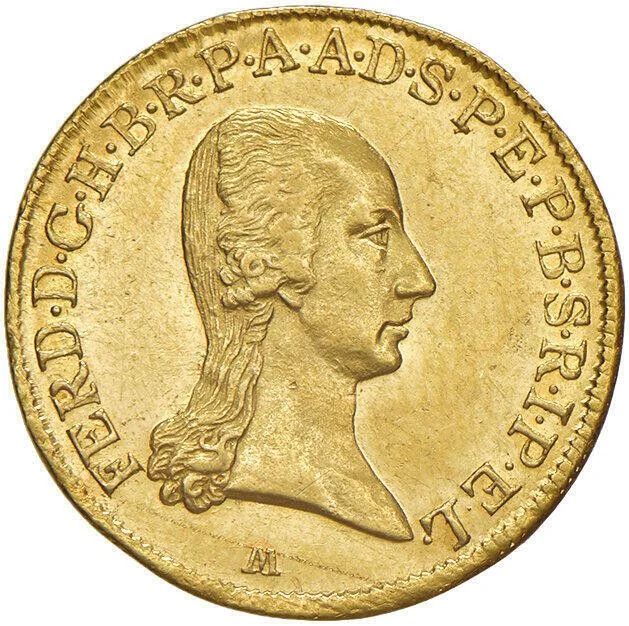
obverse
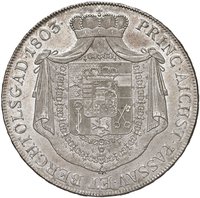
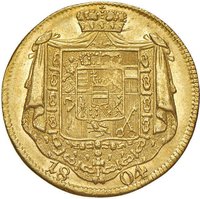
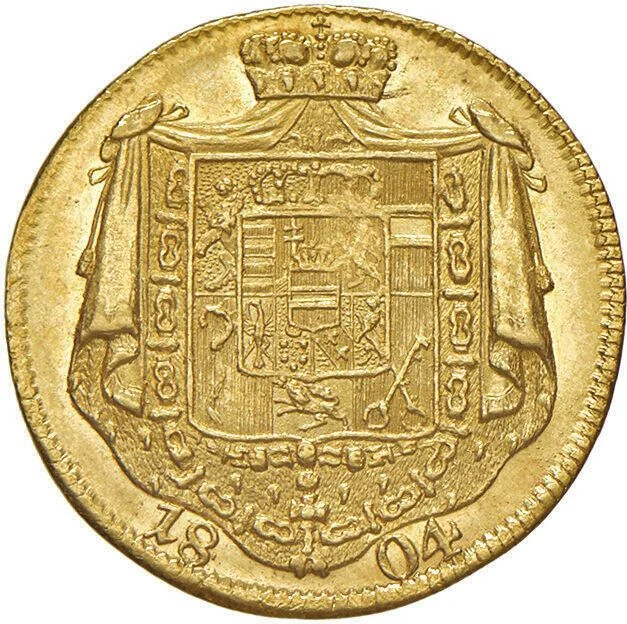
reverse
Auktionen Frühwald
Context
Years: 1803–1804
Currency:
Demonetized: Yes
Material
Diameter: 20 mm
Weight: 3.5 g
Gold weight: 3.45 g
Shape: Round
Composition: 98.6% Gold
Magnetic: No
Technique: Milled
References
KM: #Click to copy to clipboard487
Numista: #85213
Value
Bullion value: $572.04

Obverse

Description:
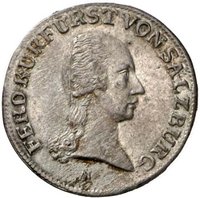
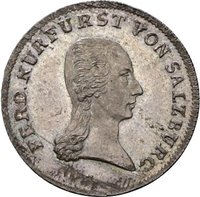
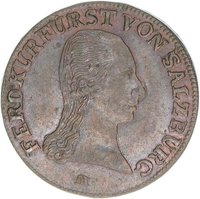
Right-facing portrait of Ferdinand of Habsburg (Ferdinand III, Grand Duke of Tuscany) with surrounding legend.
Inscription:
FERD D G H B R P A A D S P E P B S R I P EL
Translation:
FERD[inandus] D[ei] G[ratia] H[ungariae] B[ohemiaeque] R[ex] P[rinceps] A[rchidux] A[ustriae] D[ux] S[tyriae] P[ortorae] E[t] P[annoniae] B[urgravius] S[ilesiae] R[egni] I[taliae] P[rinceps] EL[ector]
Script: Latin
Language: Latin
Engraver: Mazentopf

Reverse

Description:
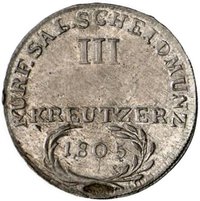
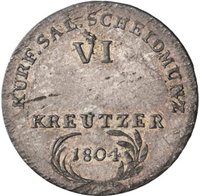
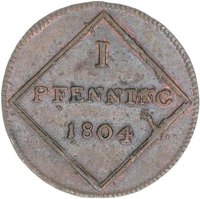
Crowned arms on an escutcheon, date divided below.
Inscription:
18 04
Script: Latin

Edge

Mintings

YearMint MarkMintageQualityCollection
1803M
1804M

Historical background

In 1803, the currency situation in the Bishopric of Salzburg was one of transition and uncertainty, directly tied to its dramatic political upheaval. For centuries, Salzburg had been an independent ecclesiastical principality within the Holy Roman Empire, minting its own coins (such as the Salzburg Gulden and Kreuzer) and managing its monetary affairs. However, the geopolitical forces of the Napoleonic Wars, specifically the German Mediatisation of 1803, secularized the bishopric. It was transformed into the short-lived Electorate of Salzburg under the former Grand Duke Ferdinand III of Tuscany, ending over a thousand years of rule by prince-archbishops and throwing its established currency system into question.

The new political reality immediately created a complex monetary landscape. While the existing Salzburg coinage remained in circulation, the territory was now part of a broader Habsburg sphere of influence. This introduced Austrian currency (Gulden and Kreuzer) into the economy, leading to a period of concurrent circulation. The stability and value of the local coinage became dependent on the policies of the new secular ruler and, more importantly, on the overarching authority of Vienna, as Salzburg's fate was increasingly dictated by the larger conflict between Austria and France.

This ambiguous situation was resolved swiftly and decisively by further political change. In 1805, following the Austrian defeat at Austerlitz and the Peace of Pressburg, Salzburg was annexed by the Austrian Empire. By 1806, the formal integration led to the complete cessation of local minting and the full replacement of the Salzburg currency with the standardized Austrian monetary system. Thus, the distinctive currency of the Bishopric of Salzburg, a symbol of its historic independence, was extinguished within three years of the secularization decree, absorbed into the imperial finances of the Habsburg Monarchy.

Series: 1803 Bishopric of Salzburg circulation coins

3 Kreuzer obverse
3 Kreuzer reverse
3 Kreuzer
1803-1805
6 Kreuzers obverse
6 Kreuzers reverse
6 Kreuzers
1803-1805
1 Thaler - 1 Guldiner obverse
1 Thaler - 1 Guldiner reverse
1 Thaler - 1 Guldiner
1803
1 Ducat obverse
1 Ducat reverse
1 Ducat
1803-1804
Legendary