

1 Lilangeni – Kingdom of Swaziland
Eswatini
Context

Material
Diameter: 20 mm
Weight: 4 g
Thickness: 1.98 mm
Shape: Round
Composition: Aluminium bronze
Magnetic: No
Technique: Milled
Alignment: Medal alignment
flip
References
KM: #Click to copy to clipboard66
Numista: #85199
Value
Exchange value: 1 SZL
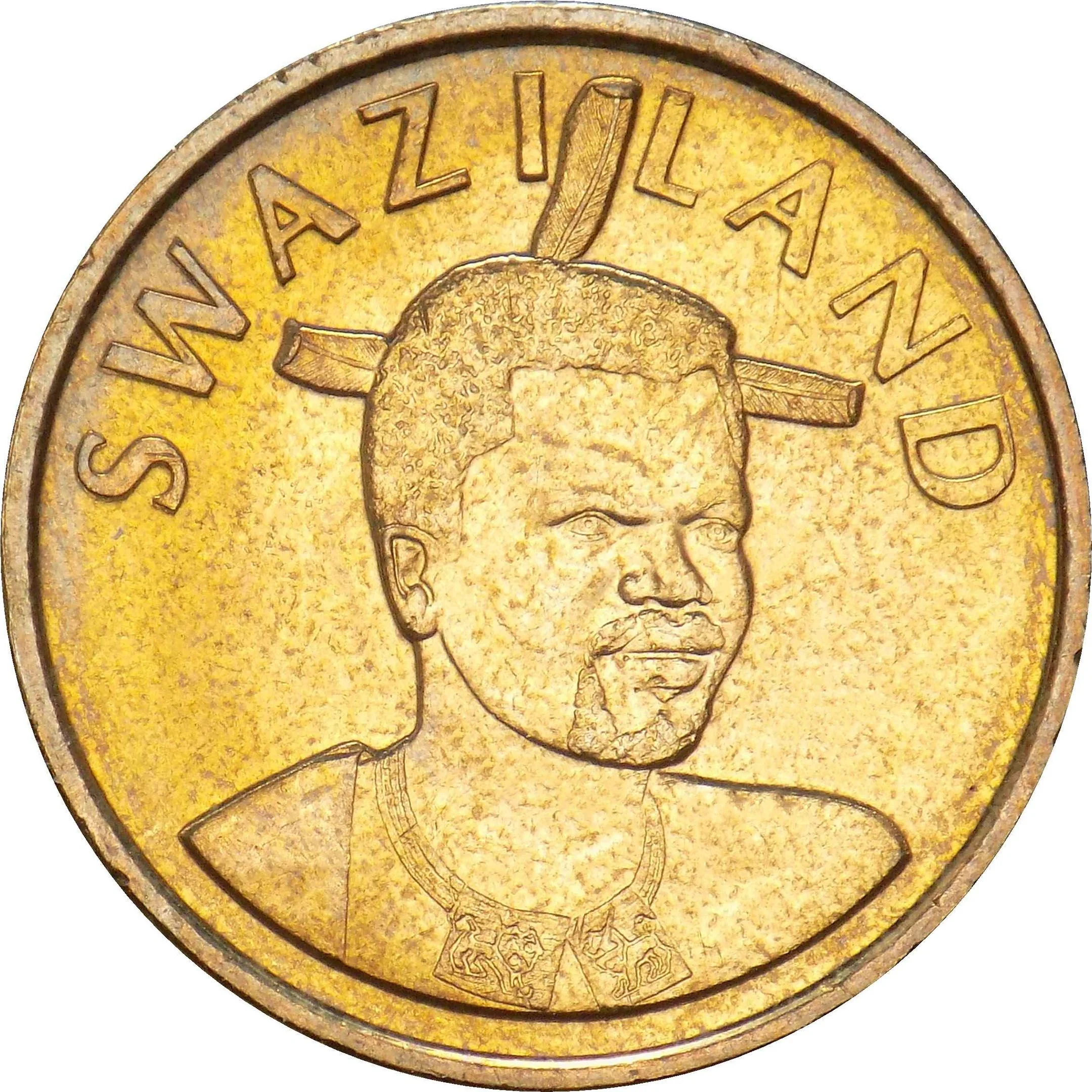
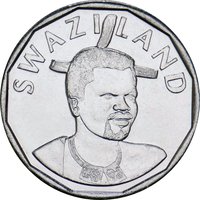
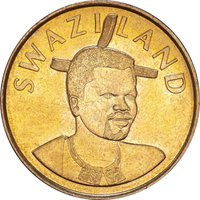
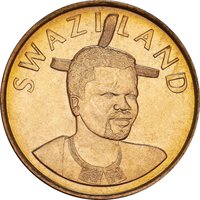
Obverse
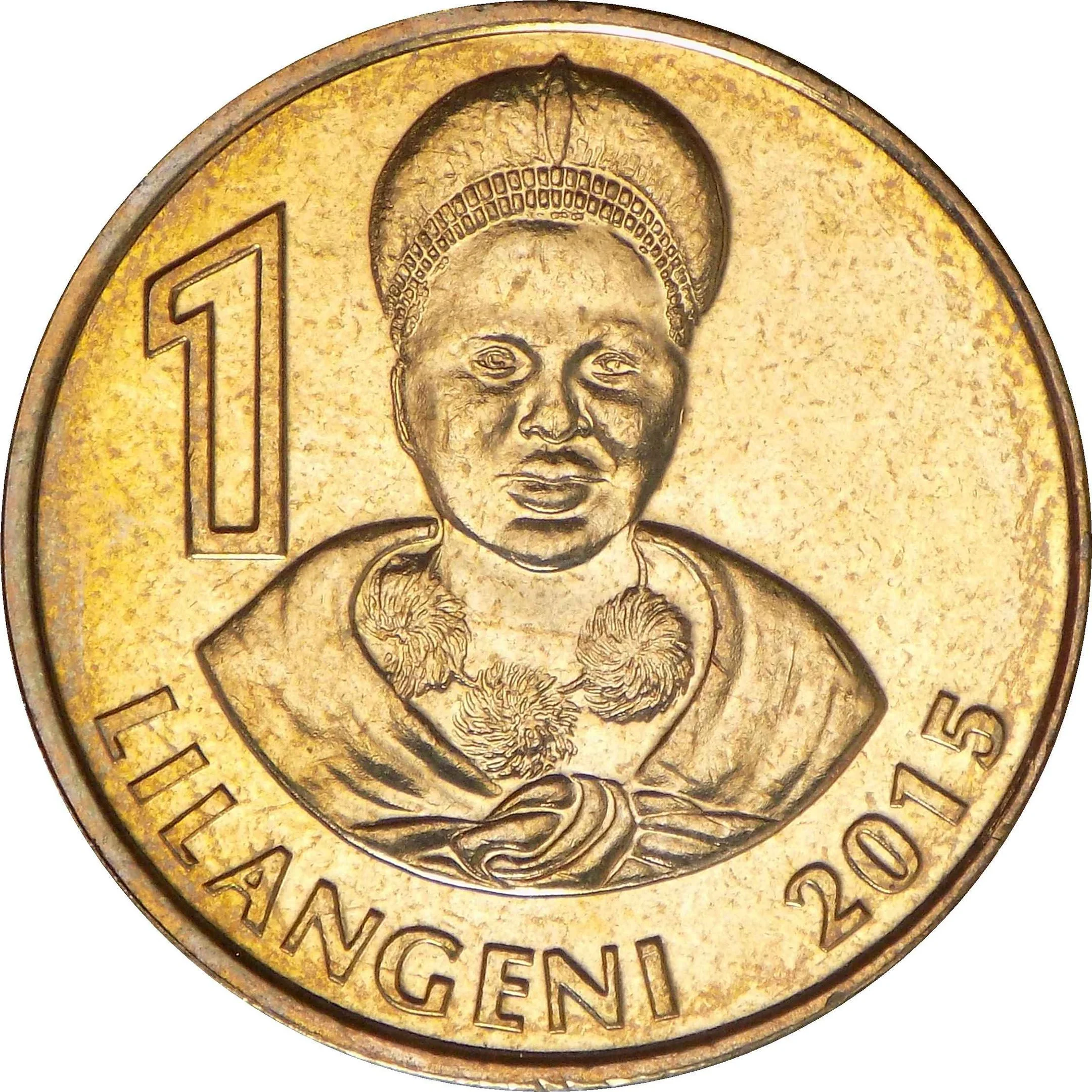
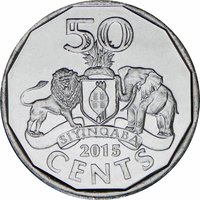
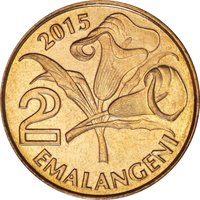
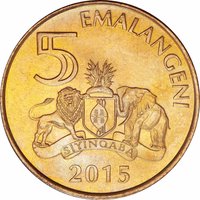
Reverse
Description:
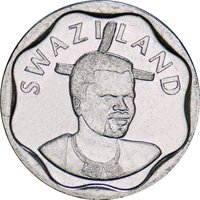
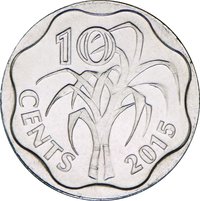
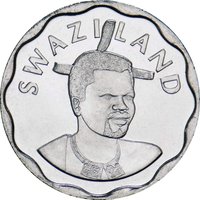
Ntfombi, Ndlovukati of Swaziland, date and value.
Inscription:
1
LILANGENI 2015
LILANGENI 2015
Script: Latin
Edge
Reeded
Mintings
| Year | Mint Mark | Mintage | Quality | Collection |
|---|---|---|---|---|
| 2015 | — | — |
Historical background
In 2015, the Kingdom of Swaziland (which would rename itself Eswatini in 2018) operated within the Common Monetary Area (CMA) with South Africa, Lesotho, and Namibia. This arrangement meant the country's currency, the Swazi lilangeni (SZL), was pegged at par to the South African rand (ZAR), which also circulated as legal tender within the country. This peg provided monetary stability and facilitated seamless trade with its largest economic partner, South Africa, but it also meant Swaziland effectively ceded control of its monetary policy to the South African Reserve Bank.
The year was marked by significant economic pressure stemming from a sharp decline in Southern African Customs Union (SACU) revenue, which accounted for a substantial portion of government income. This revenue shock, estimated at nearly a 30% drop, strained public finances and led to budget deficits, forcing the government to draw down reserves and seek external financing. Consequently, while the currency peg itself remained stable, the broader economic situation raised concerns about foreign exchange reserves and the country's ability to maintain the peg without painful fiscal adjustments.
Despite these fiscal challenges, the lilangeni's peg to the rand held firm throughout 2015. However, the rand itself experienced considerable volatility, depreciating significantly against major currencies like the US dollar due to slowing growth in China, domestic political concerns in South Africa, and broader emerging market pressures. Therefore, while the exchange rate mechanism was stable, Swaziland imported both the stability and the weakness of the rand, which increased the cost of imports and contributed to inflationary pressures within the kingdom, compounding its fiscal difficulties.
The year was marked by significant economic pressure stemming from a sharp decline in Southern African Customs Union (SACU) revenue, which accounted for a substantial portion of government income. This revenue shock, estimated at nearly a 30% drop, strained public finances and led to budget deficits, forcing the government to draw down reserves and seek external financing. Consequently, while the currency peg itself remained stable, the broader economic situation raised concerns about foreign exchange reserves and the country's ability to maintain the peg without painful fiscal adjustments.
Despite these fiscal challenges, the lilangeni's peg to the rand held firm throughout 2015. However, the rand itself experienced considerable volatility, depreciating significantly against major currencies like the US dollar due to slowing growth in China, domestic political concerns in South Africa, and broader emerging market pressures. Therefore, while the exchange rate mechanism was stable, Swaziland imported both the stability and the weakness of the rand, which increased the cost of imports and contributed to inflationary pressures within the kingdom, compounding its fiscal difficulties.
🌱 Common