

10 centavos – Honduras
Add to wishlist
Honduras
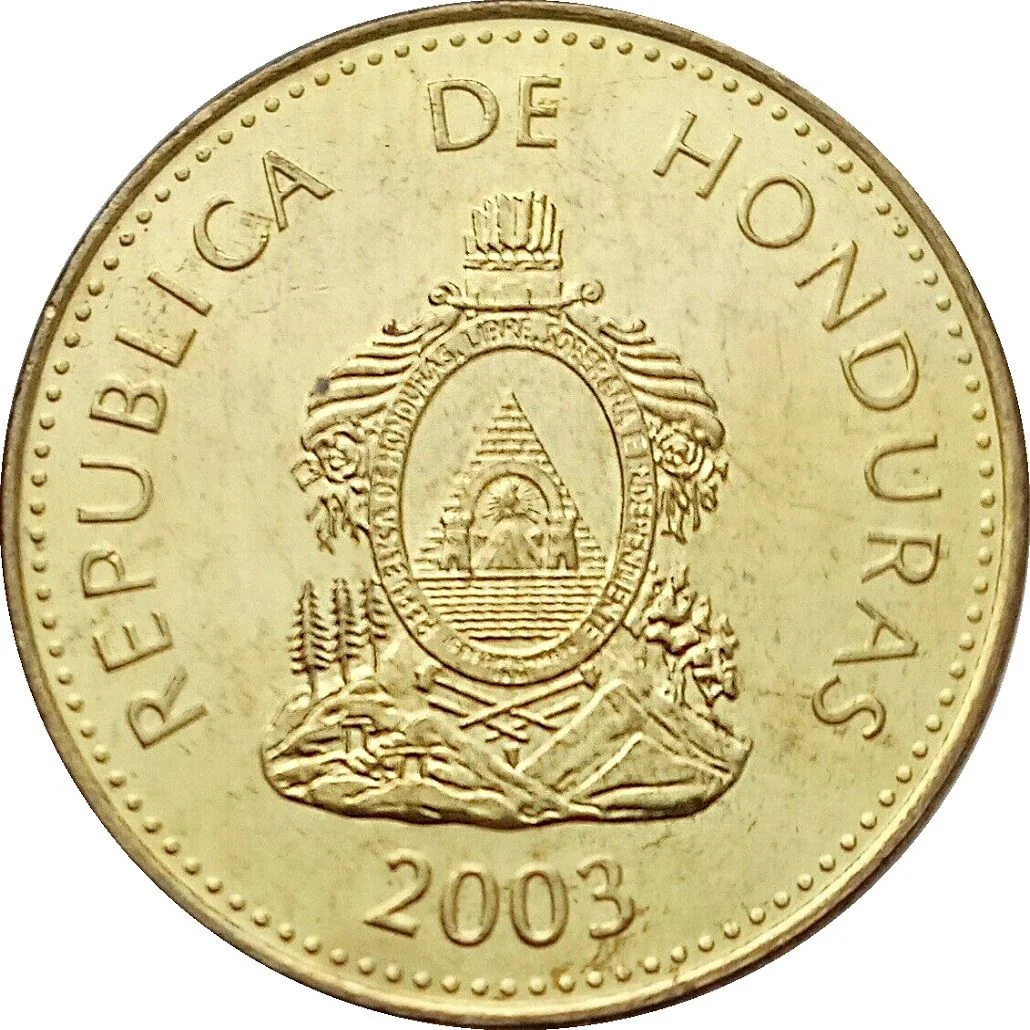
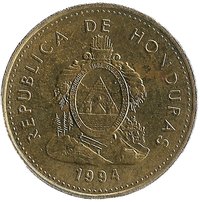
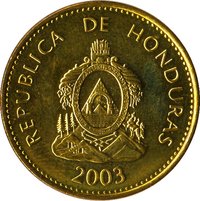
Obverse
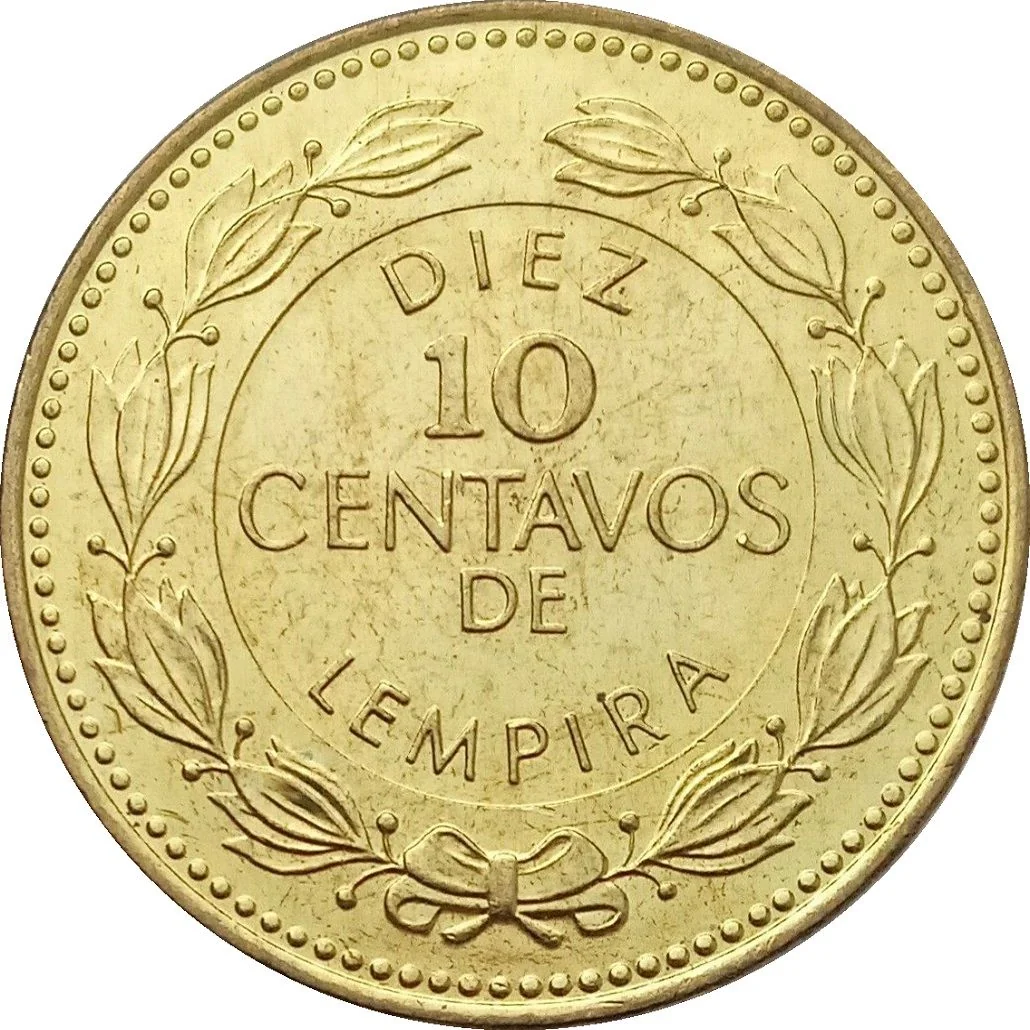
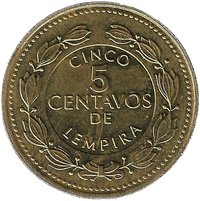
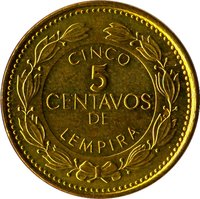
Reverse
Edge
Plain
Categories
| Symbols> Coat of Arms |
| Symbol> Wreath |
Mintings
| Year | Mint Mark | Mintage | Quality | Collection |
|---|---|---|---|---|
| 1993 | — | 21,000,000 | ||
| 1994 | — | 10,000,000 | ||
| 1995 | — | — | ||
| 1998 | — | 20,000,000 | ||
| 1999 | — | 30,000,000 | ||
| 2002 | — | 25,000,000 | ||
| 2003 | — | 15,000,000 | ||
| 2005 | — | 25,000,000 | ||
| 2006 | — | — | ||
| 2007 | — | — |
Historical background
In 1993, Honduras was navigating a complex currency situation characterized by a dual exchange rate system and the lingering effects of macroeconomic instability. The official currency, the lempira, was pegged to the US dollar at a fixed rate of 2 lempiras per dollar, a parity maintained by the Central Bank of Honduras (BCH). However, alongside this official rate existed a parallel, free-market rate where the lempira traded at a significant discount, reflecting market pressures and limited confidence. This disparity created distortions, encouraged capital flight, and provided opportunities for arbitrage, undermining efficient economic planning.
The roots of this instability lay in the preceding decade's economic crises, including the fallout from regional conflict and a heavy debt burden. While structural adjustment programs, initiated in 1990 under President Rafael Leonardo Callejas, aimed to stabilize the economy, they involved austerity measures that contributed to social hardship. A key objective of these reforms was to unify the dual exchange rate system, a move strongly advocated by international financial institutions like the International Monetary Fund (IMF) and the World Bank as a prerequisite for greater monetary stability and economic liberalization.
Therefore, 1993 represented a transitional year on the path toward currency reform. The government was under increasing pressure to dismantle the unsustainable dual system and allow the lempira to float more freely according to market forces. This set the stage for the significant monetary policy shift that would follow in 1994, when the lempira was devalued and a crawling peg system was adopted, effectively unifying the rates and beginning a new chapter in Honduras's monetary policy aimed at achieving greater fiscal and exchange rate discipline.
The roots of this instability lay in the preceding decade's economic crises, including the fallout from regional conflict and a heavy debt burden. While structural adjustment programs, initiated in 1990 under President Rafael Leonardo Callejas, aimed to stabilize the economy, they involved austerity measures that contributed to social hardship. A key objective of these reforms was to unify the dual exchange rate system, a move strongly advocated by international financial institutions like the International Monetary Fund (IMF) and the World Bank as a prerequisite for greater monetary stability and economic liberalization.
Therefore, 1993 represented a transitional year on the path toward currency reform. The government was under increasing pressure to dismantle the unsustainable dual system and allow the lempira to float more freely according to market forces. This set the stage for the significant monetary policy shift that would follow in 1994, when the lempira was devalued and a crawling peg system was adopted, effectively unifying the rates and beginning a new chapter in Honduras's monetary policy aimed at achieving greater fiscal and exchange rate discipline.
🌱 Very Common