

1 shilling – United Kingdom
Add to wishlist
United Kingdom
Context
Years: 1816–1820
Issuer: United Kingdom
Ruler: George III
Currency:
(1158—1970)
Demonetized: Yes
Total mintage: 66,084,200
Material
References
KM: #
Numista: #8476
Value
Bullion value: $13.07
Obverse
Description:
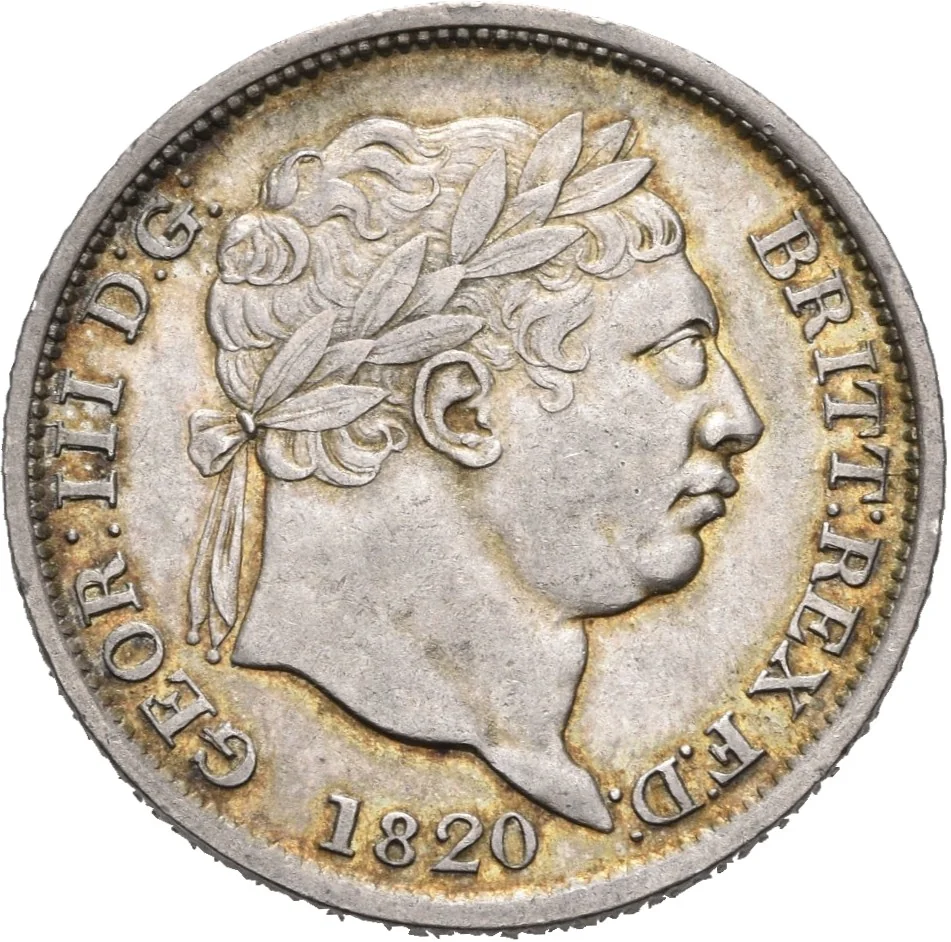
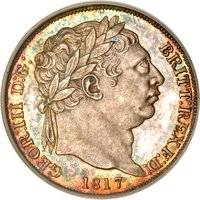
King George III portrait right, legend around, date below.
Inscription:
GEOR:III D:G: BRITT:REX F:D:
1816
1816
Translation:
George the Third, by the Grace of God, King of Britain, Defender of the Faith.
1816
1816
Script: Latin
Language: Latin
Engraver: Benedetto Pistrucci
Reverse
Description:
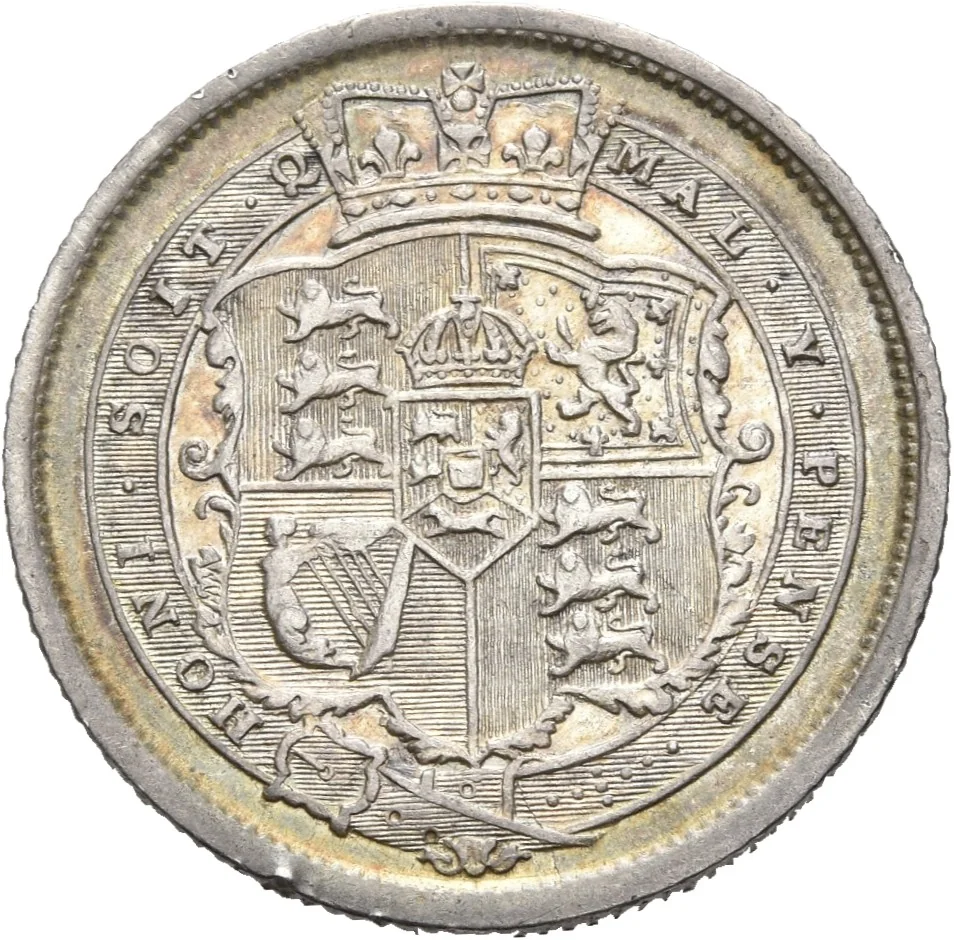
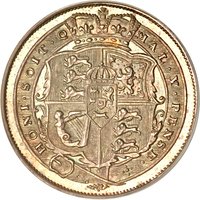
Crowned royal shield within the Garter, overlaid with a smaller crowned shield.
Inscription:
HONI·SOIT·Q MAL·Y·PENSE·
Translation:
Shamed be he who thinks ill of it.
Script: Latin
Language: French
Engraver: Thomas Wyon the Younger
Edge
Reeded
Mints
| Name | Mark |
|---|---|
| Royal Mint (Tower Hill) | — |
Mintings
| Year | Mint Mark | Mintage | Quality | Collection |
|---|---|---|---|---|
| 1816 | — | 26,139,900 | ||
| 1816 | — | — | Proof | |
| 1817 | — | 23,031,300 | ||
| 1817 | — | — | Proof | |
| 1818 | — | 1,342,400 | ||
| 1819 | — | 7,595,200 | ||
| 1820 | — | 7,975,400 | ||
| 1820 | — | — | Proof |
Historical background
In 1816, the United Kingdom stood at a monetary crossroads, emerging from the prolonged financial strain of the Napoleonic Wars. The conflict had forced the government to suspend the convertibility of Bank of England notes into gold in 1797, leading to a period of "paper money" where the pound's value was not anchored to a tangible asset. This era saw significant inflation and currency instability, with gold coins circulating at a premium over their face value in paper. The post-war economy was burdened by massive debt and a sharp economic downturn, creating intense debate about how to restore financial confidence and stability as the nation transitioned to peace.
The pivotal parliamentary decision came with the Coinage Act of 1816, which formally placed Britain on a gold standard. This legislation demonetised silver, making it a mere token currency for small transactions, and established gold as the sole standard of value. The centrepiece was the introduction of a new gold coin, the sovereign, valued at one pound sterling and containing 113 grains of pure gold. Crucially, the Bank of England was obliged to redeem its notes for gold bullion upon demand, a full resumption that would take effect in 1821. This move was designed to impose discipline on the money supply and ensure the pound's value was fixed and internationally trustworthy.
The 1816 reforms were a deliberate act of economic statecraft with profound long-term consequences. By choosing gold, Britain aimed to attract foreign investment, facilitate its growing international trade, and cement London's emerging role as the world's financial centre. The stable and credible gold standard provided a foundation for the century of global economic expansion that followed. However, the immediate transition also brought deflationary pressure and hardship, particularly for debtors, setting the stage for ongoing social and political debates about the balance between monetary rigidity and economic vitality throughout the 19th century.
The pivotal parliamentary decision came with the Coinage Act of 1816, which formally placed Britain on a gold standard. This legislation demonetised silver, making it a mere token currency for small transactions, and established gold as the sole standard of value. The centrepiece was the introduction of a new gold coin, the sovereign, valued at one pound sterling and containing 113 grains of pure gold. Crucially, the Bank of England was obliged to redeem its notes for gold bullion upon demand, a full resumption that would take effect in 1821. This move was designed to impose discipline on the money supply and ensure the pound's value was fixed and internationally trustworthy.
The 1816 reforms were a deliberate act of economic statecraft with profound long-term consequences. By choosing gold, Britain aimed to attract foreign investment, facilitate its growing international trade, and cement London's emerging role as the world's financial centre. The stable and credible gold standard provided a foundation for the century of global economic expansion that followed. However, the immediate transition also brought deflationary pressure and hardship, particularly for debtors, setting the stage for ongoing social and political debates about the balance between monetary rigidity and economic vitality throughout the 19th century.
🌱 Common