

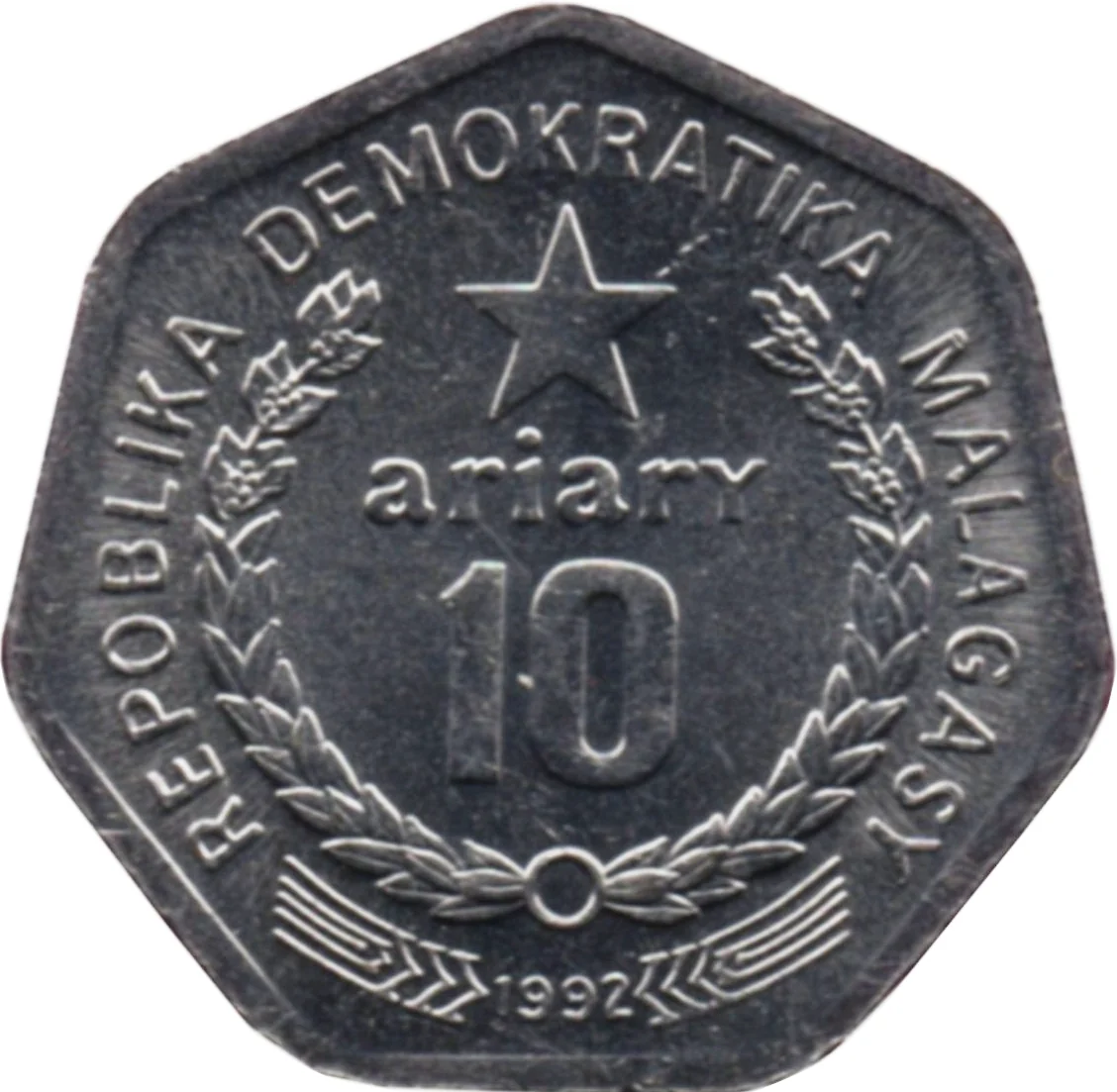
10 ariary – Madagascar
Add to wishlist
Madagascar
Context
Material
Diameter: 23.5 mm
Weight: 6.47 g
Shape: Heptagonal
Composition: Stainless steel
Technique: Milled
Alignment: Coin alignment
flip
References
KM: #
Numista: #8462
Value
Exchange value: 10 MGF
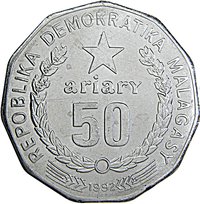
Obverse
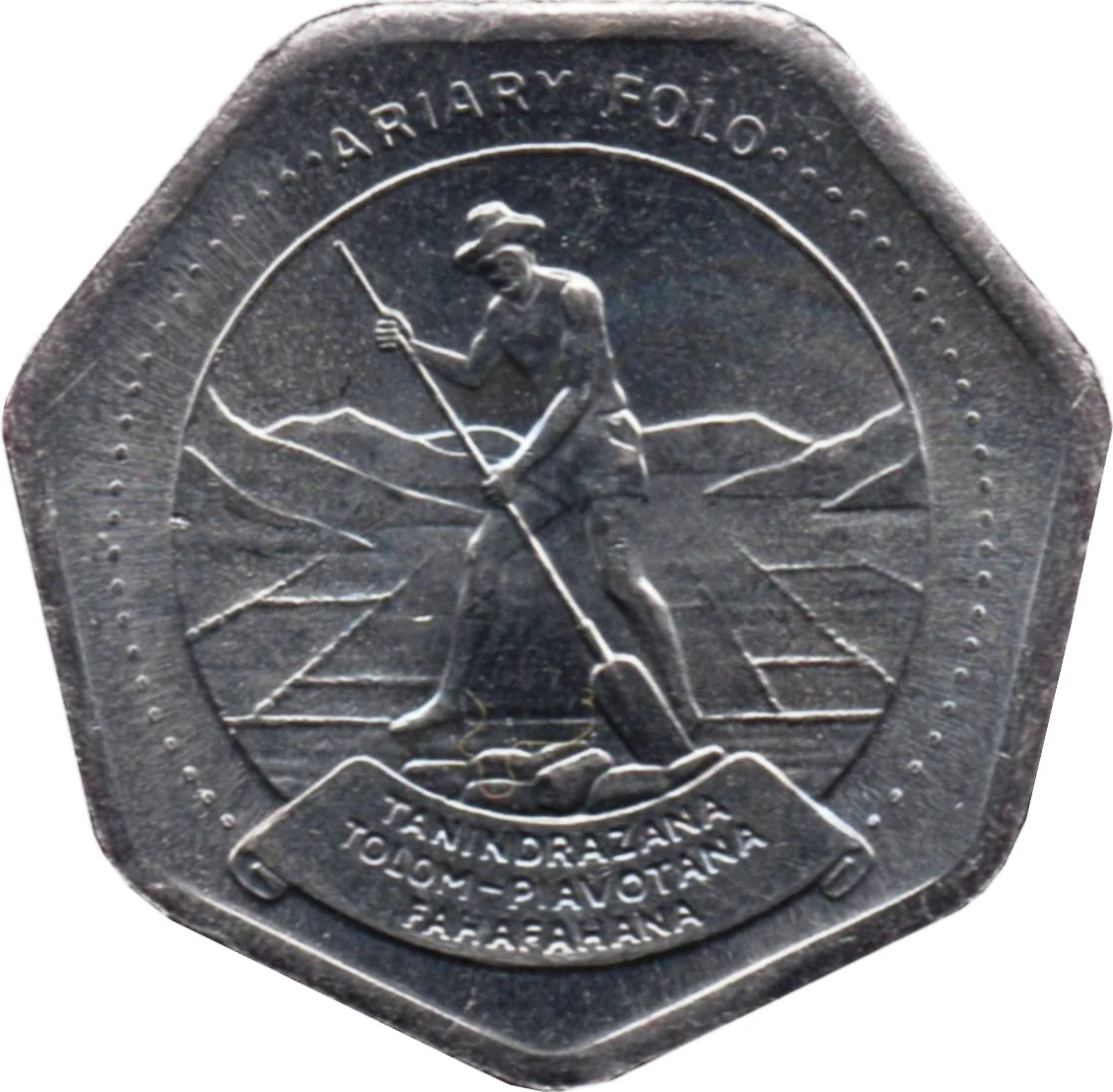
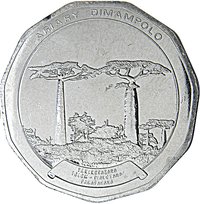
Reverse
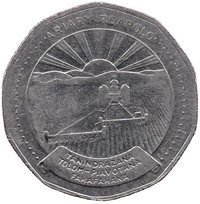
Description:
Peat cutter in a bog.
Inscription:
ARIARY FOLO
TANINDRAZANA
TOLOM - PIAVOTANA
FAHAFAHANA
TANINDRAZANA
TOLOM - PIAVOTANA
FAHAFAHANA
Translation:
Homeland
Justice - Development
Liberty
Justice - Development
Liberty
Script: Latin
Language: Malagasy
Engraver: Michael Hibbit
Edge
Plain
Categories
| Agriculture |
| Organization> FAO |
Mints
| Name | Mark |
|---|---|
| Royal Canadian Mint of Winnipeg | — |
Mintings
| Year | Mint Mark | Mintage | Quality | Collection |
|---|---|---|---|---|
| 1992 | — | — |
Historical background
In 1992, Madagascar's currency situation was characterized by severe instability and devaluation, deeply intertwined with a profound political and economic crisis. The year marked the transition from the 17-year socialist-Marxist rule of Didier Ratsiraka to a new democratic Third Republic, a process fraught with instability including a general strike and near-civil war conditions. This political turmoil exacerbated long-standing economic weaknesses, including a large fiscal deficit, collapsing public services, and a heavily controlled economy, all of which placed intense pressure on the national currency, the Malagasy franc (FMG).
The government, facing empty coffers and unable to finance its deficits through domestic borrowing, resorted to monetizing the debt—printing money to pay its bills. This led to rampant inflation, which eroded the currency's value and fueled a thriving black market for foreign exchange, particularly US dollars and French francs. The official exchange rate, set by the Central Bank, became increasingly divorced from reality, creating a vast disparity with the parallel market rate. This distortion crippled formal trade and investment, as the overvalued official currency made exports uncompetitive and encouraged capital flight.
Consequently, 1992 was a pivotal year that laid bare the unsustainable nature of Madagascar's financial system. The currency instability was both a symptom and a cause of the broader collapse, forcing the new transitional government and international donors like the IMF to prioritize monetary reform. The groundwork was being laid for the significant devaluations and structural adjustment programs that would follow in the mid-1990s, aiming to unify exchange rates, curb inflation, and stabilize the FMG as part of a shift toward a market economy.
The government, facing empty coffers and unable to finance its deficits through domestic borrowing, resorted to monetizing the debt—printing money to pay its bills. This led to rampant inflation, which eroded the currency's value and fueled a thriving black market for foreign exchange, particularly US dollars and French francs. The official exchange rate, set by the Central Bank, became increasingly divorced from reality, creating a vast disparity with the parallel market rate. This distortion crippled formal trade and investment, as the overvalued official currency made exports uncompetitive and encouraged capital flight.
Consequently, 1992 was a pivotal year that laid bare the unsustainable nature of Madagascar's financial system. The currency instability was both a symptom and a cause of the broader collapse, forcing the new transitional government and international donors like the IMF to prioritize monetary reform. The groundwork was being laid for the significant devaluations and structural adjustment programs that would follow in the mid-1990s, aiming to unify exchange rates, curb inflation, and stabilize the FMG as part of a shift toward a market economy.
🌱 Common