

1 Tambala – Malawi
Malawi
Context
Years: 1971–1982
Issuer: Malawi 
Period:
(since 1966)
Ruler: Hastings Kamuzu Banda
Currency:
(since 1971)
Demonetized: Yes
Total mintage: 82,504,000
Material
References
KM: #Click to copy to clipboard7
Numista: #8453
Value
Exchange value: 0.01 MWK
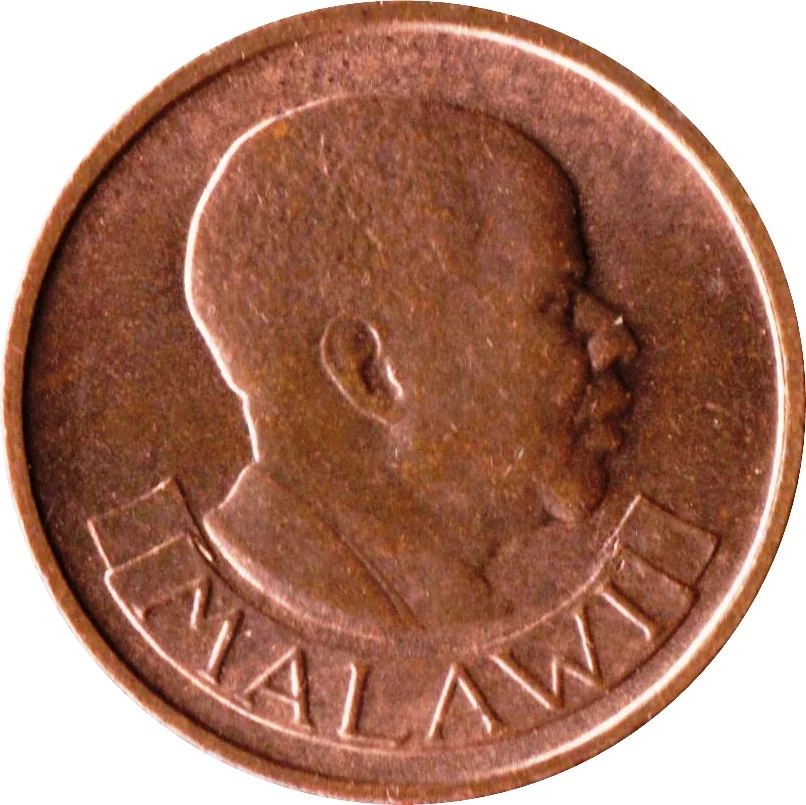
Obverse
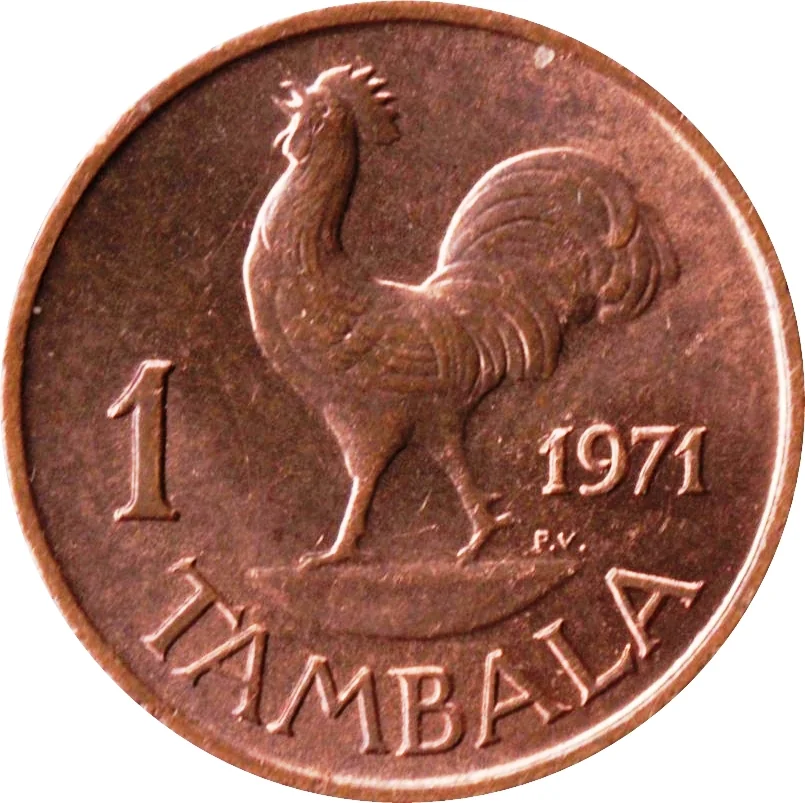
Reverse
Description:
Crowing barnyard bird.
Inscription:
1 1971
P.V.
TAMBALA
P.V.
TAMBALA
Script: Latin
Designer: Paul Vincze
Edge
Plain
Categories
| Animal> Bird |
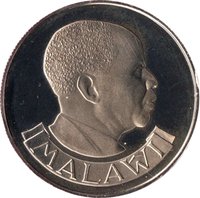
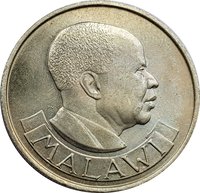
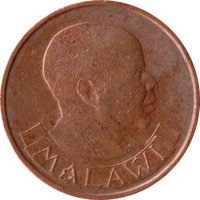
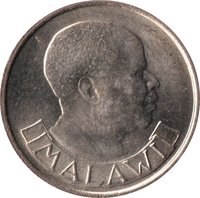
| Person> Politician |
Mints
| Name | Mark |
|---|---|
| Royal Mint (Tower Hill) | — |
| Royal Mint | — |
Mintings
| Year | Mint Mark | Mintage | Quality | Collection |
|---|---|---|---|---|
| 1971 | — | 15,000,000 | ||
| 1971 | — | 4,000 | Proof | |
| 1973 | — | 5,000,000 | ||
| 1974 | — | 12,500,000 | ||
| 1975 | — | 10,000,000 | ||
| 1977 | — | 10,000,000 | ||
| 1979 | — | 15,000,000 | ||
| 1982 | — | 15,000,000 |
Historical background
In 1971, Malawi's currency situation was defined by its recent transition to an independent monetary system. Just five years earlier, in 1966, the country had replaced the Malawi-Rhodesia pound with its own decimal currency, the Malawian pound, ending its reliance on the currency board of the Federation of Rhodesia and Nyasaland. This move was a key symbol of economic sovereignty following political independence in 1964. However, 1971 marked a more significant and lasting reform: the introduction of the Malawian kwacha, which replaced the pound at a rate of two kwacha to one pound. The kwacha was subdivided into 100 tambala, establishing a fully decimalized and distinctly national currency.
This monetary reform occurred under the authoritarian but economically developmentalist rule of President Hastings Kamuzu Banda. The change aligned Malawi with the decimal systems used by its neighbours and most of the world, simplifying trade and financial calculations. The period was characterised by a conservative fiscal policy, with the kwacha initially pegged to a basket of currencies and later to the British pound sterling. This provided a degree of stability, supporting Banda's agenda of agricultural-led growth, particularly in tobacco, tea, and sugar.
Despite this stability, the broader economic context was challenging. Malawi was one of the world's poorest nations, with an economy heavily dependent on volatile commodity exports and vulnerable to external shocks. The currency's value and management were tightly controlled by the government and the Reserve Bank of Malawi, reflecting the highly centralised political control of the Banda regime. Therefore, while the 1971 kwacha introduction represented a mature step in nation-building, it operated within a fragile economic base and a tightly managed political framework that would face significant tests in the coming decades.
This monetary reform occurred under the authoritarian but economically developmentalist rule of President Hastings Kamuzu Banda. The change aligned Malawi with the decimal systems used by its neighbours and most of the world, simplifying trade and financial calculations. The period was characterised by a conservative fiscal policy, with the kwacha initially pegged to a basket of currencies and later to the British pound sterling. This provided a degree of stability, supporting Banda's agenda of agricultural-led growth, particularly in tobacco, tea, and sugar.
Despite this stability, the broader economic context was challenging. Malawi was one of the world's poorest nations, with an economy heavily dependent on volatile commodity exports and vulnerable to external shocks. The currency's value and management were tightly controlled by the government and the Reserve Bank of Malawi, reflecting the highly centralised political control of the Banda regime. Therefore, while the 1971 kwacha introduction represented a mature step in nation-building, it operated within a fragile economic base and a tightly managed political framework that would face significant tests in the coming decades.
Series: 1971 Malawi circulation coins
🌱 Very Common