

100000 zlotys – Poland
Add to wishlist
Poland
Context
Year: 1990
Issuer: Poland
Period:
(since 1989)
Currency:
(1949—1994)
Demonetization: 1 January 1995
Total mintage: 1,000,000
Material
Diameter: 39 mm
Weight: 31.1 g
Silver Weight:: 31.07 g
Thickness: 3 mm
Shape: Round
Composition: 99.9% Silver
Standard: Silver ounce
Magnetic: No
Technique: Milled
Alignment: Medal alignment
flip
References
Y: #
Numista: #8426
Value
Exchange value: 100000 PLZ
Bullion value: $79.39
Inflation-adjusted value: 16087056.00 PLZ
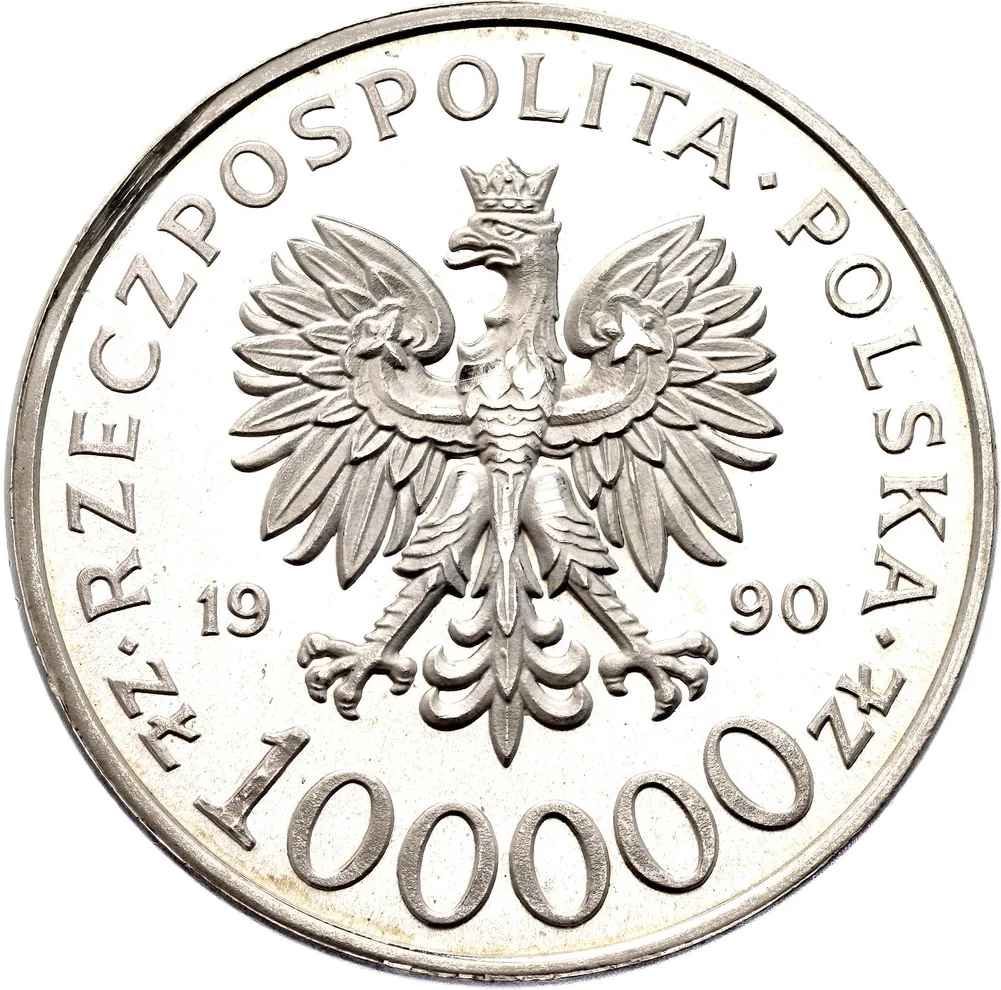
Obverse
Description:
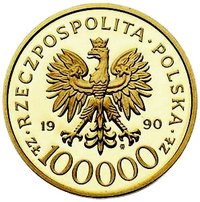
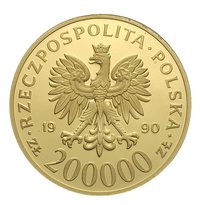
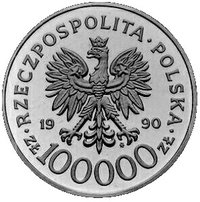
Crowned Polish eagle above value.
Inscription:
· RZECZPOSPOLITA · POLSKA ·
19 90
ZŁ 100000 ZŁ
19 90
ZŁ 100000 ZŁ
Translation:
REPUBLIC OF POLAND
1990
ZŁ 100000 ZŁ
1990
ZŁ 100000 ZŁ
Script: Latin
Language: Polish
Designer: Stanisława Wątróbska-Frindt
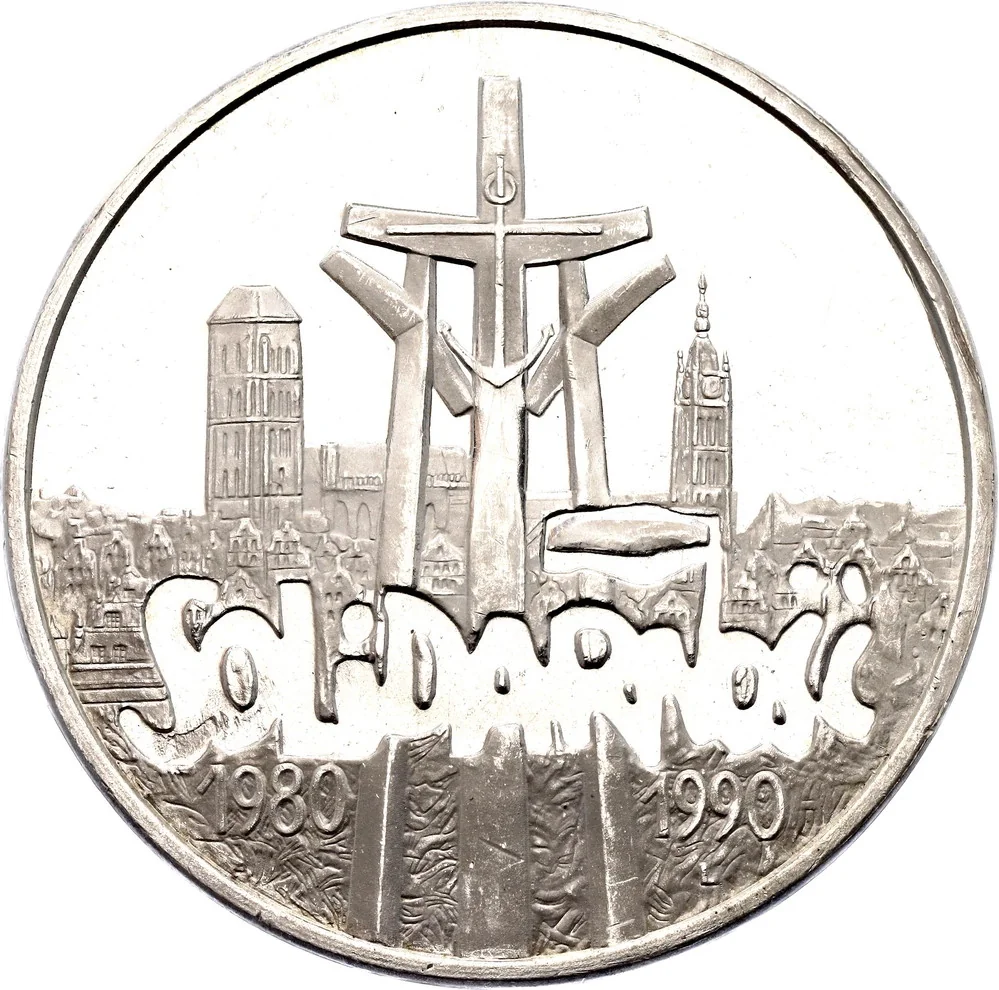
Reverse
Description:
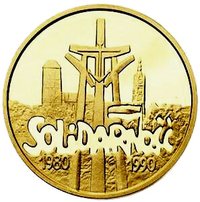
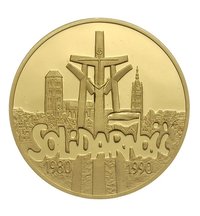
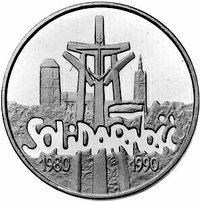
Solidarity monument before Gdańsk's Old Town.
Inscription:
SOLIDARNOŚĆ
1980 1990
L
1980 1990
L
Translation:
Solidarity
1980 1990
L
1980 1990
L
Script: Latin
Language: Polish
Designer: B. Chmielewski
Edge
Plain
Mintings
| Year | Mint Mark | Mintage | Quality | Collection |
|---|---|---|---|---|
| 1990 | — | 500,000 | ||
| 1990 | L | 500,000 |
Historical background
In early 1990, Poland stood at a critical juncture, embarking on a radical economic transformation known as the "Balcerowicz Plan" or "Shock Therapy." The legacy of the communist era was a disastrous monetary situation characterized by hyperinflation, which peaked at over 600% in 1990, severe shortages, a worthless złoty, and a vast monetary overhang where large amounts of savings chased virtually no goods in the state-controlled market. The economy was isolated, with an inconvertible currency and multiple artificial exchange rates, crippling any chance of normal trade or investment.
The core of the January 1, 1990, reforms directly targeted this currency chaos. The złoty was made internally convertible, meaning Polish citizens and firms could freely exchange it for foreign currencies at a unified, fixed, and drastically devalued official rate set by the National Bank of Poland. This single, bold move aimed to stabilize the currency, kill the black market, anchor expectations, and open the economy to international competition. It was accompanied by strict anti-inflation policies: slashing subsidies, liberalizing most prices, and imposing severe credit restrictions.
The immediate results were harsh but structurally transformative. The fixed exchange rate acted as a crucial nominal anchor, helping to rapidly curb hyperinflation. While it led to a deep initial recession and a painful drop in living standards, it successfully established the złoty as a stable unit of account for the first time in decades. This painful yet decisive currency stabilization laid the essential groundwork for Poland's subsequent market economy, attracting foreign investment and setting the stage for future growth and, ultimately, integration into the European Union and adoption of the euro roadmap.
The core of the January 1, 1990, reforms directly targeted this currency chaos. The złoty was made internally convertible, meaning Polish citizens and firms could freely exchange it for foreign currencies at a unified, fixed, and drastically devalued official rate set by the National Bank of Poland. This single, bold move aimed to stabilize the currency, kill the black market, anchor expectations, and open the economy to international competition. It was accompanied by strict anti-inflation policies: slashing subsidies, liberalizing most prices, and imposing severe credit restrictions.
The immediate results were harsh but structurally transformative. The fixed exchange rate acted as a crucial nominal anchor, helping to rapidly curb hyperinflation. While it led to a deep initial recession and a painful drop in living standards, it successfully established the złoty as a stable unit of account for the first time in decades. This painful yet decisive currency stabilization laid the essential groundwork for Poland's subsequent market economy, attracting foreign investment and setting the stage for future growth and, ultimately, integration into the European Union and adoption of the euro roadmap.
Series: Polish Road to Freedom
🌟 Uncommon