

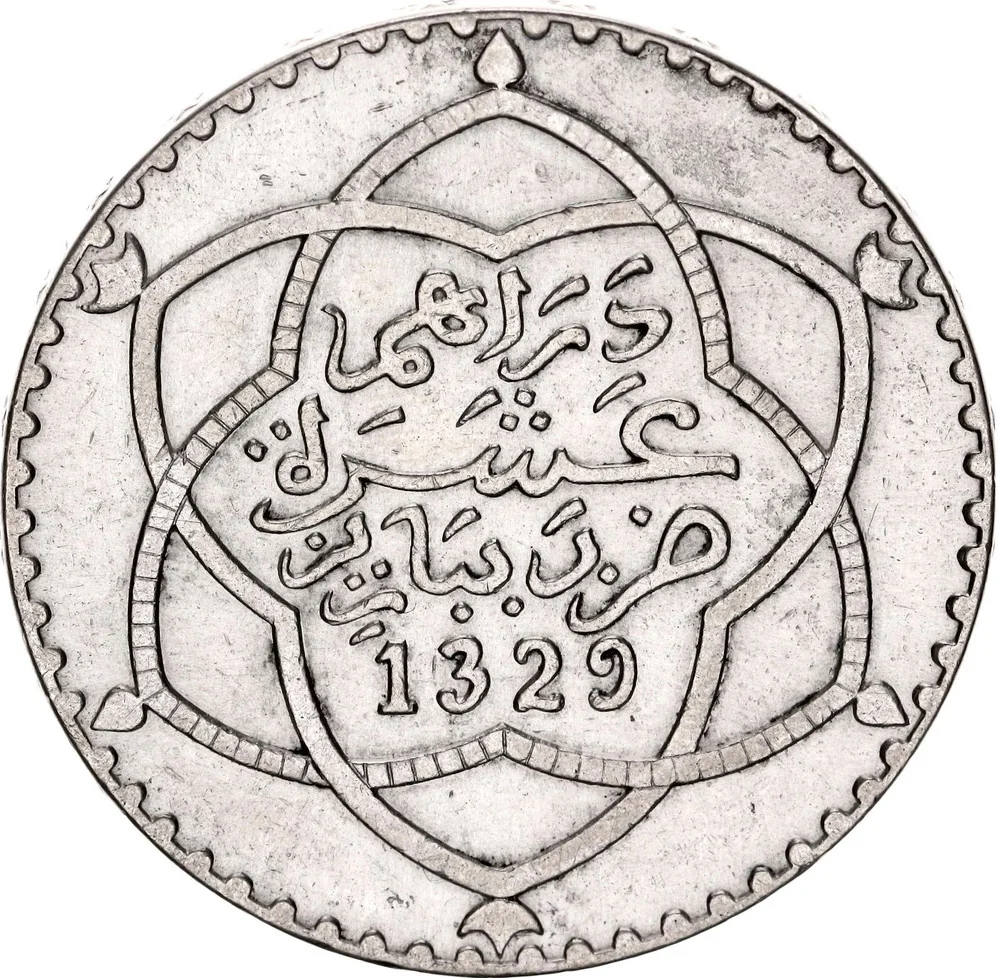
10 dirhams – Morocco
Add to wishlist
Morocco
Context
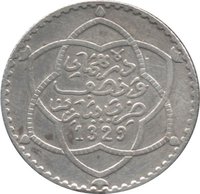
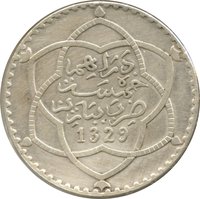
Year: 1911
Islamic (Hijri) Year:: 1329
Issuer: Morocco
Ruler: Abd al-Hafid
Currency:
(1882—1921)
Subdivision: 10 dirhams = 1 Rial
Demonetized: Yes
Total mintage: 10,093,866
Material
References
Y: #
Numista: #8400
Value
Exchange value: 1 MAH
Bullion value: $55.70
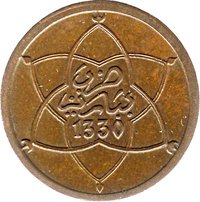
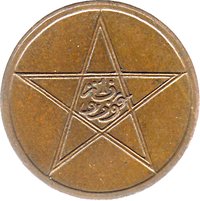
Obverse
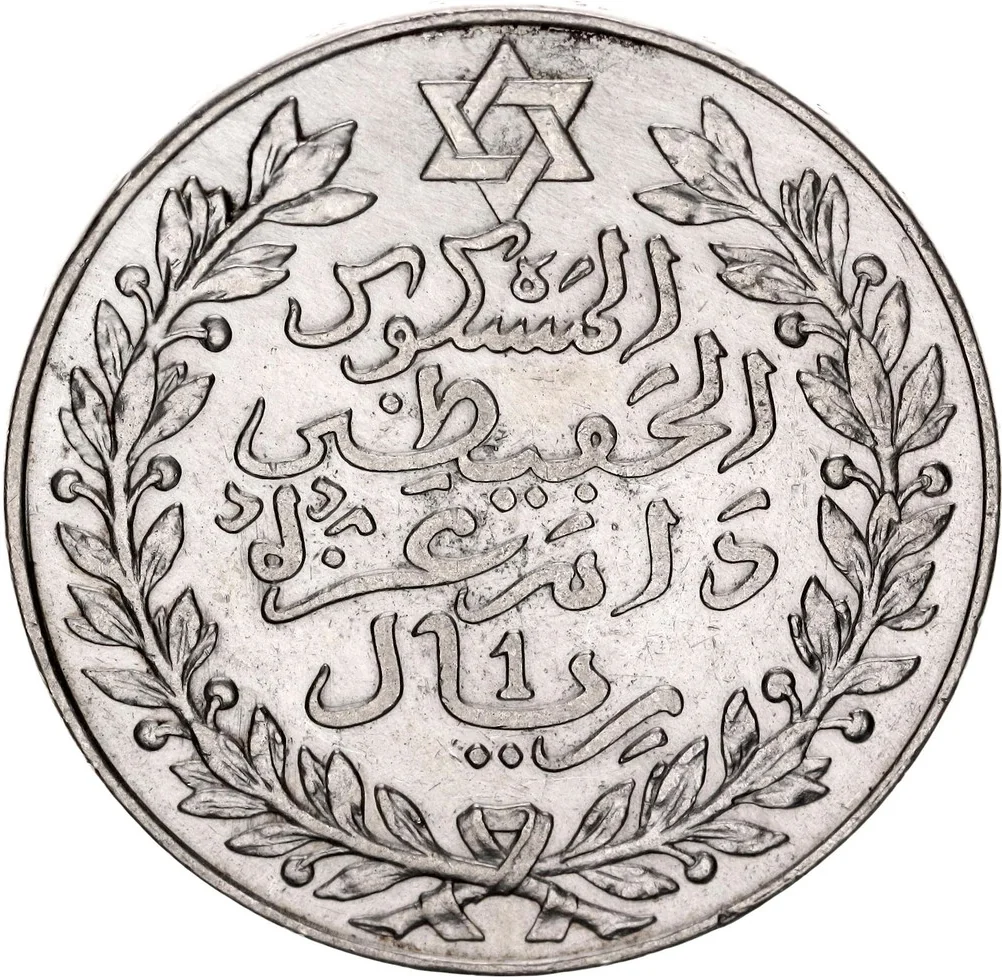
Reverse
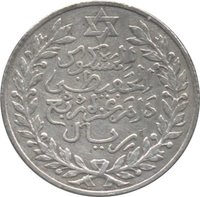
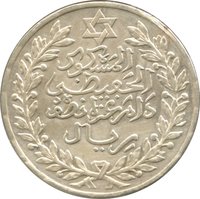
Description:
Wreath encircling lettering, topped by a six-pointed star.
Inscription:
1
Script: Arabic
Edge
Relief 5-pointed stars surround edge
Mints
| Name | Mark |
|---|---|
| Monnaie de Paris | — |
Mintings
| Year | Mint Mark | Mintage | Quality | Collection |
|---|---|---|---|---|
| 1911 | — | 10,093,866 |
Historical background
In 1911, Morocco's currency situation was a complex reflection of its political fragility and intense European competition for influence. The country nominally operated on a bimetallic system based on the silver dirham and gold benduqi, but the reality was a chaotic circulation of diverse coins. Spanish pesetas, French francs, British sovereigns, and Maria Theresa thalers all circulated freely alongside local and Ottoman coinage, their values fluctuating with market confidence rather than official decree. This monetary anarchy hampered trade, facilitated fraud, and symbolized the weakening authority of the Sultanate, which lacked a unified, modern minting system.
This financial disorder was both a cause and a consequence of the broader "Moroccan Crisis." European powers, particularly France and Germany, used financial instability as a pretext for deepening their intervention. France, pursuing its colonial ambitions in North Africa, had already established the State Bank of Morocco (Banque d'État du Maroc) in 1907, backed by French capital alongside other European interests. This bank held the exclusive right to issue banknotes, a powerful lever of economic control. The Algeciras Conference of 1906 had internationalized this arrangement, but by 1911, France was aggressively consolidating its financial—and by extension, political—dominance.
The currency situation reached a critical point in 1911, directly triggering the Agadir Crisis. In May, the Sultan's forces, struggling to quell a rebellion, besieged Fez. Citing the need to protect European lives and financial interests (including the State Bank's operations), France militarily occupied the city. Germany, viewing this as a breach of the Algeciras agreements and a threat to its own commercial interests, responded by sending the gunboat Panther to Agadir in July. While ostensibly about port access, the crisis was fundamentally over the future control of Morocco and its financial system. The subsequent Franco-German treaty in November paved the way for the French protectorate, established in 1912, which would soon impose a full franc-based currency, finally ending Morocco's pre-colonial monetary confusion through forced integration into the French economic zone.
This financial disorder was both a cause and a consequence of the broader "Moroccan Crisis." European powers, particularly France and Germany, used financial instability as a pretext for deepening their intervention. France, pursuing its colonial ambitions in North Africa, had already established the State Bank of Morocco (Banque d'État du Maroc) in 1907, backed by French capital alongside other European interests. This bank held the exclusive right to issue banknotes, a powerful lever of economic control. The Algeciras Conference of 1906 had internationalized this arrangement, but by 1911, France was aggressively consolidating its financial—and by extension, political—dominance.
The currency situation reached a critical point in 1911, directly triggering the Agadir Crisis. In May, the Sultan's forces, struggling to quell a rebellion, besieged Fez. Citing the need to protect European lives and financial interests (including the State Bank's operations), France militarily occupied the city. Germany, viewing this as a breach of the Algeciras agreements and a threat to its own commercial interests, responded by sending the gunboat Panther to Agadir in July. While ostensibly about port access, the crisis was fundamentally over the future control of Morocco and its financial system. The subsequent Franco-German treaty in November paved the way for the French protectorate, established in 1912, which would soon impose a full franc-based currency, finally ending Morocco's pre-colonial monetary confusion through forced integration into the French economic zone.
🌱 Fairly Common