

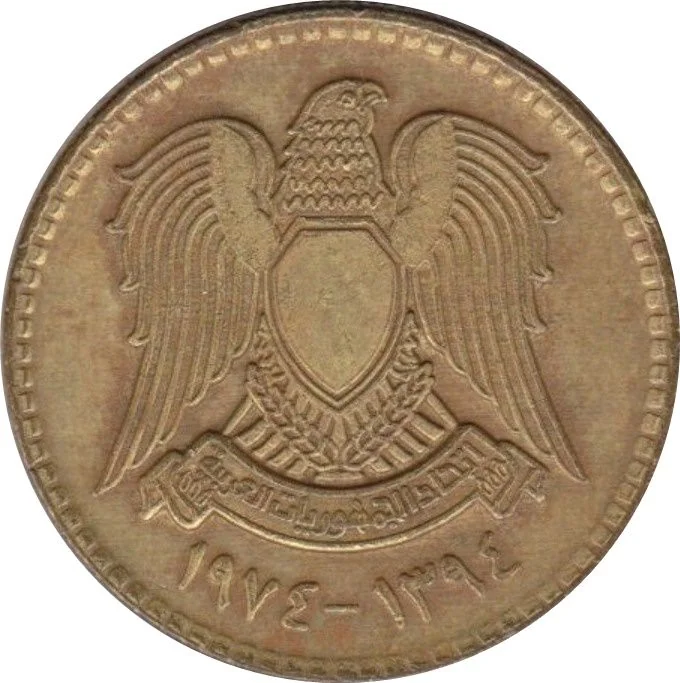
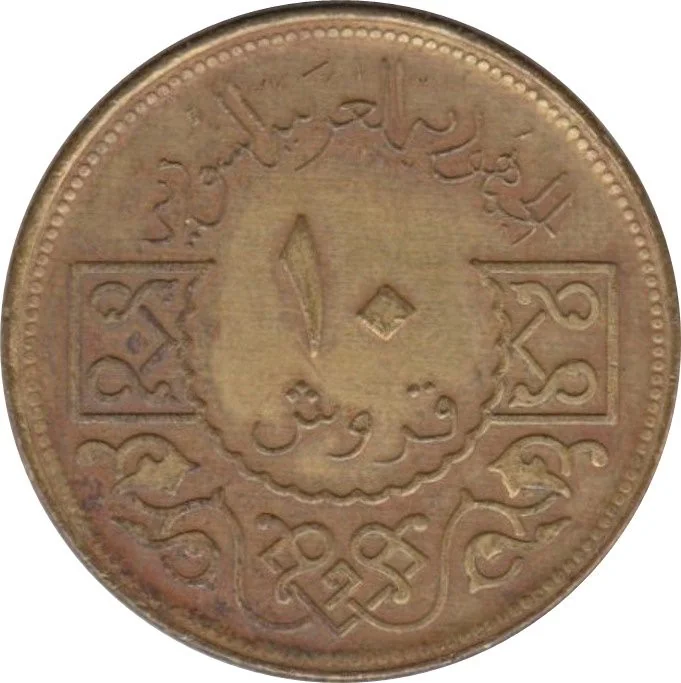
10 piastres – Syria
Add to wishlist
Syria
Context
Year: 1974
Islamic (Hijri) Year:: 1394
Issuer: Syria
Period:
(since 1961)
Currency:
(since 1919)
Demonetized: Yes
Material
Diameter: 21 mm
Weight: 4 g
Thickness: 1.66 mm
Shape: Round
Composition: Aluminium bronze
Magnetic: No
Technique: Milled
Alignment: Medal alignment
flip
References
KM: #
Numista: #8378
Value
Exchange value: 0.10 SYP
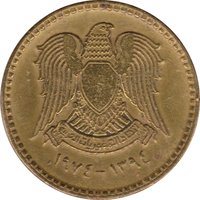
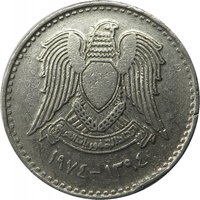
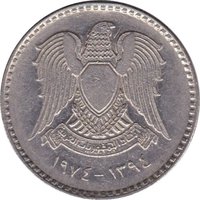
Obverse
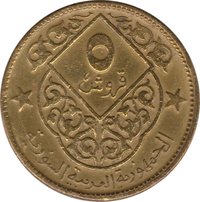
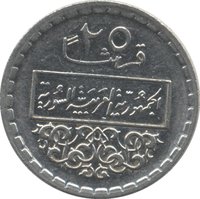
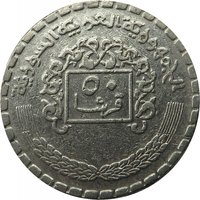
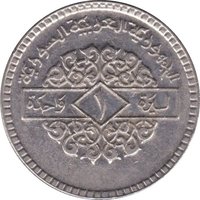
Reverse
Edge
Reeded
Categories
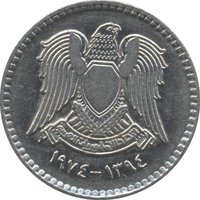
| Animal> Bird |
| Symbols> Coat of Arms |
Mintings
| Year | Mint Mark | Mintage | Quality | Collection |
|---|---|---|---|---|
| 1974 | — | — |
Historical background
In 1974, Syria’s currency situation was characterized by relative stability and strength, a direct reflection of the country's robust economic and geopolitical position. The Syrian pound (SYP) was pegged to the U.S. dollar at an official rate of 3.85 pounds to the dollar, a fixed parity maintained since 1947. This stability was underpinned by several factors: strong agricultural output, increasing oil production following discoveries in the northeast, and substantial financial inflows from Arab Gulf states, which rewarded Syria for its frontline role in the 1973 October War against Israel.
Economically, the period was one of significant state-led growth and investment. The post-war years saw a major economic boom, fueled by public sector expansion, infrastructure projects, and rising oil revenues. This growth, combined with strict currency controls and a state-dominated banking system, insulated the official exchange rate from market pressures. There was little to no meaningful black market for foreign currency deviation at the time, as confidence in the pound was high and the central bank maintained sufficient foreign reserves to defend the peg.
However, this apparent stability contained the seeds of future vulnerability. The economic model was heavily dependent on volatile factors like oil prices, remittances, and foreign aid. Furthermore, the vast increase in government spending on development and military projects, while driving growth, was beginning to elevate inflationary pressures. Although these strains would not become critical until the late 1970s and 1980s, 1974 stands as the calm before the storm—the final year of a long period of monetary stability before external imbalances and fiscal pressures would eventually lead to a series of devaluations and a protracted currency decline.
Economically, the period was one of significant state-led growth and investment. The post-war years saw a major economic boom, fueled by public sector expansion, infrastructure projects, and rising oil revenues. This growth, combined with strict currency controls and a state-dominated banking system, insulated the official exchange rate from market pressures. There was little to no meaningful black market for foreign currency deviation at the time, as confidence in the pound was high and the central bank maintained sufficient foreign reserves to defend the peg.
However, this apparent stability contained the seeds of future vulnerability. The economic model was heavily dependent on volatile factors like oil prices, remittances, and foreign aid. Furthermore, the vast increase in government spending on development and military projects, while driving growth, was beginning to elevate inflationary pressures. Although these strains would not become critical until the late 1970s and 1980s, 1974 stands as the calm before the storm—the final year of a long period of monetary stability before external imbalances and fiscal pressures would eventually lead to a series of devaluations and a protracted currency decline.
Series: 1974 Syria circulation coins
🌱 Common