

½ penny – Jamaica
Add to wishlist
Jamaica
Context
Years: 1964–1966
Issuer: Jamaica
Ruler: Elizabeth II
Currency:
(1655—1969)
Demonetization: 1969
Total mintage: 4,320,000
Material
Diameter: 22.5 mm
Weight: 4.5 g
Thickness: 1.65 mm
Shape: Round
Composition: Nickel brass
Magnetic: No
Technique: Milled
Alignment: Medal alignment
flip
References
KM: #
Numista: #8342
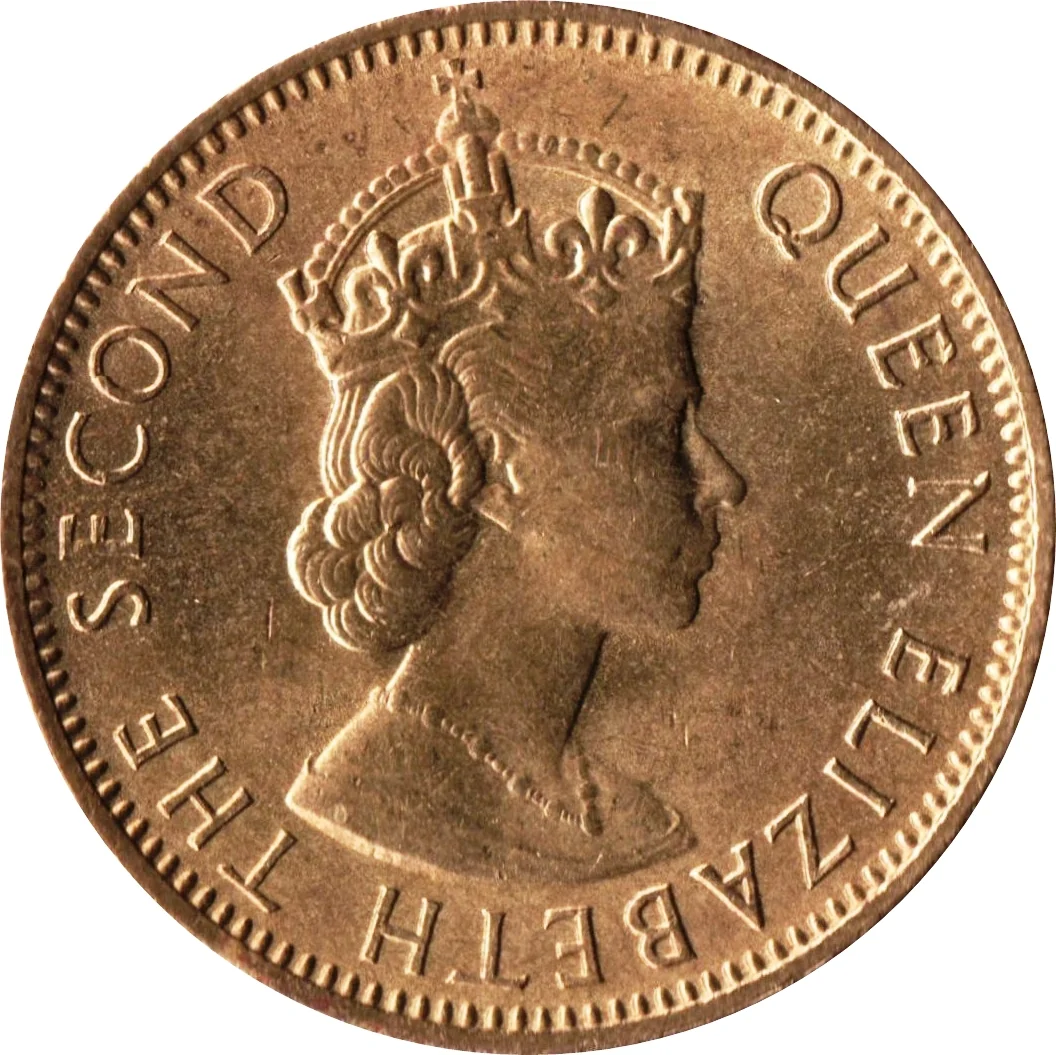
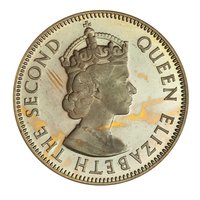
Obverse
Description:
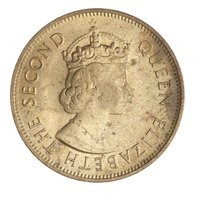
Crowned right-facing portrait of Queen Elizabeth II with encircling legend.
Inscription:
QUEEN ELIZABETH THE SECOND
Script: Latin
Engraver: Cecil Thomas
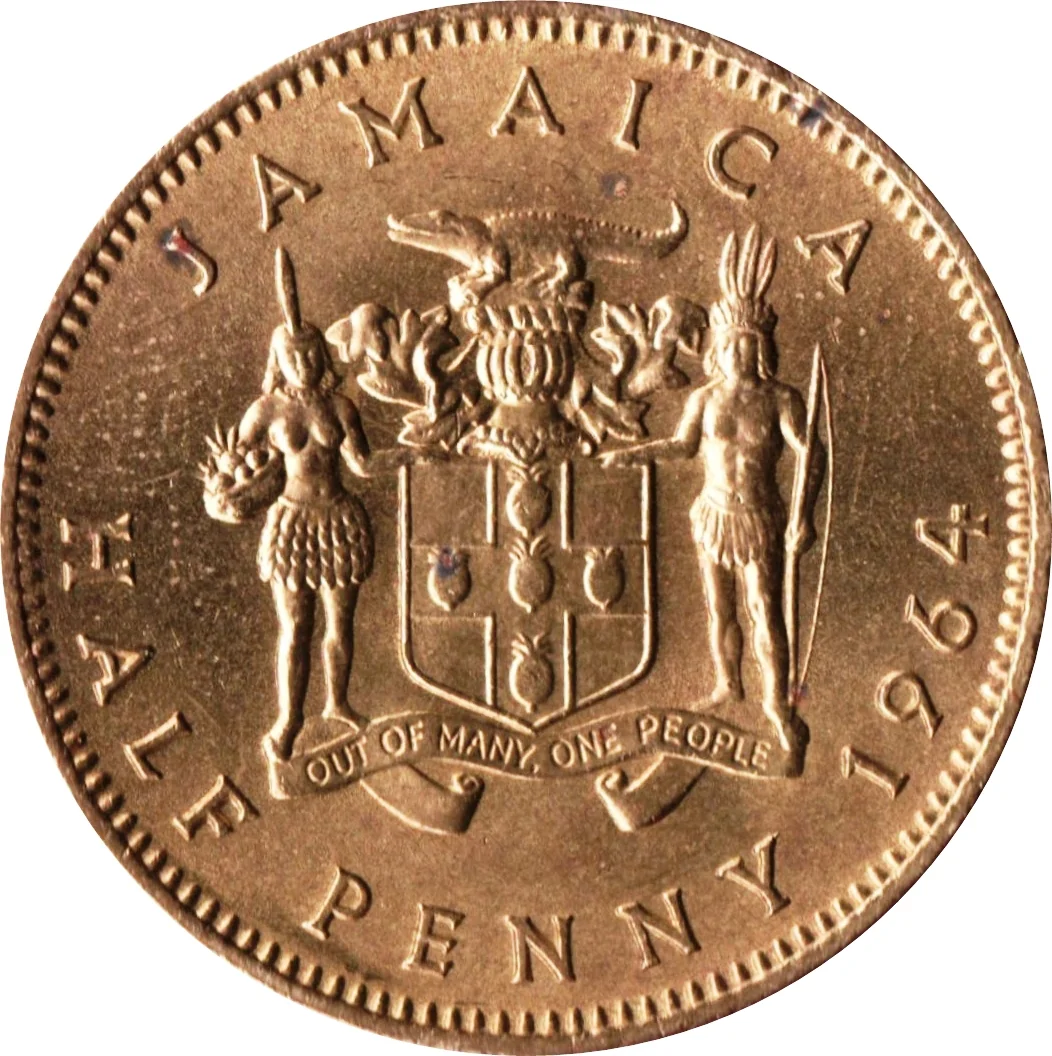
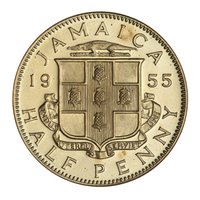
Reverse
Description:
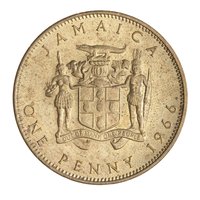
Jamaican coat of arms with supporters and encircling legend.
Inscription:
JAMAICA
HALF PENNY 1964
OUT OF MANY ONE PEOPLE
HALF PENNY 1964
OUT OF MANY ONE PEOPLE
Script: Latin
Engraver: Christopher Ironside
Edge
Plain
Mints
| Name | Mark |
|---|---|
| Royal Mint (Tower Hill) | — |
Mintings
| Year | Mint Mark | Mintage | Quality | Collection |
|---|---|---|---|---|
| 1964 | — | 1,440,000 | ||
| 1965 | — | 1,200,000 | ||
| 1966 | — | 1,680,000 |
Historical background
In 1964, Jamaica was navigating a complex monetary transition, having achieved independence from Britain just two years prior. The nation's currency was still the Jamaican pound (£), which remained pegged at par to the British pound sterling and was part of the sterling area. This arrangement meant Jamaica's reserves were held in London, and its monetary policy was heavily influenced by the United Kingdom. The economy was largely dependent on sugar, bananas, and bauxite, with the latter's growing importance bringing in vital US dollars, creating a dual dynamic of British colonial financial ties and increasing American economic influence.
Domestically, there were growing discussions about establishing a distinct national identity and greater economic sovereignty, which included the question of a central bank and an independent currency. The government, led by Prime Minister Sir Alexander Bustamante, was operating under the Currency Notes Law of 1960, which authorized the Board of Commissioners of Currency to issue Jamaican pound notes. However, these were still technically local representations of the sterling system. The economic landscape was one of cautious optimism but underscored by a recognition that the colonial monetary framework might not serve long-term national development goals.
Consequently, 1964 served as a pivotal prelude to major change. The groundwork was being laid for a significant break: the establishment of the Bank of Jamaica as the central bank in 1960 (which began operations gradually) and the impending decimalization and introduction of a wholly new currency. Just two years later, in 1966, the government would announce the creation of the Jamaican dollar (JMD), replacing the Jamaican pound at a rate of £1 = J$2, thereby finalizing the move toward a fully independent monetary system. Thus, 1964 was a year of operating within the old sterling order while actively preparing to leave it behind.
Domestically, there were growing discussions about establishing a distinct national identity and greater economic sovereignty, which included the question of a central bank and an independent currency. The government, led by Prime Minister Sir Alexander Bustamante, was operating under the Currency Notes Law of 1960, which authorized the Board of Commissioners of Currency to issue Jamaican pound notes. However, these were still technically local representations of the sterling system. The economic landscape was one of cautious optimism but underscored by a recognition that the colonial monetary framework might not serve long-term national development goals.
Consequently, 1964 served as a pivotal prelude to major change. The groundwork was being laid for a significant break: the establishment of the Bank of Jamaica as the central bank in 1960 (which began operations gradually) and the impending decimalization and introduction of a wholly new currency. Just two years later, in 1966, the government would announce the creation of the Jamaican dollar (JMD), replacing the Jamaican pound at a rate of £1 = J$2, thereby finalizing the move toward a fully independent monetary system. Thus, 1964 was a year of operating within the old sterling order while actively preparing to leave it behind.
🌱 Very Common