

1 crown (Queen Elizabeth II) – Isle of Man
Add to wishlist
Non-circulating coins
Commemoration: Queen Elizabeth II 80th Birthday - Coronation
Series: 80 Glorious Years
Context
Year: 2006
Country: British Crown dependencies
Issuer: Isle of Man
Ruler: Elizabeth II
Currency:
(since 1971)
Material
Diameter: 38.6 mm
Weight: 28.28 g
Thickness: 3 mm
Shape: Round
Composition: Copper-nickel
Technique: Milled
Alignment: Medal alignment
flip
References
Numista: #83335
Value
Exchange value: 0.25 IMP
Obverse
Description:
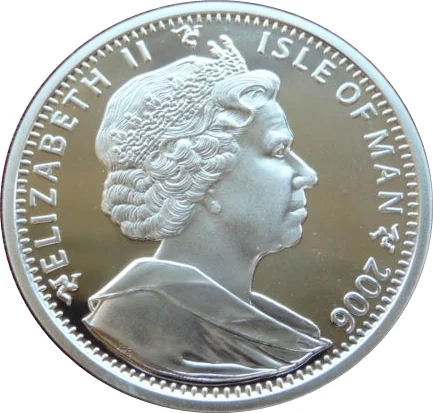
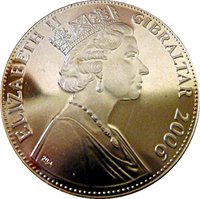
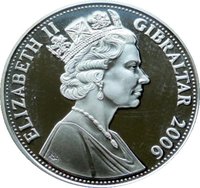
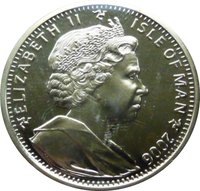
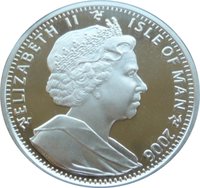
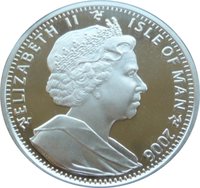
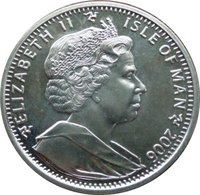
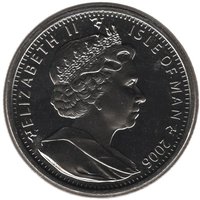
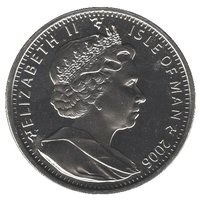
Queen Elizabeth II right-facing portrait in the "Girls of Great Britain and Ireland" Tiara, surrounded by legend and date.
Inscription:
ELIZABETH II ISLE OF MAN
2006
IRB
2006
IRB
Translation:
ELIZABETH II ISLE OF MAN
2006
IRB
2006
IRB
Script: Latin
Designer: Ian Rank-Broadley
Reverse
Description:
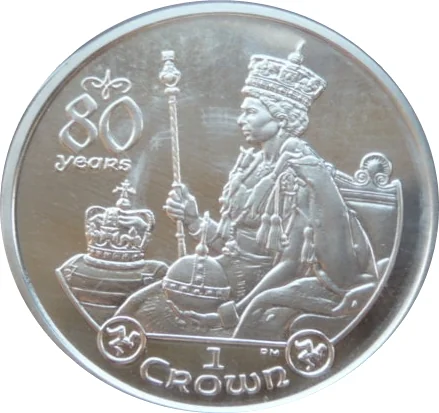
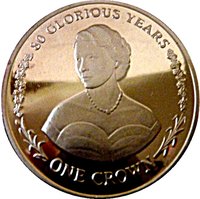
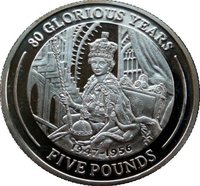
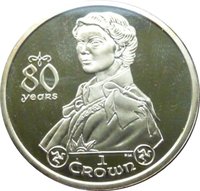
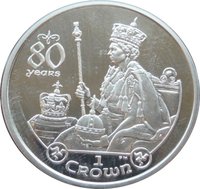
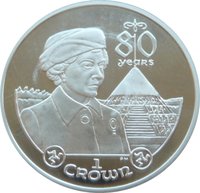
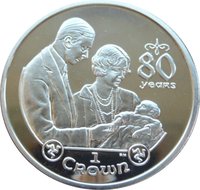
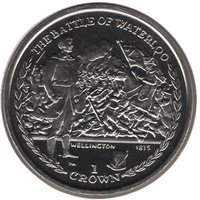
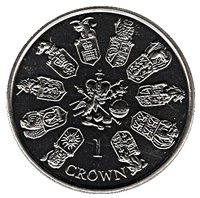
Queen Elizabeth II, crowned and holding the Orb and Sceptre, sits on the throne.
Inscription:
80 Years
1
CROWN
1
CROWN
Script: Latin
Edge
Reeded
Categories
| Event> Birth anniversary |
| Event> Coronation |
| Symbol> Crown |
| Person> Monarch |
Mints
| Name | Mark |
|---|---|
| Pobjoy Mint | (PM) |
Mintings
| Year | Mint Mark | Mintage | Quality | Collection |
|---|---|---|---|---|
| 2006 | PM | — |
Historical background
In 2006, the Isle of Man's currency situation was defined by its unique political status as a British Crown Dependency. The Manx pound (£) was, and remains, pegged at par with the British pound sterling (GBP). While sterling circulated freely and was universally accepted, the Isle of Man government issued its own distinct banknotes and coins, which were legal tender only on the island. This system provided a symbol of national identity while maintaining full economic integration with the United Kingdom, its largest trading partner.
The year saw the continued operation of this stable and long-standing arrangement, managed by the Isle of Man Treasury. A key feature was that Manx currency was not automatically accepted in the UK, requiring exchange at banks, though sterling from the UK was always accepted on the island. This occasionally caused minor inconvenience for travellers but posed no significant economic issues. The island's financial health was robust, supported by a growing offshore finance sector, and its currency peg was underpinned by substantial foreign currency reserves held in sterling.
Overall, 2006 represented a period of monetary stability for the Isle of Man. The fixed parity with sterling provided economic certainty for trade and investment, insulating the island from currency fluctuations. The situation highlighted the Isle of Man's successful balancing act: leveraging the economic security of a major currency while asserting its constitutional autonomy through the issuance of its own distinct legal tender.
The year saw the continued operation of this stable and long-standing arrangement, managed by the Isle of Man Treasury. A key feature was that Manx currency was not automatically accepted in the UK, requiring exchange at banks, though sterling from the UK was always accepted on the island. This occasionally caused minor inconvenience for travellers but posed no significant economic issues. The island's financial health was robust, supported by a growing offshore finance sector, and its currency peg was underpinned by substantial foreign currency reserves held in sterling.
Overall, 2006 represented a period of monetary stability for the Isle of Man. The fixed parity with sterling provided economic certainty for trade and investment, insulating the island from currency fluctuations. The situation highlighted the Isle of Man's successful balancing act: leveraging the economic security of a major currency while asserting its constitutional autonomy through the issuance of its own distinct legal tender.
Series: 80 Glorious Years
💎 Extremely Rare