

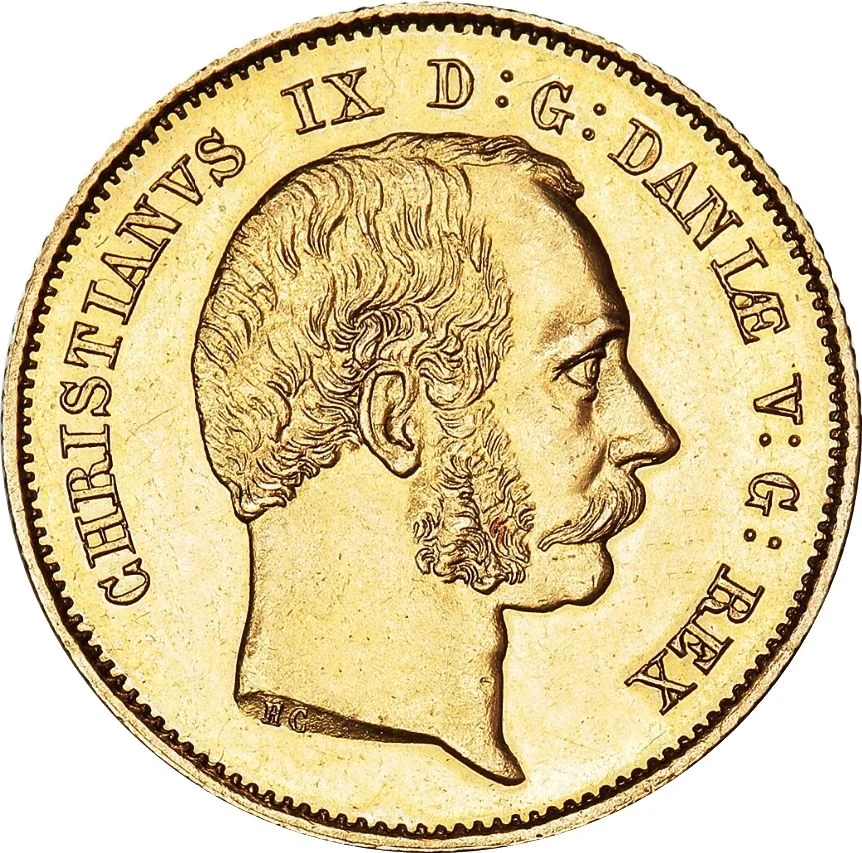
1 Christian d'Or – Denmark
Denmark
Context
Year: 1869
Issuer: Denmark 
Ruler: Christian IX
Currency:
(1854—1873)
Subdivision: 1 Christian d'Or = 5 Rigsdaler
Demonetized: Yes
Total mintage: 539
Material
References
KM: #Click to copy to clipboard778
Numista: #83077
Value
Bullion value: $990.46
Obverse
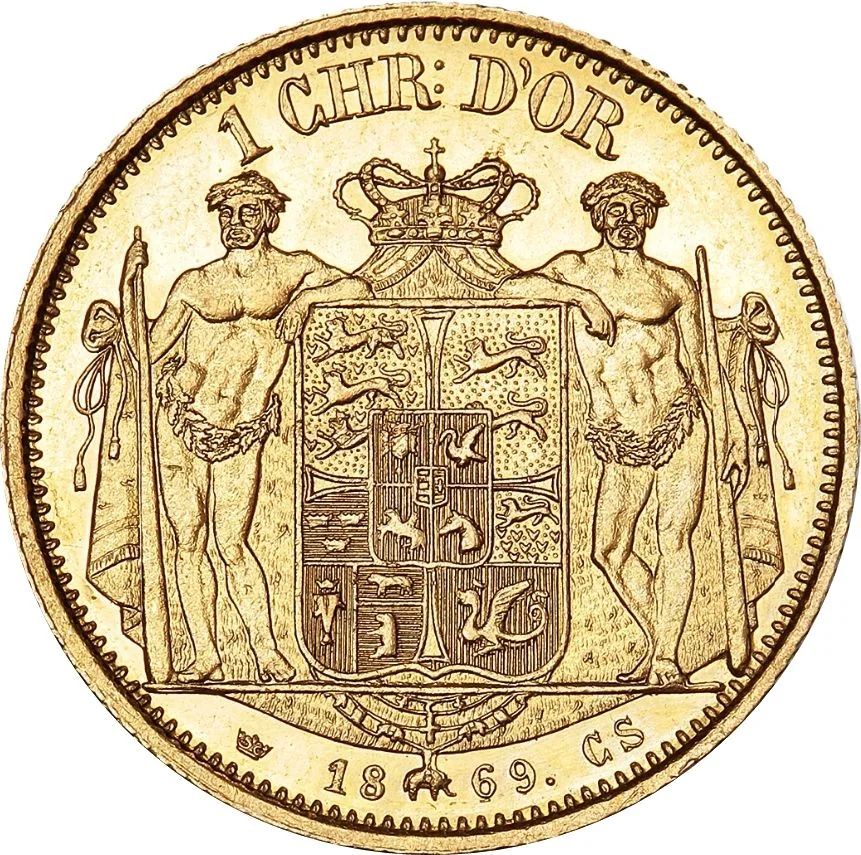
Reverse
Description:
Crowned grater shield with Denmark’s arms (Elephant collar below) held by club-armed wildmen. A wide crowned mantle fills the background. Value above, date below, mintmark at sides.
Inscription:
1 CHR: D'OR
♔18 | 69. CS
♔18 | 69. CS
Script: Latin
Edge
Mints
| Name | Mark |
|---|---|
| Royal Danish Mint | ♔ |
Mintings
| Year | Mint Mark | Mintage | Quality | Collection |
|---|---|---|---|---|
| 1869 | ♔ | 539 |
Historical background
In 1869, Denmark was navigating a complex monetary landscape defined by the Scandinavian Monetary Union (SMU), established just two years prior in 1873. This union, formed with Sweden (and later joined by Norway in 1875), was a landmark agreement to create a common gold standard and fixed exchange rates between the member states' currencies. The Danish krone (crown), subdivided into 100 øre, replaced the former rigsdaler as the official unit of account, pegged directly to gold. This move aimed to stabilize trade, simplify financial transactions across borders, and integrate Denmark more closely with its Nordic neighbors economically.
However, the situation in 1869 was one of transition and preparation. The formal treaty was still four years away, but the political and economic groundwork was being laid. Denmark's currency system prior to this was based on the silver standard rigsdaler, but the global shift toward gold following discoveries in California and Australia, coupled with the desire for Scandinavian economic cooperation, drove the change. The period was thus characterized by legislative debates and financial planning to align the national monetary system with the impending union, ensuring a smooth transition from silver to gold.
Consequently, the Danish currency situation in 1869 was not one of crisis but of deliberate reform. The state was proactively moving away from an older, isolated system toward a modern, internationally integrated gold standard. This shift reflected a broader European trend and was a strategic effort to enhance Denmark's economic stability and regional influence, setting the stage for the formal adoption of the krone and the successful launch of the Scandinavian Monetary Union in the early 1870s.
However, the situation in 1869 was one of transition and preparation. The formal treaty was still four years away, but the political and economic groundwork was being laid. Denmark's currency system prior to this was based on the silver standard rigsdaler, but the global shift toward gold following discoveries in California and Australia, coupled with the desire for Scandinavian economic cooperation, drove the change. The period was thus characterized by legislative debates and financial planning to align the national monetary system with the impending union, ensuring a smooth transition from silver to gold.
Consequently, the Danish currency situation in 1869 was not one of crisis but of deliberate reform. The state was proactively moving away from an older, isolated system toward a modern, internationally integrated gold standard. This shift reflected a broader European trend and was a strategic effort to enhance Denmark's economic stability and regional influence, setting the stage for the formal adoption of the krone and the successful launch of the Scandinavian Monetary Union in the early 1870s.
💎 Extremely Rare