

2 frederiks d'or – Denmark
Add to wishlist
Denmark
Context
Years: 1828–1836
Issuer: Denmark
Ruler: Frederick VI
Currency:
(1813—1854)
Subdivision: 2 frederiks d'or = 10 Speciedaler
Demonetized: Yes
Total mintage: 369,000
Material
References
KM: #
Numista: #83068
Value
Bullion value: $1851.04
Obverse
Description:
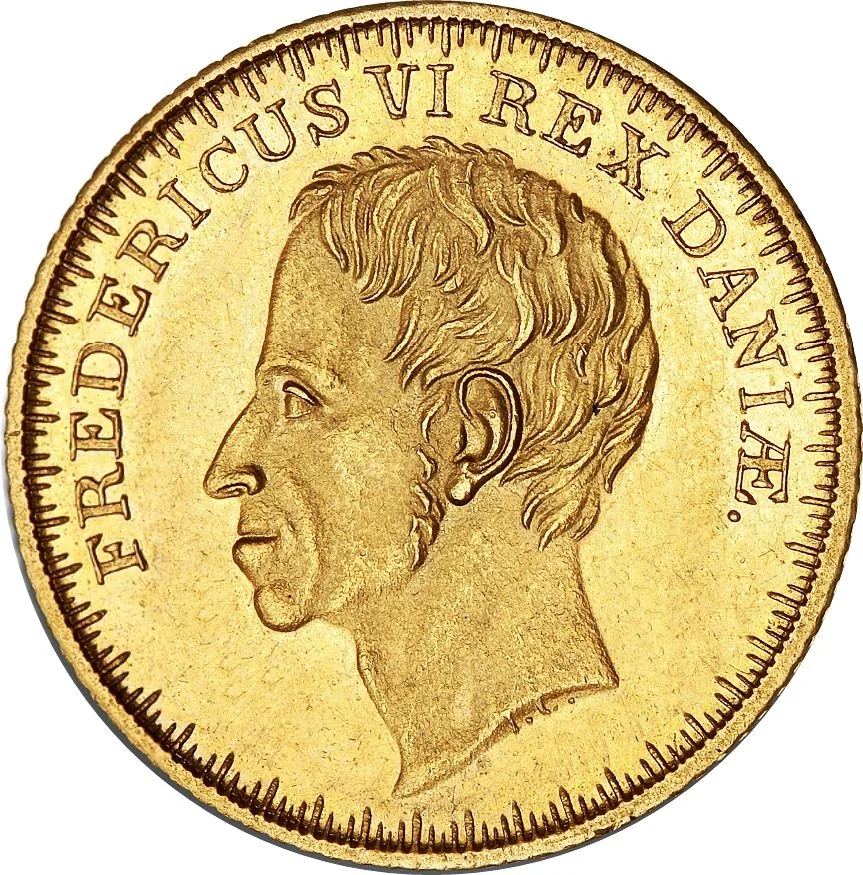
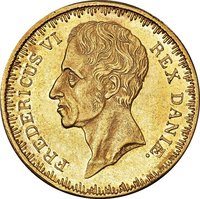
King Frederik VI left-facing portrait. Engraver initials on neck.
Inscription:
FREDERICUS VI REX DANIÆ.
I.C.
I.C.
Translation:
Frederick VI, King of Denmark.
I.C.
I.C.
Script: Latin
Language: Latin
Engraver: Johannes Conradsen
Reverse
Description:
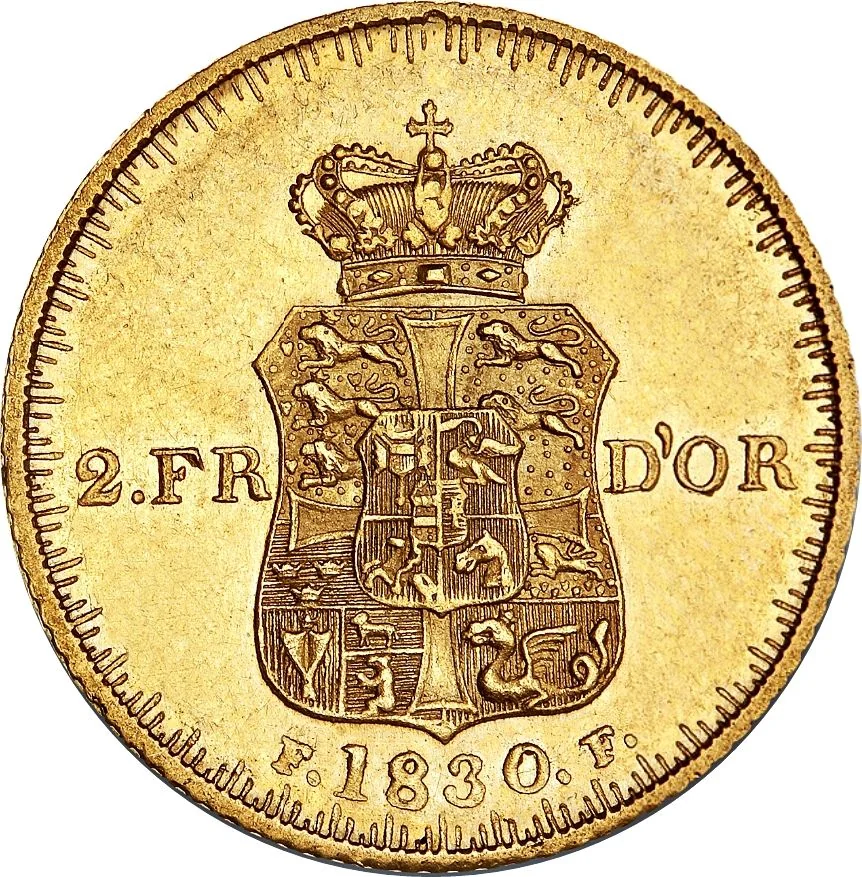
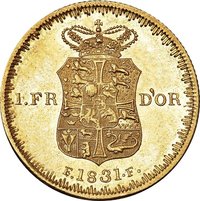
Crowned grater shield with Danish arms divides value. Date below, mintmaster initials flanking.
Inscription:
2. FR D'OR
F. 1830. F.
F. 1830. F.
Script: Latin
Edge
Milled
Mints
| Name | Mark |
|---|---|
| Altona, Schleswig-Holstein | — |
Mintings
| Year | Mint Mark | Mintage | Quality | Collection |
|---|---|---|---|---|
| 1828 | — | 168,000 | ||
| 1829 | — | 96,000 | ||
| 1830 | — | 105,000 | ||
| 1833 | — | — | ||
| 1834 | — | — | ||
| 1835 | — | — | ||
| 1836 | — | — |
Historical background
In 1828, Denmark operated under a silver standard, with the rigsdaler (rix-dollar) as the primary unit of account. However, the currency system was complex and fragmented, characterized by a chronic shortage of physical silver coinage. This scarcity was a legacy of the state bankruptcy in 1813, which had led to the introduction of a temporary paper currency, the rigsbankdaler. By 1828, these notes were still in wide circulation and had become de facto legal tender, though they traded at a discount compared to the theoretical silver rigsdaler. The coexistence of undervalued silver coins (which were often hoarded or melted) and depreciated paper money created a dysfunctional dual system that hampered trade and economic predictability.
The situation was further complicated by the existence of multiple subsidiary currencies. In the Duchy of Schleswig and Holstein, different monetary systems were used, and within Denmark proper, transactions were often conducted in older units like the mark and skilling, adding layers of conversion and confusion. This monetary disarray reflected the broader economic difficulties of the post-Napoleonic Wars era, where Denmark, having lost Norway and with its foreign trade weakened, struggled with a heavy national debt and deflationary pressures.
Consequently, the year 1828 fell within a prolonged period of monetary instability that would eventually necessitate comprehensive reform. The government, recognizing the economic drag of the chaotic system, was actively working towards a solution. This culminated just a few years later in the Currency Act of 1835, which formally established the rigsbankdaler as the sole legal tender, effectively placing Denmark on a stable paper standard and finally unifying its currency. Thus, 1828 represents a point of lingering disorder near the end of a turbulent transitional period in Danish monetary history.
The situation was further complicated by the existence of multiple subsidiary currencies. In the Duchy of Schleswig and Holstein, different monetary systems were used, and within Denmark proper, transactions were often conducted in older units like the mark and skilling, adding layers of conversion and confusion. This monetary disarray reflected the broader economic difficulties of the post-Napoleonic Wars era, where Denmark, having lost Norway and with its foreign trade weakened, struggled with a heavy national debt and deflationary pressures.
Consequently, the year 1828 fell within a prolonged period of monetary instability that would eventually necessitate comprehensive reform. The government, recognizing the economic drag of the chaotic system, was actively working towards a solution. This culminated just a few years later in the Currency Act of 1835, which formally established the rigsbankdaler as the sole legal tender, effectively placing Denmark on a stable paper standard and finally unifying its currency. Thus, 1828 represents a point of lingering disorder near the end of a turbulent transitional period in Danish monetary history.
✨ Legendary