

½ speciedaler – Norway
Add to wishlist
Norway
Context
Years: 1819–1824
Issuer: Norway
Ruler: Charles III John
Currency:
(1816—1875)
Demonetized: Yes
Total mintage: 410,600
Material
References
KM: #
Numista: #82375
Value
Bullion value: $31.02
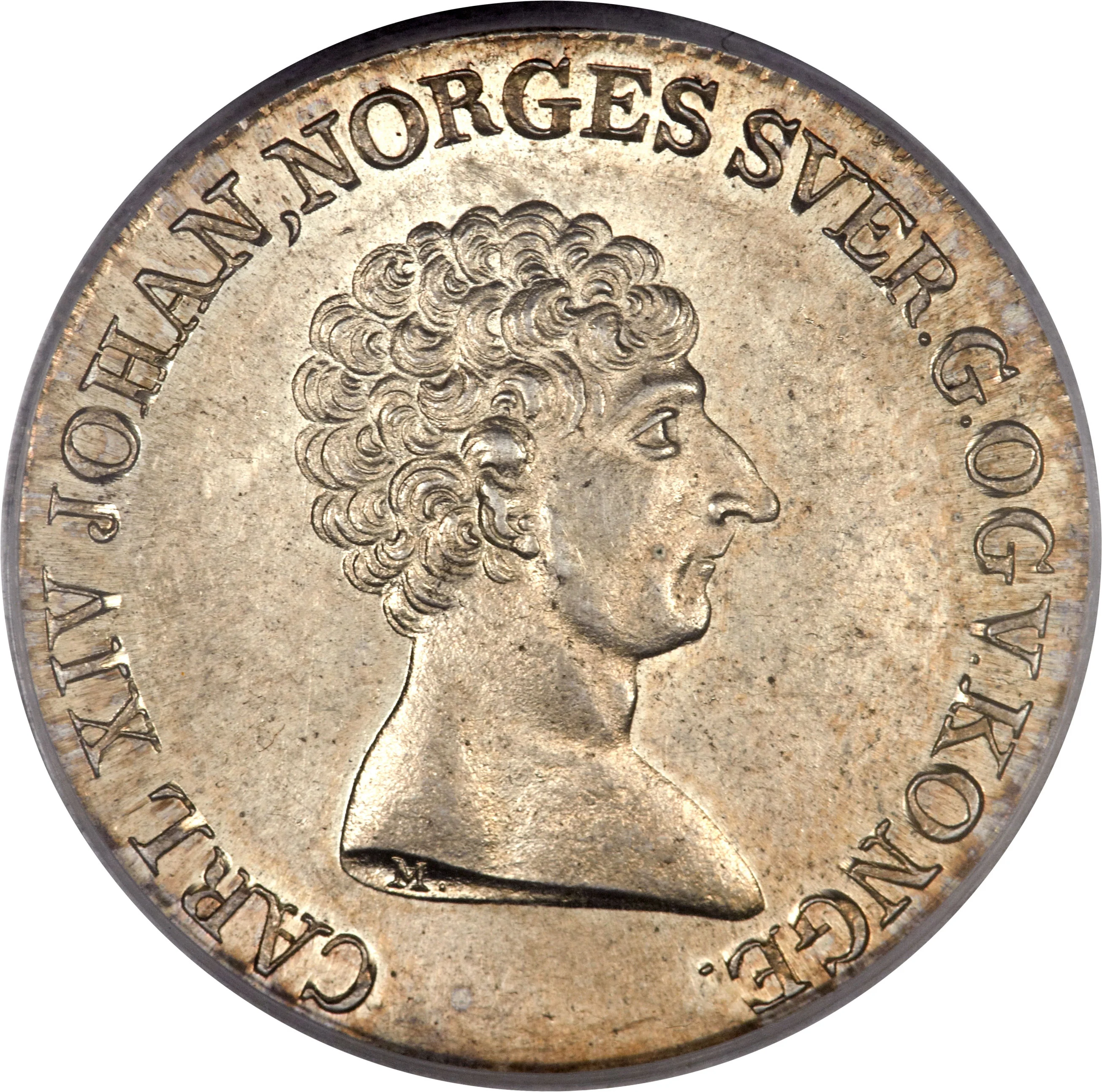
Obverse
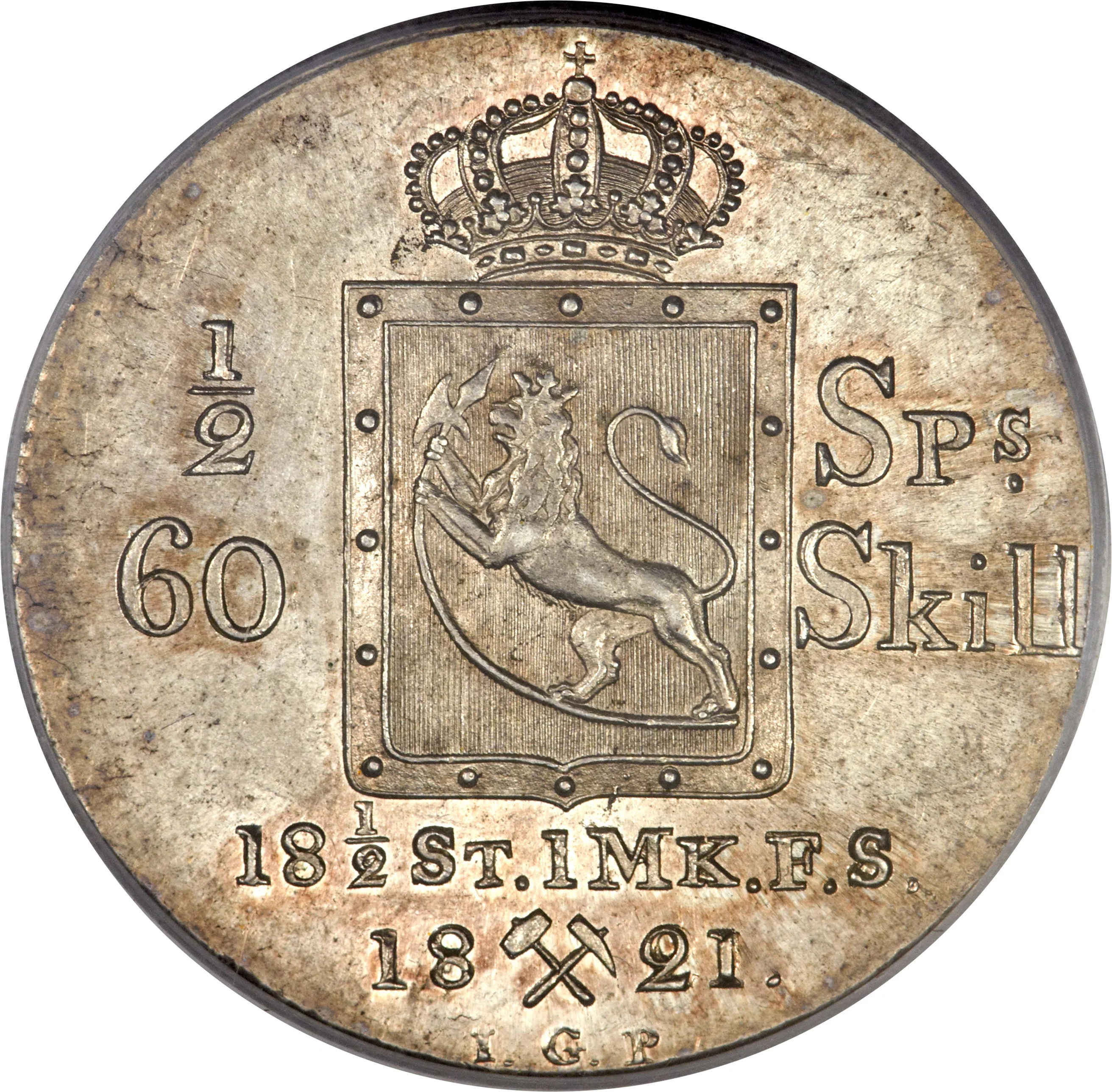
Reverse
Description:
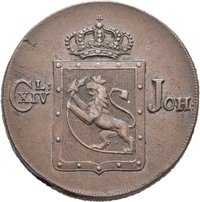
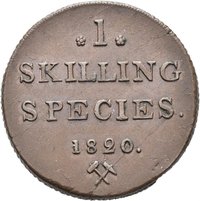
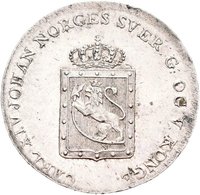
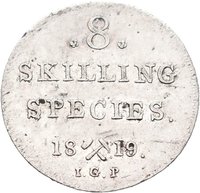
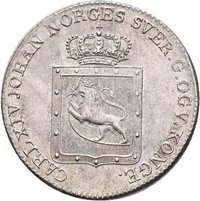
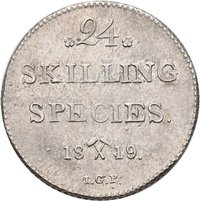
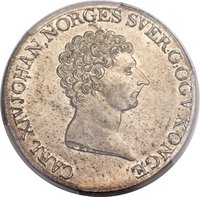
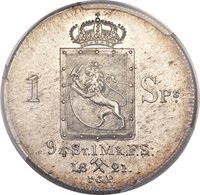
Crowned shield with beaded border, containing a crowned Norwegian lion holding a halberd on a lined field. Value is beside the shield. Below, three lines contain the value description, date (split by mintmark), and mintmaster initials. A beaded ring encircles the coin's rim.
Inscription:
½ | SPs.
60 | Skill
18 ½ ST. 1 MK. F. S.
18 ⚒ 21.
I. G. P.
60 | Skill
18 ½ ST. 1 MK. F. S.
18 ⚒ 21.
I. G. P.
Script: Latin
Edge
Mints
| Name | Mark |
|---|---|
| Norwegian Mint | — |
Mintings
| Year | Mint Mark | Mintage | Quality | Collection |
|---|---|---|---|---|
| 1819 | — | 302,100 | ||
| 1821 | — | 69,400 | ||
| 1823 | — | 6,100 | ||
| 1824 | — | 33,000 |
Historical background
In 1819, Norway found itself in a precarious monetary situation, a direct legacy of the Napoleonic Wars and the subsequent union with Sweden established in 1814. The young state, having declared independence only to be forced into a personal union, inherited a severely depleted treasury and a chaotic currency system. The war effort had been financed by massive borrowing from the newly established Norges Bank (founded in 1816) and the issuance of inconvertible paper money called riksbankdaler, which had rapidly depreciated. By 1819, this paper currency traded at a significant discount to silver, causing inflation and eroding public confidence in the monetary system.
The central challenge was the resumption of specie payments, meaning the return to a currency redeemable in silver. Norges Bank, under its first governor, Thomas Fasting, was legally obligated to achieve this by 1820. However, the bank's silver reserves were critically low, and the state's debt to the bank was enormous. This created a tense political and economic dilemma: enforcing strict deflationary policies to restore parity would cause severe short-term hardship, while failure to act would perpetuate monetary instability and undermine Norway's economic sovereignty within the union.
Consequently, 1819 was a year of decisive and painful action. The Storting passed a rigorous austerity budget, slashing public spending and increasing taxes to begin repaying the debt to Norges Bank. These measures, while essential for long-term stability, precipitated a sharp economic contraction and widespread distress, particularly among farmers and the poor. Thus, the currency situation of 1819 was a defining crisis of Norway's early independence, where the foundation for future monetary stability was laid through politically difficult deflationary policies.
The central challenge was the resumption of specie payments, meaning the return to a currency redeemable in silver. Norges Bank, under its first governor, Thomas Fasting, was legally obligated to achieve this by 1820. However, the bank's silver reserves were critically low, and the state's debt to the bank was enormous. This created a tense political and economic dilemma: enforcing strict deflationary policies to restore parity would cause severe short-term hardship, while failure to act would perpetuate monetary instability and undermine Norway's economic sovereignty within the union.
Consequently, 1819 was a year of decisive and painful action. The Storting passed a rigorous austerity budget, slashing public spending and increasing taxes to begin repaying the debt to Norges Bank. These measures, while essential for long-term stability, precipitated a sharp economic contraction and widespread distress, particularly among farmers and the poor. Thus, the currency situation of 1819 was a defining crisis of Norway's early independence, where the foundation for future monetary stability was laid through politically difficult deflationary policies.
Series: 1819 Norway circulation coins
✨ Legendary