

½ dollar – United States
Add to wishlist
United States
Context
Years: 1892–1915
Issuer: United States
Period:
(since 1776)
Currency:
(since 1785)
Subdivision: ½ dollar = 50 Cents
Total mintage: 135,915,602
Material
References
KM: #
Numista: #10085
Value
Exchange value: ½ USD = $0.50
Bullion value: $28.08
Obverse
Description:
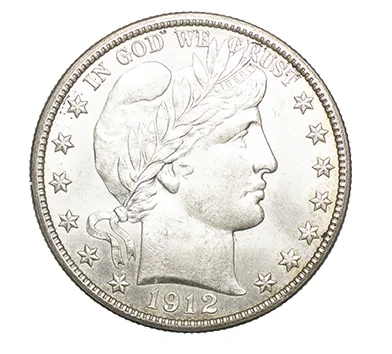
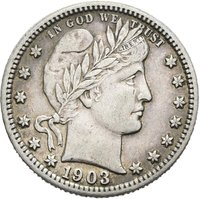
Liberty bust right, motto above, surrounded by 13 stars.
Inscription:
IN GOD WE TRUST
B
1904
B
1904
Script: Latin
Designer: Charles Edward Barber
Reverse
Description:
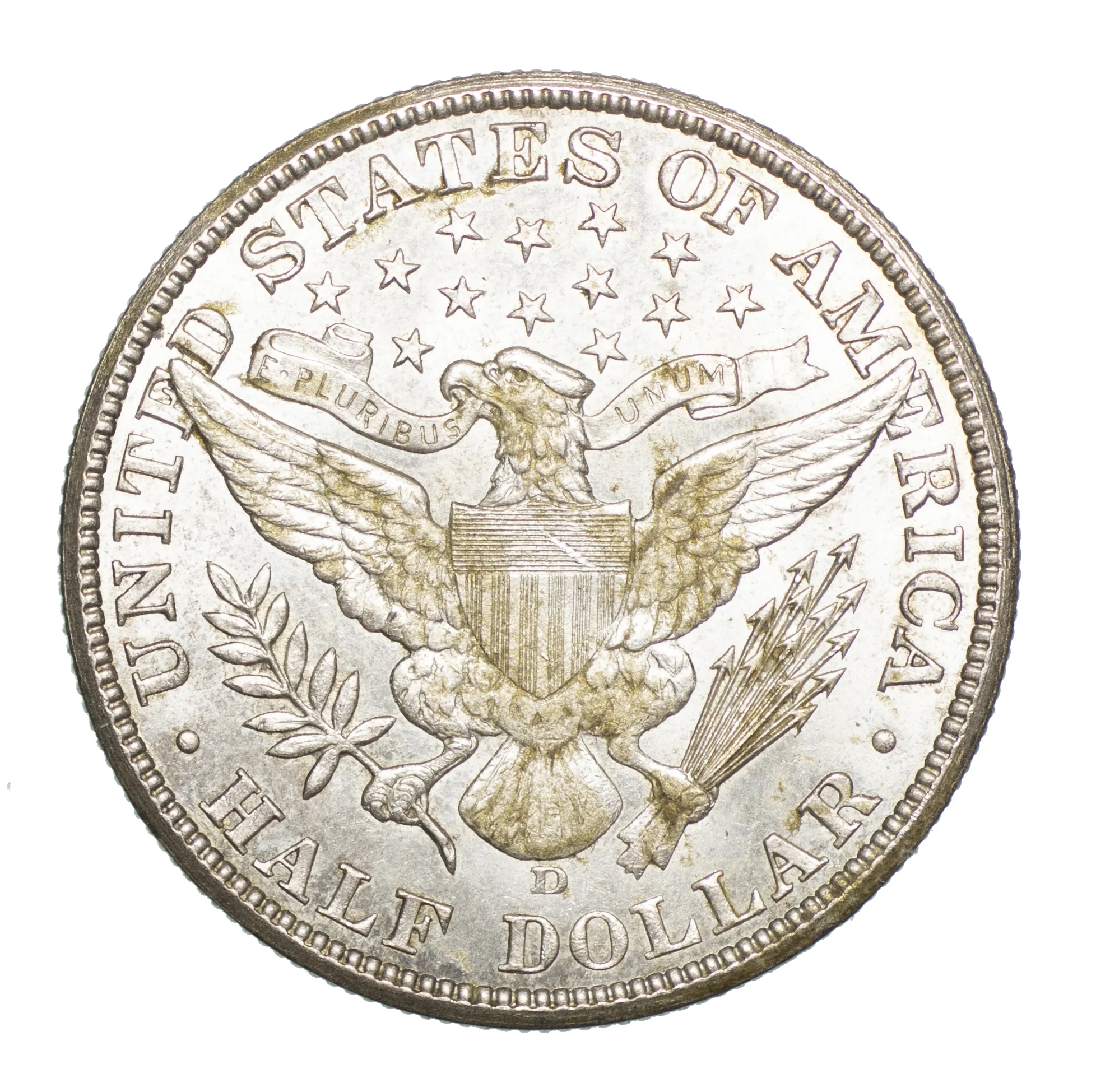
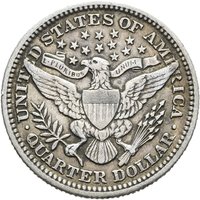
Heraldic eagle beneath 13 stars, surrounded by the country name with the denomination below.
Inscription:
UNITED STATES OF AMERICA
E PLURIBUS UNUM
S
HALF DOLLAR
E PLURIBUS UNUM
S
HALF DOLLAR
Script: Latin
Designer: Charles Edward Barber
Edge
Reeded
Categories
| Animal> Bird> Eagle |
| Symbol> Allegory |
| Symbol> Phrygian cap |
| Symbol> Wreath |
| Object> Cold weapons |
Mints
| Name | Mark |
|---|---|
| United States Mint of Philadelphia | — |
| United States Mint of Denver | D |
| United States Mint of New Orleans | O |
| United States Mint of San Francisco | S |
Mintings
| Year | Mint Mark | Mintage | Quality | Collection |
|---|---|---|---|---|
| 1892 | — | 934,000 | ||
| 1892 | — | 1,245 | Proof | |
| 1892 | O | 390,000 | ||
| 1892 | S | 1,029,028 | ||
| 1893 | O | 1,389,000 | ||
| 1893 | S | 740,000 | ||
| 1893 | — | 1,826,000 | ||
| 1893 | — | 792 | Proof | |
| 1894 | — | 1,148,000 | ||
| 1894 | — | 972 | Proof | |
| 1894 | O | 2,138,000 | ||
| 1894 | S | 4,048,690 | ||
| 1895 | — | 1,834,338 | ||
| 1895 | — | 880 | Proof | |
| 1895 | O | 1,766,000 | ||
| 1895 | S | 1,108,086 | ||
| 1896 | — | 950,000 | ||
| 1896 | — | 762 | Proof | |
| 1896 | O | 924,000 | ||
| 1896 | S | 1,140,948 | ||
| 1897 | — | 731 | Proof | |
| 1897 | O | 632,000 | ||
| 1897 | — | 2,480,000 | ||
| 1897 | S | 933,900 | ||
| 1898 | — | 2,956,000 | ||
| 1898 | — | 735 | Proof | |
| 1898 | O | 874,000 | ||
| 1898 | S | 2,358,550 | ||
| 1899 | — | 5,538,000 | ||
| 1899 | — | 846 | Proof | |
| 1899 | O | 1,724,000 | ||
| 1899 | S | 1,686,411 | ||
| 1900 | — | 4,762,000 | ||
| 1900 | — | 912 | Proof | |
| 1900 | O | 2,744,000 | ||
| 1900 | S | 2,560,322 | ||
| 1901 | — | 4,268,000 | ||
| 1901 | — | 813 | Proof | |
| 1901 | O | 1,124,000 | ||
| 1901 | S | 847,044 | ||
| 1902 | — | 777 | Proof | |
| 1902 | O | 2,526,000 | ||
| 1902 | S | 1,460,670 | ||
| 1902 | — | 4,922,000 | ||
| 1903 | — | 2,278,000 | ||
| 1903 | — | 755 | Proof | |
| 1903 | O | 2,100,000 | ||
| 1903 | S | 1,920,772 | ||
| 1904 | — | 2,992,000 | ||
| 1904 | — | 670 | Proof | |
| 1904 | O | 1,117,600 | ||
| 1904 | S | 553,038 | ||
| 1905 | — | 662,000 | ||
| 1905 | — | 727 | Proof | |
| 1905 | O | 505,000 | ||
| 1905 | S | 2,494,000 | ||
| 1906 | — | 675 | Proof | |
| 1906 | O | 2,446,000 | ||
| 1906 | S | 1,740,154 | ||
| 1906 | — | 2,638,000 | ||
| 1906 | D | 4,028,000 | ||
| 1907 | S | 1,250,000 | ||
| 1907 | — | 2,598,000 | ||
| 1907 | D | 3,856,000 | ||
| 1907 | O | 3,946,000 | ||
| 1907 | — | 575 | Proof | |
| 1908 | — | 1,354,000 | ||
| 1908 | — | 545 | Proof | |
| 1908 | D | 3,280,000 | ||
| 1908 | O | 5,360,000 | ||
| 1908 | S | 1,644,828 | ||
| 1909 | — | 2,368,000 | ||
| 1909 | — | 650 | Proof | |
| 1909 | O | 925,400 | ||
| 1909 | S | 1,764,000 | ||
| 1910 | — | 418,000 | ||
| 1910 | — | 551 | Proof | |
| 1910 | S | 1,948,000 | ||
| 1911 | — | 1,406,000 | ||
| 1911 | — | 543 | Proof | |
| 1911 | D | 695,080 | ||
| 1911 | S | 1,272,000 | ||
| 1912 | — | 700 | Proof | |
| 1912 | D | 2,300,800 | ||
| 1912 | — | 1,550,000 | ||
| 1912 | S | 1,370,000 | ||
| 1913 | — | 188,000 | ||
| 1913 | S | 604,000 | ||
| 1913 | — | 627 | Proof | |
| 1913 | D | 534,000 | ||
| 1914 | — | 124,230 | ||
| 1914 | — | 380 | Proof | |
| 1914 | S | 992,000 | ||
| 1915 | — | 138,000 | ||
| 1915 | — | 450 | Proof | |
| 1915 | D | 1,170,400 | ||
| 1915 | S | 1,604,000 |
Historical background
In 1892, the United States was embroiled in a deep and contentious debate over its monetary system, a conflict often termed the "Battle of the Standards." The nation operated on a de facto gold standard following the Coinage Act of 1873, which demonetized silver. This "Crime of '73," as it was called by its opponents, created a deflationary environment that heavily burdened agrarian and debtor interests in the South and West. Farmers and miners, struggling with falling crop prices and high debts, rallied behind the "Free Silver" movement, which demanded the unlimited coinage of silver at a fixed ratio to gold (typically 16:1) to inflate the currency and ease their financial strain.
Conversely, the financial establishment of the Northeast, industrialists, and creditors staunchly defended the gold standard. They argued that gold alone ensured monetary stability, preserved the value of savings, and maintained international creditworthiness. The political landscape was sharply divided along these lines. The Republican Party, led by President Benjamin Harrison, firmly upheld the gold standard, while the emerging Populist Party and a growing faction within the Democratic Party, which would soon nominate William Jennings Bryan, made the free and unlimited coinage of silver the central plank of their platform.
Thus, 1892 stood as a pivotal year on the eve of a political explosion. The Populist Party's impressive showing in that year's presidential election, garnering over a million votes and several electoral votes, signaled the rising power of the silver movement. This set the stage for the dramatic 1896 presidential election, where the currency question would become the defining issue. The economic tension of 1892—between deflation and inflation, between creditor and debtor, and between industrial and agrarian America—highlighted a fundamental struggle over the nation's economic identity and who would benefit from its financial system.
Conversely, the financial establishment of the Northeast, industrialists, and creditors staunchly defended the gold standard. They argued that gold alone ensured monetary stability, preserved the value of savings, and maintained international creditworthiness. The political landscape was sharply divided along these lines. The Republican Party, led by President Benjamin Harrison, firmly upheld the gold standard, while the emerging Populist Party and a growing faction within the Democratic Party, which would soon nominate William Jennings Bryan, made the free and unlimited coinage of silver the central plank of their platform.
Thus, 1892 stood as a pivotal year on the eve of a political explosion. The Populist Party's impressive showing in that year's presidential election, garnering over a million votes and several electoral votes, signaled the rising power of the silver movement. This set the stage for the dramatic 1896 presidential election, where the currency question would become the defining issue. The economic tension of 1892—between deflation and inflation, between creditor and debtor, and between industrial and agrarian America—highlighted a fundamental struggle over the nation's economic identity and who would benefit from its financial system.
🌱 Very Common