

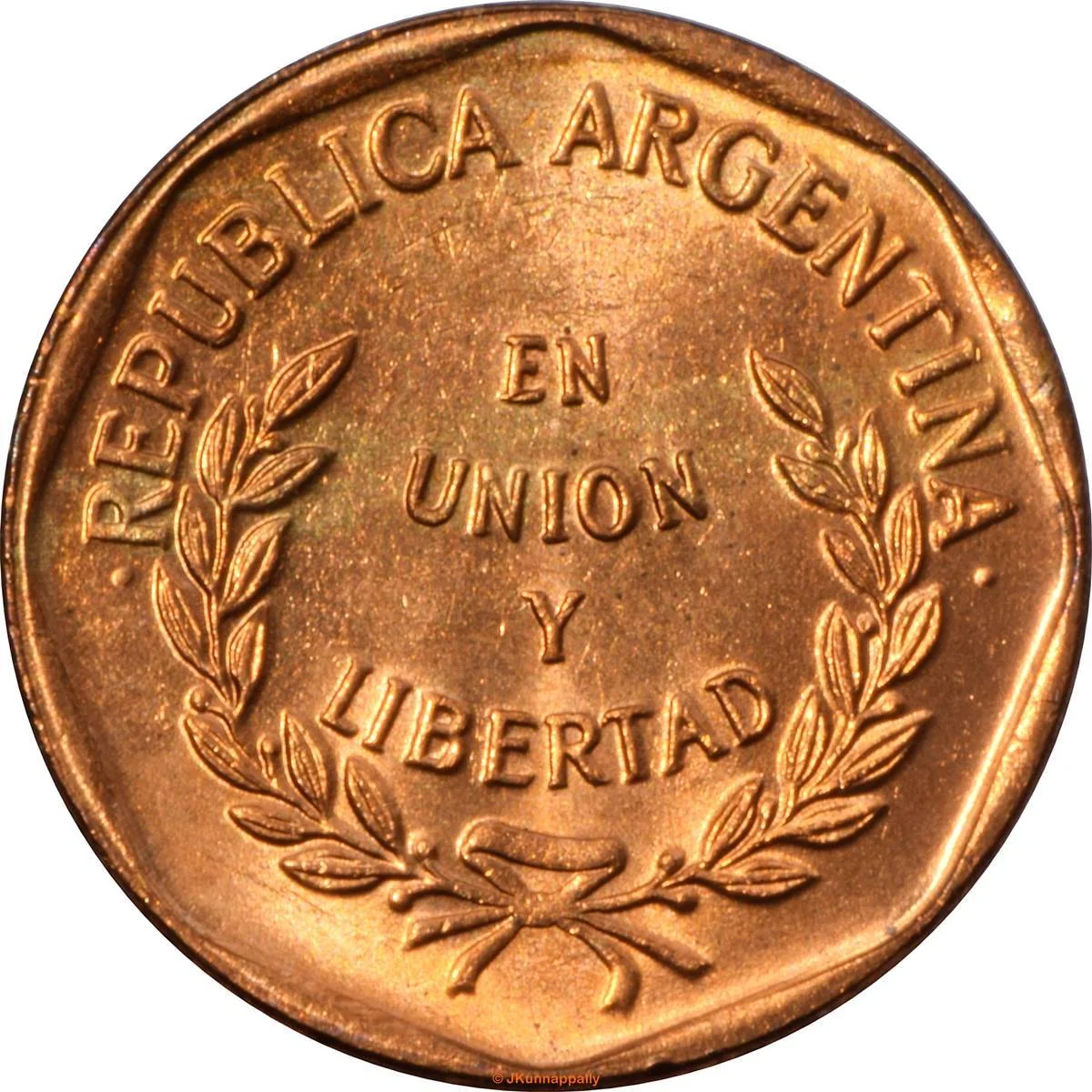
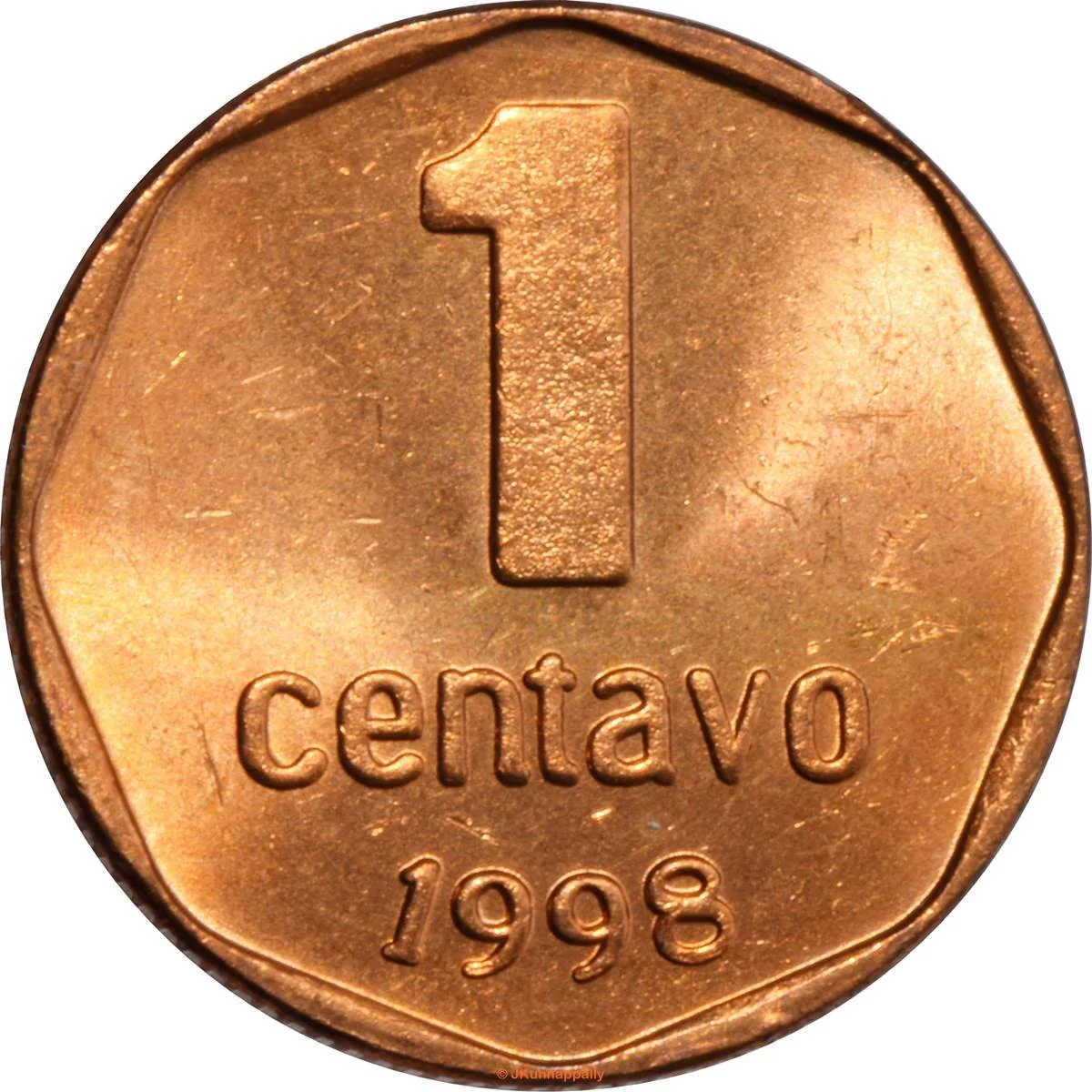

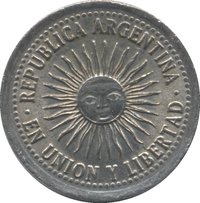
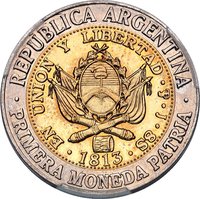
Obverse
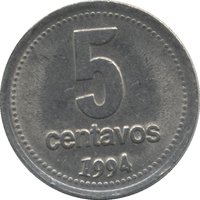
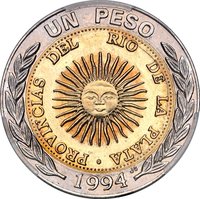
Reverse
Edge
Reeded
Mintings
| Year | Mint Mark | Mintage | Quality | Collection |
|---|---|---|---|---|
| 1993 | — | 48,000,000 | ||
| 1997 | — | 50,000,000 | BU | |
| 1998 | — | 50,000,000 | BU | |
| 1999 | — | 70,000,000 | BU | |
| 2000 | — | 37,000,000 | BU |
Historical background
In 1993, Argentina was in the early, seemingly successful phase of the Convertibility Plan, a radical economic stabilization program launched in 1991. The cornerstone of this plan was Law No. 23,928, which established a fixed, one-to-one parity between the Argentine peso and the US dollar. This was not merely a peg but a currency board arrangement, requiring the Central Bank to hold US dollar reserves to fully back the monetary base. The primary goal was to shatter the hyperinflation that had devastated the economy in the late 1980s, restoring public trust in the national currency by legally anchoring it to the dollar.
The results by 1993 were largely positive and the plan was hailed as a "miracle." Inflation plummeted from over 2,300% in 1990 to single digits, fostering economic stability and renewed confidence. This environment attracted significant foreign investment and triggered a period of strong economic growth, with GDP expanding rapidly. The peso's parity made imports cheap and facilitated access to international credit, leading to a wave of consumption and modernization. President Carlos Menem's government was actively pursuing a broader agenda of privatization, deregulation, and trade liberalization, with convertibility providing the necessary monetary stability for these structural reforms.
However, the rigidity of the system also sowed the seeds for future vulnerabilities. The fixed exchange rate eroded Argentina's export competitiveness, as the peso's value was tied to a strengthening dollar. This contributed to a growing trade deficit, while high interest rates and an overvalued currency began to stifle industrial production. Furthermore, the currency board severely limited the Central Bank's ability to act as a lender of last resort or use monetary policy to respond to economic shocks. While 1993 represented the zenith of confidence in the Convertibility Plan, these underlying imbalances were quietly accumulating, setting the stage for the severe crises that would emerge later in the decade.
The results by 1993 were largely positive and the plan was hailed as a "miracle." Inflation plummeted from over 2,300% in 1990 to single digits, fostering economic stability and renewed confidence. This environment attracted significant foreign investment and triggered a period of strong economic growth, with GDP expanding rapidly. The peso's parity made imports cheap and facilitated access to international credit, leading to a wave of consumption and modernization. President Carlos Menem's government was actively pursuing a broader agenda of privatization, deregulation, and trade liberalization, with convertibility providing the necessary monetary stability for these structural reforms.
However, the rigidity of the system also sowed the seeds for future vulnerabilities. The fixed exchange rate eroded Argentina's export competitiveness, as the peso's value was tied to a strengthening dollar. This contributed to a growing trade deficit, while high interest rates and an overvalued currency began to stifle industrial production. Furthermore, the currency board severely limited the Central Bank's ability to act as a lender of last resort or use monetary policy to respond to economic shocks. While 1993 represented the zenith of confidence in the Convertibility Plan, these underlying imbalances were quietly accumulating, setting the stage for the severe crises that would emerge later in the decade.
Series: 1993 Argentina circulation coins
🌱 Very Common