

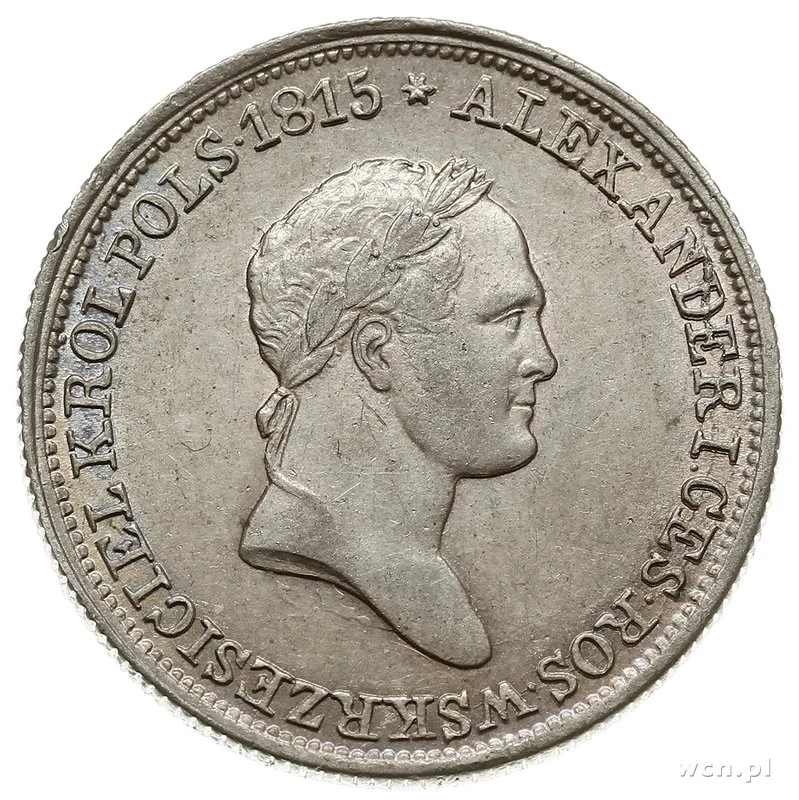
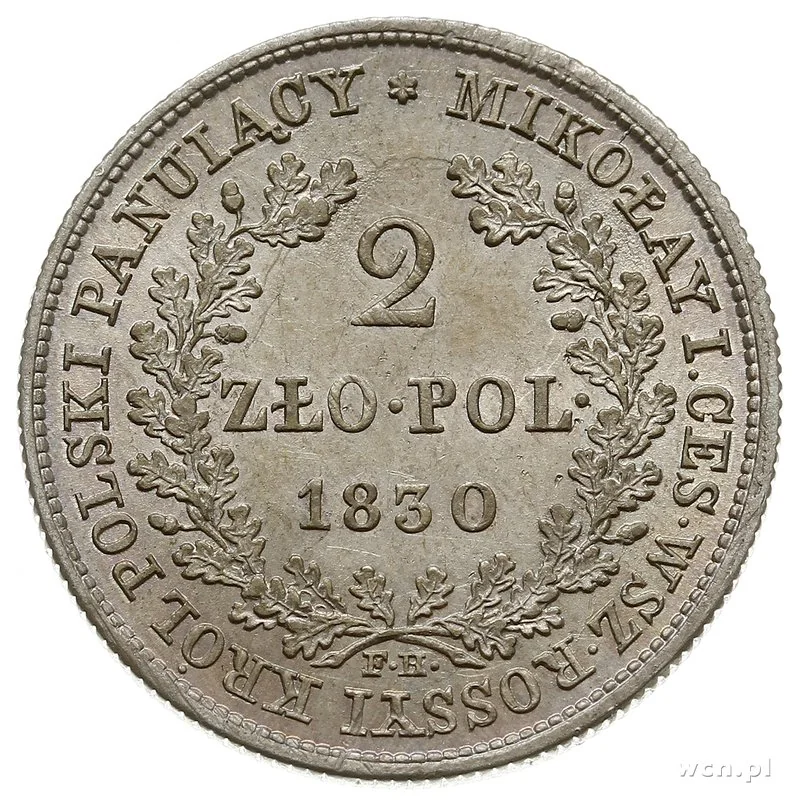
2 Zlotys – Congress Kingdom of Poland
Poland
Context
Years: 1826–1830
Country: Poland 
Issuer: Congress Kingdom of Poland
Ruler: Nicholas I
Currency:
(1815—1841)
Demonetized: Yes
Total mintage: 540,302
Material
References
Numista: #82044
Value
Bullion value: $25.02
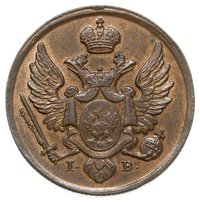
Obverse
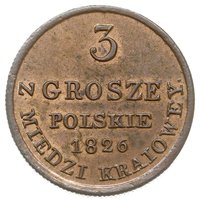
Description:
Denomination and date within wreaths and lettering.
Script: Latin
Reverse
Edge
Reeded
Mintings
| Year | Mint Mark | Mintage | Quality | Collection |
|---|---|---|---|---|
| 1826 | — | 65,134 | ||
| 1828 | — | 119,232 | ||
| 1830 | — | 355,936 |
Historical background
In 1826, the currency situation in the Congress Kingdom of Poland was characterized by a complex and strained dual-system, a legacy of its political connection to the Russian Empire. Officially, the Kingdom operated on a bimetallic standard based on the Polish złoty, which was pegged to the Russian monetary system at a fixed rate of 1 złoty = 15 silver kopecks. The Bank of Poland, established in 1828, was tasked with maintaining this standard and issuing paper notes. However, the system was undermined by the simultaneous and dominant circulation of actual Russian currency—silver rubles and kopecks, as well as copper coins—which were legally recognized and widely used for everyday transactions, creating a de facto Russian monetary hegemony.
This monetary duality reflected deeper economic pressures. The Kingdom's finances were heavily burdened by the costs of maintaining a large standing army, as mandated by Russia, and by substantial investments in infrastructure and industry initiated by Finance Minister Prince Xavier Drucki-Lubecki. While these investments spurred early industrialization, they also led to budget deficits. Consequently, despite the nominal silver standard, the scarcity of precious metal led to a reliance on paper banknotes issued by the Bank of Poland, which began operations precisely to consolidate debt and manage currency issuance, though its full impact would be felt after 1828.
Overall, the currency situation in 1826 was one of fragile stability, masking underlying dependencies. The Polish złoty existed more as a unit of account tied to the Russian ruble than as a sovereign circulating currency. This arrangement symbolized the Kingdom's limited autonomy within the Russian Empire, with its monetary policy ultimately subject to St. Petersburg's interests and the broader fiscal demands of the state, setting the stage for future financial challenges.
This monetary duality reflected deeper economic pressures. The Kingdom's finances were heavily burdened by the costs of maintaining a large standing army, as mandated by Russia, and by substantial investments in infrastructure and industry initiated by Finance Minister Prince Xavier Drucki-Lubecki. While these investments spurred early industrialization, they also led to budget deficits. Consequently, despite the nominal silver standard, the scarcity of precious metal led to a reliance on paper banknotes issued by the Bank of Poland, which began operations precisely to consolidate debt and manage currency issuance, though its full impact would be felt after 1828.
Overall, the currency situation in 1826 was one of fragile stability, masking underlying dependencies. The Polish złoty existed more as a unit of account tied to the Russian ruble than as a sovereign circulating currency. This arrangement symbolized the Kingdom's limited autonomy within the Russian Empire, with its monetary policy ultimately subject to St. Petersburg's interests and the broader fiscal demands of the state, setting the stage for future financial challenges.
💎 Extremely Rare