

250 escudos (OUA) – Cape Verde
Add to wishlist
Non-circulating coins
Commemoration: 50th Anniversary of OUA
Cape Verde
Context
Material
References
KM: #
Numista: #81801
Value
Exchange value: 250 CVE
Bullion value: $28.26
Obverse
Description:
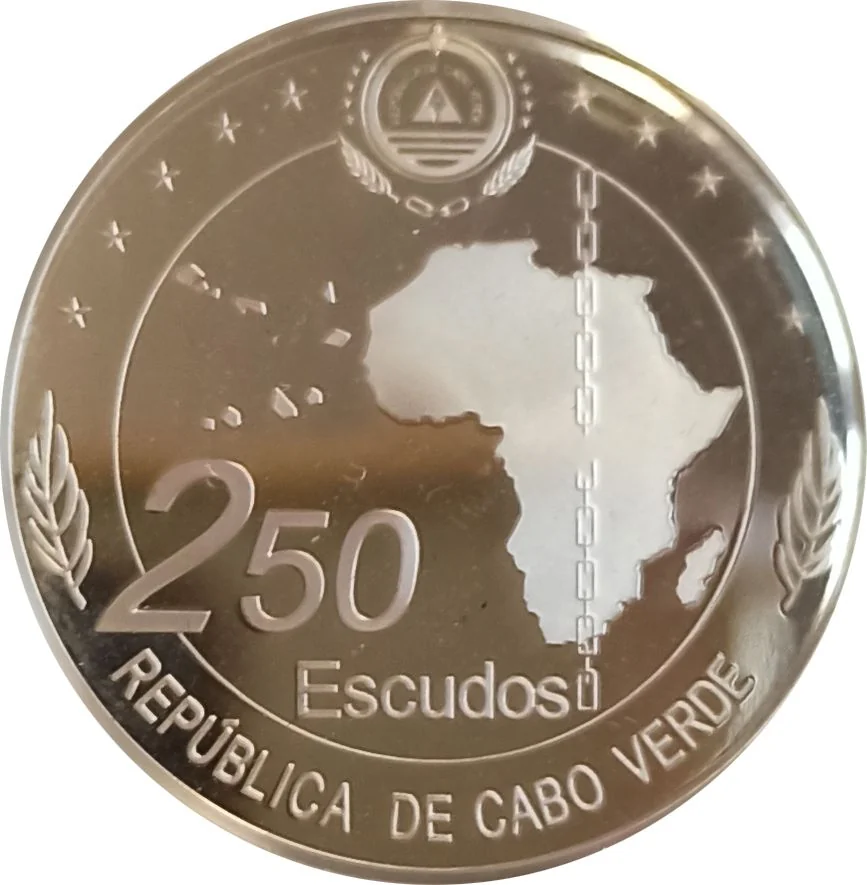
Map of Africa with Cape Verde Islands enlarged at left. Coats of arms above, large numeral at left. Five stars flank the ring, country name below within branches.
Inscription:
250 ESCUDOS
REPUBLICA DE CABO VERDE
REPUBLICA DE CABO VERDE
Translation:
250 Escudos
Republic of Cape Verde
Republic of Cape Verde
Script: Latin
Language: Portuguese
Reverse
Description:
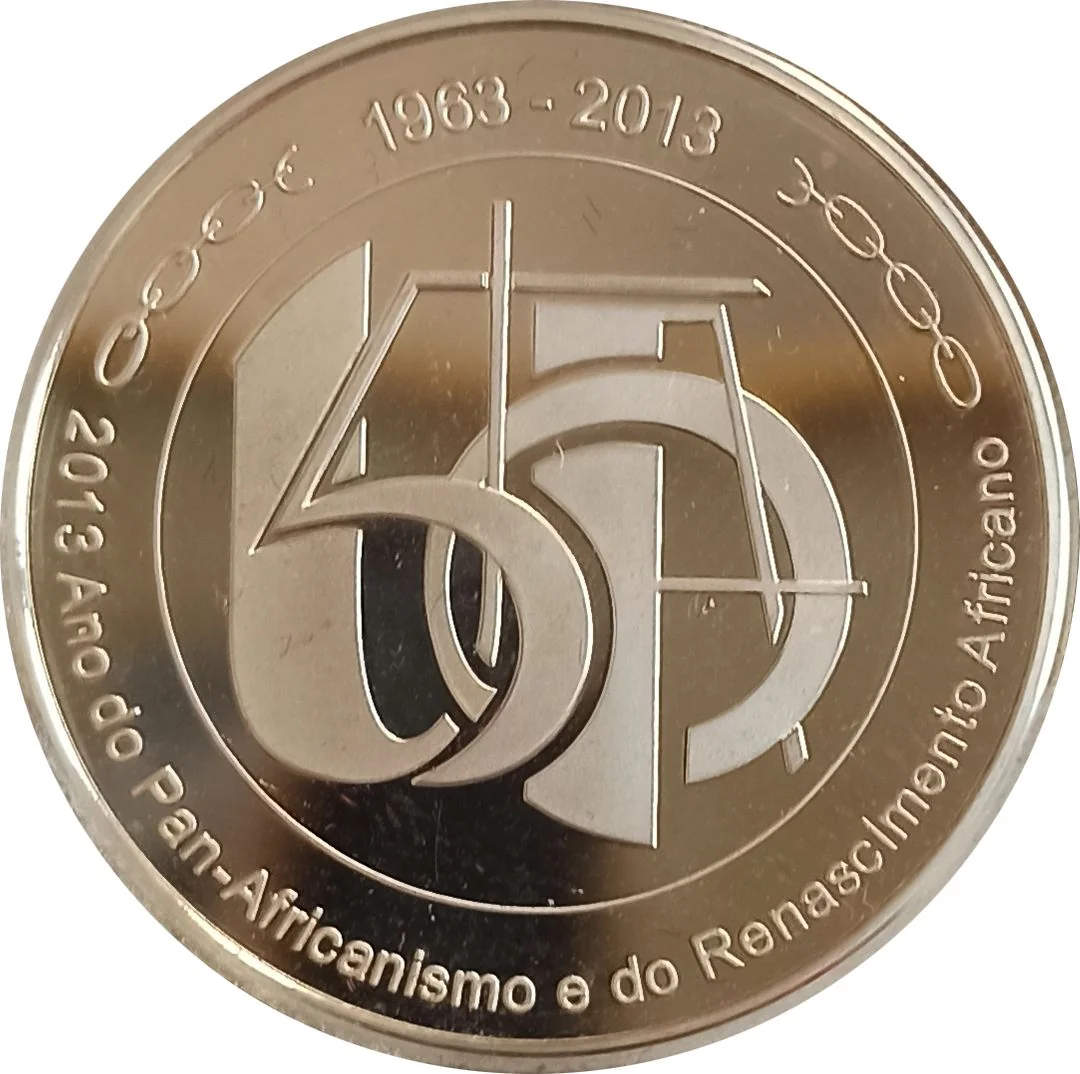
Anniversary logo centered, encircled by years and legend divided by chains.
Inscription:
1963-2013
50 UOA
2013 Ano do Pan-Africanisimo e do Renascimento Africano
50 UOA
2013 Ano do Pan-Africanisimo e do Renascimento Africano
Translation:
1963-2013
50 UOA
2013 Year of Pan-Africanism and the African Renaissance
50 UOA
2013 Year of Pan-Africanism and the African Renaissance
Script: Latin
Languages: English, Portuguese
Edge
Alternate : plain / milled
Mintings
| Year | Mint Mark | Mintage | Quality | Collection |
|---|---|---|---|---|
| 2013 | RM | 1,000 | Proof |
Historical background
In 2013, Cape Verde's currency situation was defined by its long-standing and stable peg to the euro. Since 1998, the Cape Verdean escudo (CVE) had been formally pegged to the Portuguese escudo and, following its adoption, to the euro at a fixed exchange rate of 110.265 CVE to 1 euro. This arrangement was supported by a Convertibility Agreement with Portugal, which guaranteed unlimited convertibility between the two currencies, providing a crucial anchor for monetary policy and economic stability for the small, tourism-dependent island nation.
The peg served Cape Verde well, particularly in 2013, by controlling inflation, fostering investor confidence, and facilitating trade and financial transactions with its main European partners. However, it also meant the country relinquished control over its independent monetary policy. The Banco de Cabo Verde (BCV) could not use interest rates or exchange rate adjustments to respond to domestic economic shocks; its primary role was to maintain sufficient foreign exchange reserves to defend the fixed parity. This structure made the economy sensitive to economic fluctuations in the Eurozone, especially following the region's sovereign debt crisis which peaked in the years just prior.
Overall, the currency regime in 2013 was considered a success, contributing to macroeconomic stability and predictable economic planning. The key challenges were structural: maintaining export competitiveness despite a fixed exchange rate and ensuring continued growth in foreign reserves, largely driven by tourism receipts, remittances, and foreign direct investment, to robustly back the peg. The system's stability was a cornerstone of the country's economic narrative, distinguishing it from many of its regional peers.
The peg served Cape Verde well, particularly in 2013, by controlling inflation, fostering investor confidence, and facilitating trade and financial transactions with its main European partners. However, it also meant the country relinquished control over its independent monetary policy. The Banco de Cabo Verde (BCV) could not use interest rates or exchange rate adjustments to respond to domestic economic shocks; its primary role was to maintain sufficient foreign exchange reserves to defend the fixed parity. This structure made the economy sensitive to economic fluctuations in the Eurozone, especially following the region's sovereign debt crisis which peaked in the years just prior.
Overall, the currency regime in 2013 was considered a success, contributing to macroeconomic stability and predictable economic planning. The key challenges were structural: maintaining export competitiveness despite a fixed exchange rate and ensuring continued growth in foreign reserves, largely driven by tourism receipts, remittances, and foreign direct investment, to robustly back the peg. The system's stability was a cornerstone of the country's economic narrative, distinguishing it from many of its regional peers.


✨ Legendary