

250 Escudos (independence and development) – Cape Verde
Non-circulating coins
Commemoration: 40 years of independence & development
Cape Verde
Context

Material
References
KM: #Click to copy to clipboard55a
Numista: #379178
Value
Exchange value: 250 CVE
Bullion value: $31.55
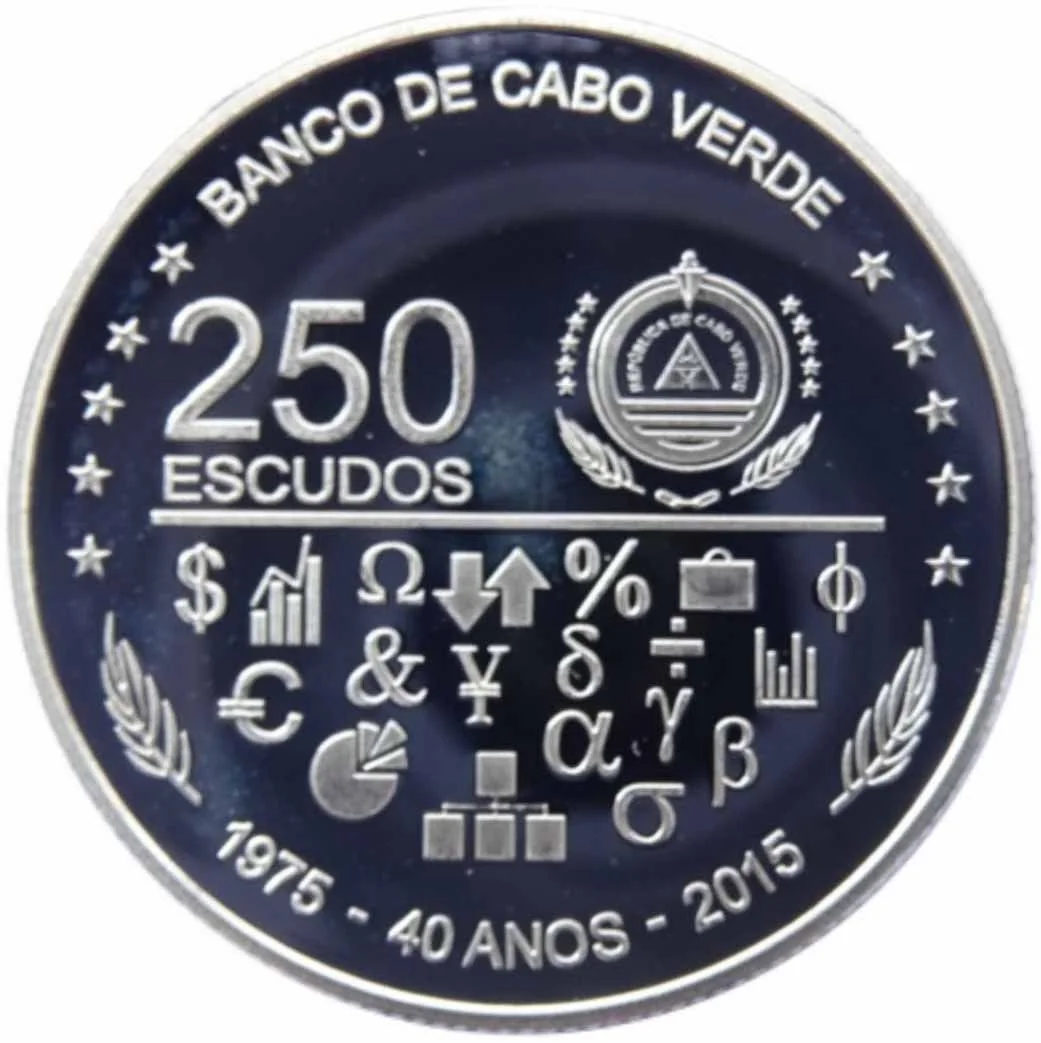
Obverse
Inscription:
BANCO DE CABO VERDE
1975 - 40 ANOS - 2015
1975 - 40 ANOS - 2015
Translation:
Bank of Cape Verde
1975 - 40 Years - 2015
1975 - 40 Years - 2015
Script: Latin
Language: Portuguese
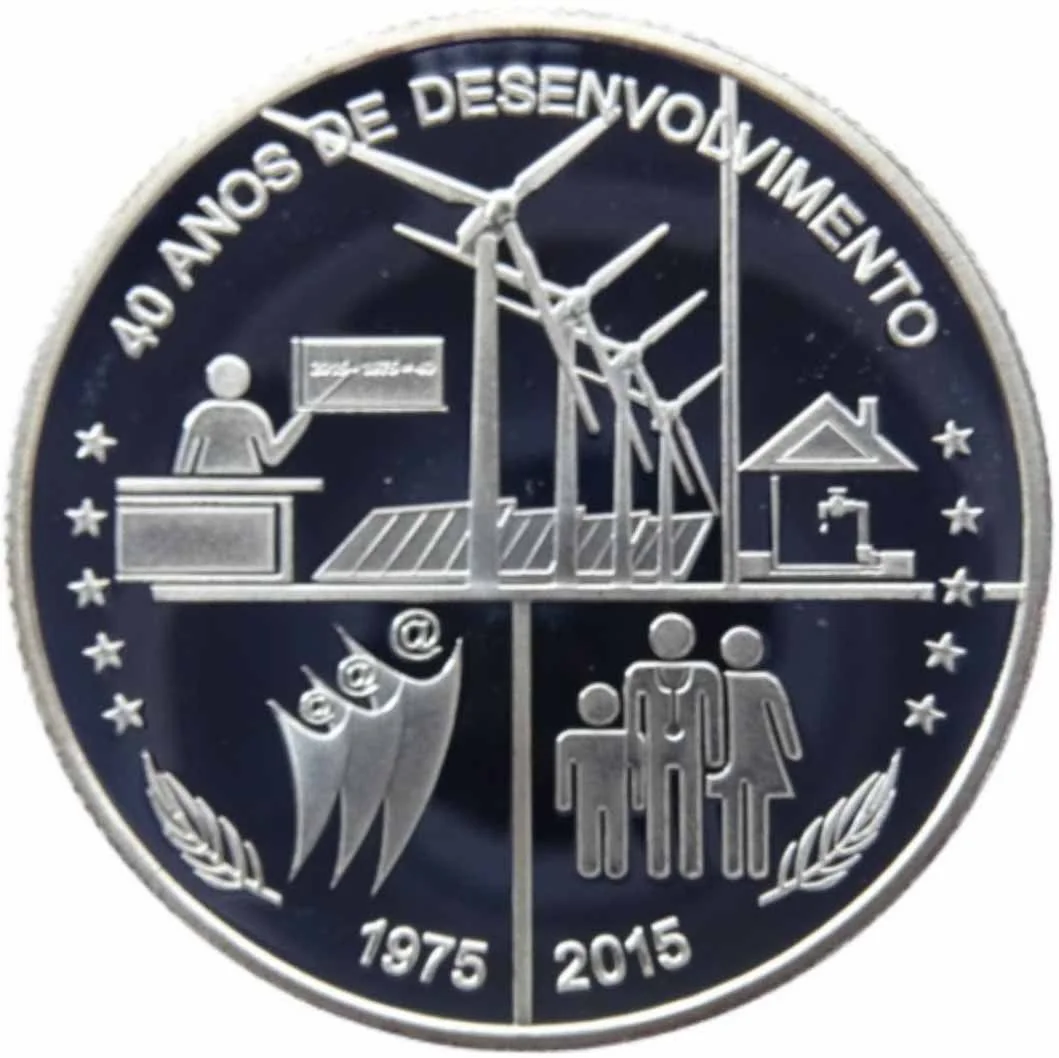
Reverse
Description:
40 anos de desenvolvimento (1975-2015)
Script: Latin
Edge
Reeded
Categories
| Event> Independence |
Mints
| Name | Mark |
|---|---|
| Imprensa Nacional - Casa da Moeda | — |
Mintings
| Year | Mint Mark | Mintage | Quality | Collection |
|---|---|---|---|---|
| 2015 | — | 1,000 |
Historical background
In 2015, Cape Verde's currency situation was defined by its long-standing and stable peg to the euro. Since 1998, the Cape Verdean escudo (CVE) had been fixed to the Portuguese escudo and, following its adoption, to the euro at a rate of 110.265 CVE to 1 euro. This arrangement was supported by a formal agreement with Portugal, later succeeded by the European Union, which provided a framework for convertibility and financial cooperation. This peg provided crucial stability for the small, tourism-dependent island economy, anchoring inflation, facilitating trade and investment with its main European partners, and instilling confidence in the financial system.
The economy faced significant headwinds that year, however, testing the constraints of the fixed exchange rate regime. Cape Verde was still grappling with the lingering effects of the Eurozone debt crisis, which dampened tourism and foreign direct investment from its primary market. Furthermore, a severe drought that began in 2014 crippled agricultural output, necessitating expensive food imports and exacerbating a wide trade deficit. These factors put pressure on foreign exchange reserves and highlighted the economy's vulnerability to external shocks, a common challenge for countries with fixed pegs.
Despite these pressures, the peg remained firmly intact and was considered a cornerstone of the country's macroeconomic policy. The government, under Prime Minister José Maria Neves, maintained fiscal discipline with support from international partners like the IMF, which helped bolster reserves. The Central Bank of Cape Verde effectively managed the currency board-like system, ensuring the peg's credibility. Consequently, while the economic climate was challenging, the currency situation itself was marked by notable stability, with the escudo's fixed value providing a predictable environment amidst broader economic difficulties.
The economy faced significant headwinds that year, however, testing the constraints of the fixed exchange rate regime. Cape Verde was still grappling with the lingering effects of the Eurozone debt crisis, which dampened tourism and foreign direct investment from its primary market. Furthermore, a severe drought that began in 2014 crippled agricultural output, necessitating expensive food imports and exacerbating a wide trade deficit. These factors put pressure on foreign exchange reserves and highlighted the economy's vulnerability to external shocks, a common challenge for countries with fixed pegs.
Despite these pressures, the peg remained firmly intact and was considered a cornerstone of the country's macroeconomic policy. The government, under Prime Minister José Maria Neves, maintained fiscal discipline with support from international partners like the IMF, which helped bolster reserves. The Central Bank of Cape Verde effectively managed the currency board-like system, ensuring the peg's credibility. Consequently, while the economic climate was challenging, the currency situation itself was marked by notable stability, with the escudo's fixed value providing a predictable environment amidst broader economic difficulties.
✨ Legendary