

1 New Sheqel – Israel
Israel
Context
Year: 1988
Hebrew Year: 5748
Issuer: Israel 
Issuing organization: Israel Government Coins and medals Corp.
Period:
(since 1948)
Currency:
(since 1986)
Total mintage: 8,990
Material
References
KM: #Click to copy to clipboard185
Numista: #81669
Value
Exchange value: 1 ILS = $0.32
Bullion value: $35.29
Inflation-adjusted value: 6.23 ILS
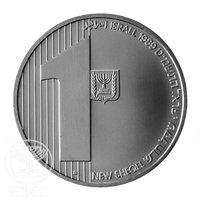
Obverse
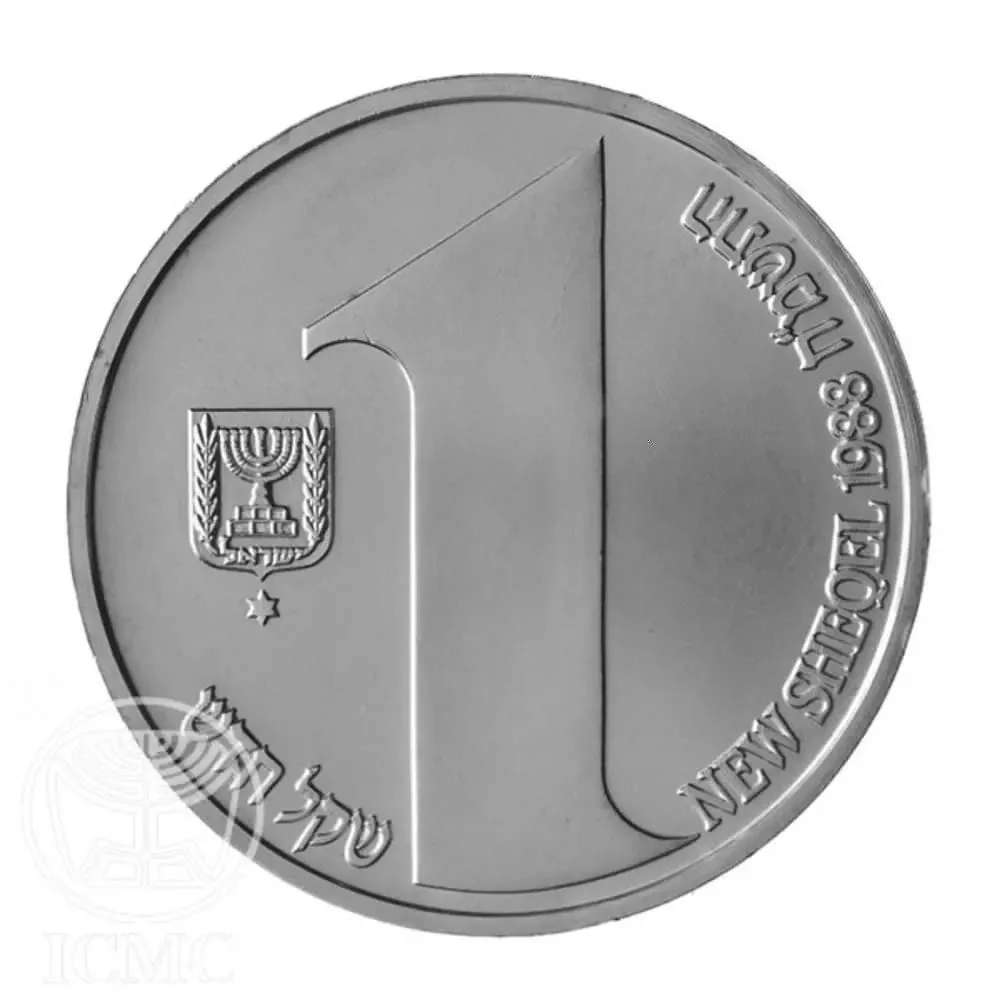
Description:
Premium value
Inscription:
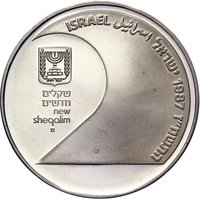
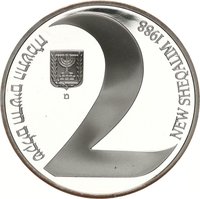
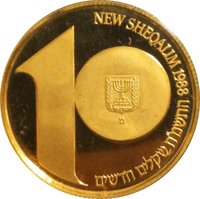
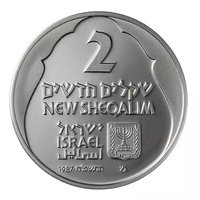
1 NEW SHEQEL
1988 התשמ"ח
שקל חדש
1988 התשמ"ח
שקל חדש
Translation:
1 New Sheqel
1988 The Year 5748
New Sheqel
1988 The Year 5748
New Sheqel
Designer: Asher Kalderon
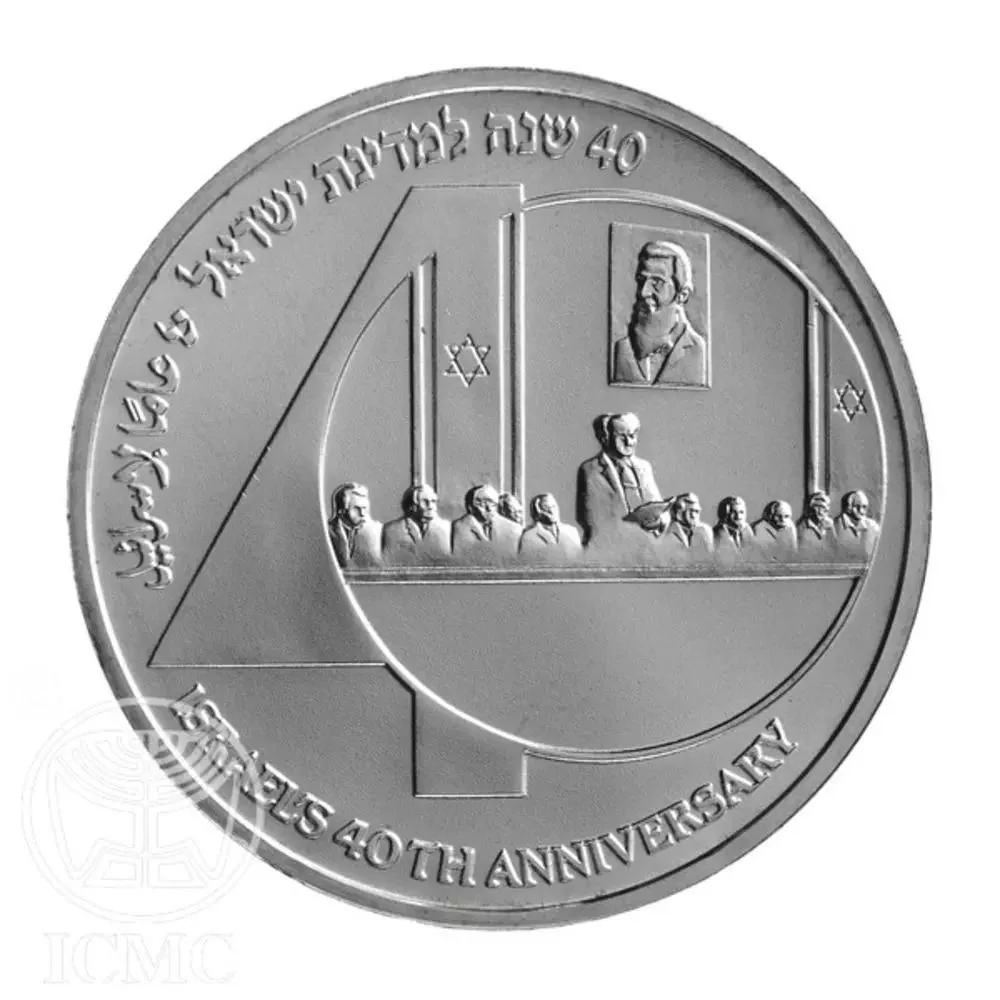
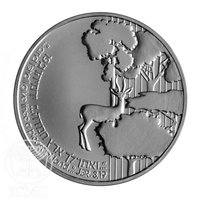
Reverse
Edge
Categories
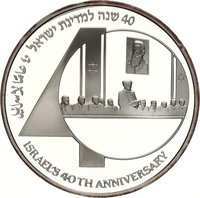
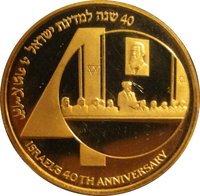
| Event> Independence |
Mints
| Name | Mark |
|---|---|
| Monnaie de Paris | — |
Mintings
| Year | Mint Mark | Mintage | Quality | Collection |
|---|---|---|---|---|
| 1988 | — | 8,990 |
Historical background
In 1988, Israel's currency situation was characterized by the ongoing struggle to stabilize the New Israeli Shekel (NIS), which had been introduced in 1985 as part of a comprehensive economic stabilization plan. This plan, a response to the hyperinflation of the early 1980s, successfully slashed annual inflation from over 400% to around 16% by 1988. However, the year was marked by significant pressure on the shekel, driven by the outbreak of the First Intifada in late 1987. The Palestinian uprising created political uncertainty and economic disruption, dampening tourism and investment, which in turn weakened confidence in the currency and increased inflationary risks.
The Bank of Israel managed the currency under a "dirty float" system, where the shekel's exchange rate was primarily determined by market forces but with frequent central bank intervention to prevent excessive volatility. A key policy tool was the use of "crawling peg" adjustments, where the shekel was allowed to depreciate gradually against a basket of currencies (primarily the US dollar) at a pre-announced rate. This mechanism aimed to balance the need for export competitiveness with the imperative of controlling imported inflation. In 1988, maintaining this delicate balance was a constant challenge, as the government also faced the fiscal strain of increased security expenditures due to the Intifada.
Ultimately, 1988 represented a critical test of the durability of the 1985 stabilization program. While the economic fundamentals had improved dramatically since the pre-stabilization crisis, external and political shocks exposed lingering vulnerabilities. The currency situation reflected a fragile equilibrium, where the achievements of controlled inflation and a functioning exchange rate regime were persistently threatened by geopolitical instability and the high cost of conflict, setting the stage for continued economic challenges in the years ahead.
The Bank of Israel managed the currency under a "dirty float" system, where the shekel's exchange rate was primarily determined by market forces but with frequent central bank intervention to prevent excessive volatility. A key policy tool was the use of "crawling peg" adjustments, where the shekel was allowed to depreciate gradually against a basket of currencies (primarily the US dollar) at a pre-announced rate. This mechanism aimed to balance the need for export competitiveness with the imperative of controlling imported inflation. In 1988, maintaining this delicate balance was a constant challenge, as the government also faced the fiscal strain of increased security expenditures due to the Intifada.
Ultimately, 1988 represented a critical test of the durability of the 1985 stabilization program. While the economic fundamentals had improved dramatically since the pre-stabilization crisis, external and political shocks exposed lingering vulnerabilities. The currency situation reflected a fragile equilibrium, where the achievements of controlled inflation and a functioning exchange rate regime were persistently threatened by geopolitical instability and the high cost of conflict, setting the stage for continued economic challenges in the years ahead.
Series: Israel Independence Day
⭐ Rare