

1 lira – Habsburg Venetian Province
Add to wishlist
Italy
Context
Year: 1802
Country: Italy
Issuer: Habsburg Venetian Province
Ruler: Francis II
Currency:
(1752—1805)
Demonetized: Yes
Material
References
KM: #
Numista: #81647
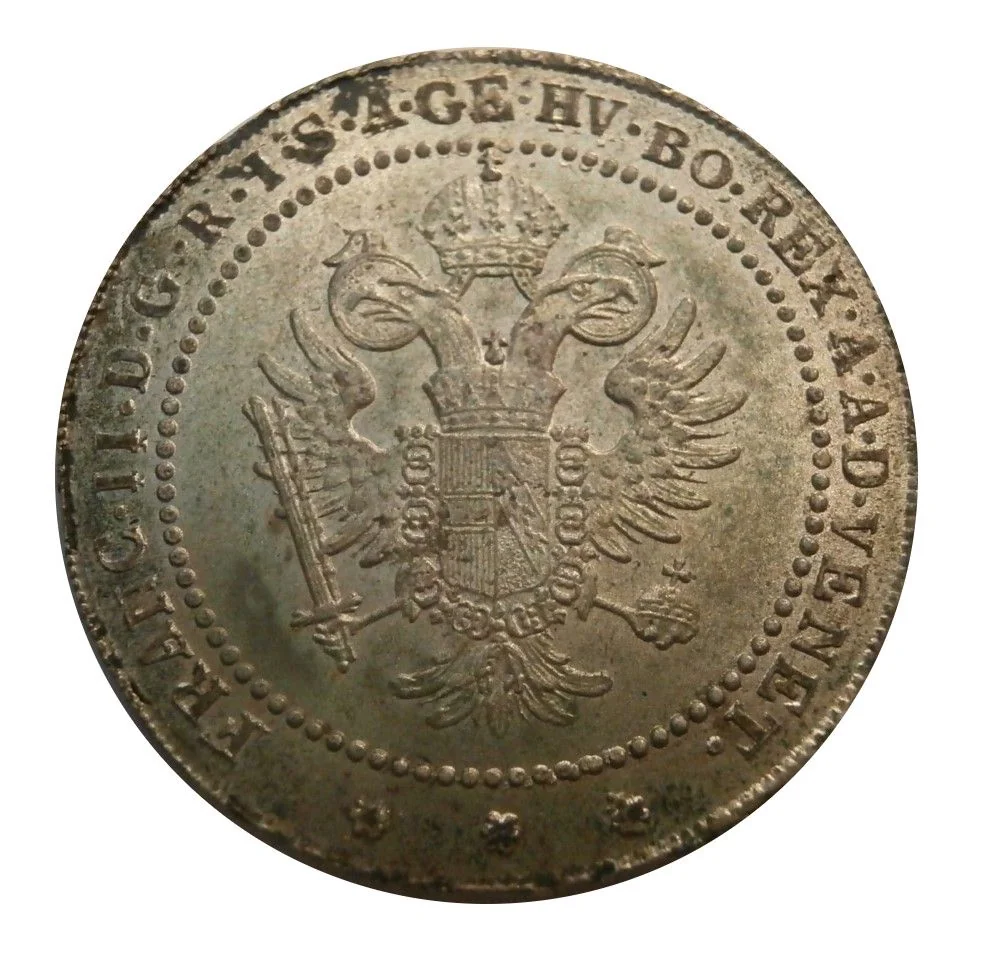
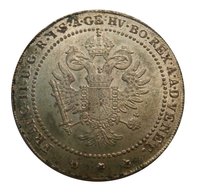
Obverse
Description:
Imperial eagle crowned within beaded circle.
Inscription:
FRANC. II. D. G. R. I. S. A. GE. HV. BO. REX. A. A. D. VEN.
Translation:
FRANCIS II BY THE GRACE OF GOD KING OF THE ROMANS, SEMPER AUGUSTUS, OF GERMANY, HUNGARY, BOHEMIA, ARCHDUKE OF AUSTRIA, DUKE OF VENICE.
Script: Latin
Language: Latin
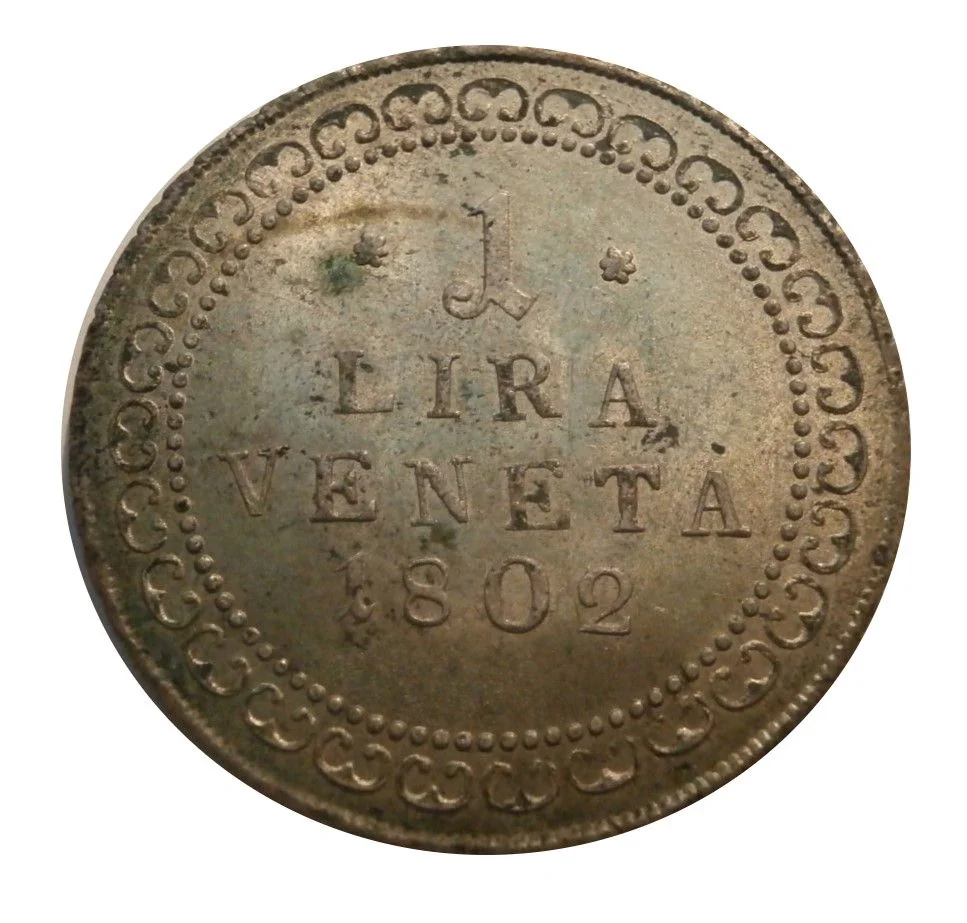
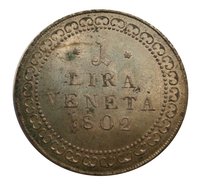
Reverse
Description:
Dated four-line verse in decorative frame.
Inscription:
1
LIRA
VENETA
1802
LIRA
VENETA
1802
Script: Latin
Edge
Chain ornament
Mints
| Name | Mark |
|---|---|
| Venice | — |
Mintings
| Year | Mint Mark | Mintage | Quality | Collection |
|---|---|---|---|---|
| 1802 | — | — |
Historical background
In 1802, the Habsburg Venetian Province, comprising the former territories of the Venetian Republic annexed in 1797, faced a complex and unstable currency situation. The Austrian administration inherited a monetary system in disarray following the fall of Venice, characterized by a chaotic mix of old Venetian coins (like the zecchino and lira), Austrian currency (Conventionsthaler and kreuzers), and various foreign coins circulating from the turbulent Napoleonic wars. This created significant confusion in trade and daily transactions, as the values and exchange rates between these disparate currencies were neither fixed nor universally accepted.
Recognizing the need for order, the Habsburg authorities sought to impose monetary standardization by extending the Austrian Convention monetary system to the province. The goal was to establish the Conventionsthaler as the primary unit of account and gradually phase out the old Venetian currency. However, this process was met with practical difficulties and local resistance. The population, long accustomed to Venetian money, was often distrustful of the new imperial coins, and the economic dislocation following the annexation slowed the full integration of the monetary system.
Consequently, the year 1802 represented a transitional period of enforced but incomplete monetary unification. While official transactions and state finances were conducted in Austrian currency, a de facto dual circulation persisted in markets. This period of uncertainty would be short-lived, however, as the Treaty of Pressburg in 1805 would soon transfer the province to the Napoleonic Kingdom of Italy, abruptly ending Habsburg monetary reforms and introducing yet another new currency regime.
Recognizing the need for order, the Habsburg authorities sought to impose monetary standardization by extending the Austrian Convention monetary system to the province. The goal was to establish the Conventionsthaler as the primary unit of account and gradually phase out the old Venetian currency. However, this process was met with practical difficulties and local resistance. The population, long accustomed to Venetian money, was often distrustful of the new imperial coins, and the economic dislocation following the annexation slowed the full integration of the monetary system.
Consequently, the year 1802 represented a transitional period of enforced but incomplete monetary unification. While official transactions and state finances were conducted in Austrian currency, a de facto dual circulation persisted in markets. This period of uncertainty would be short-lived, however, as the Treaty of Pressburg in 1805 would soon transfer the province to the Napoleonic Kingdom of Italy, abruptly ending Habsburg monetary reforms and introducing yet another new currency regime.
💎 Extremely Rare