

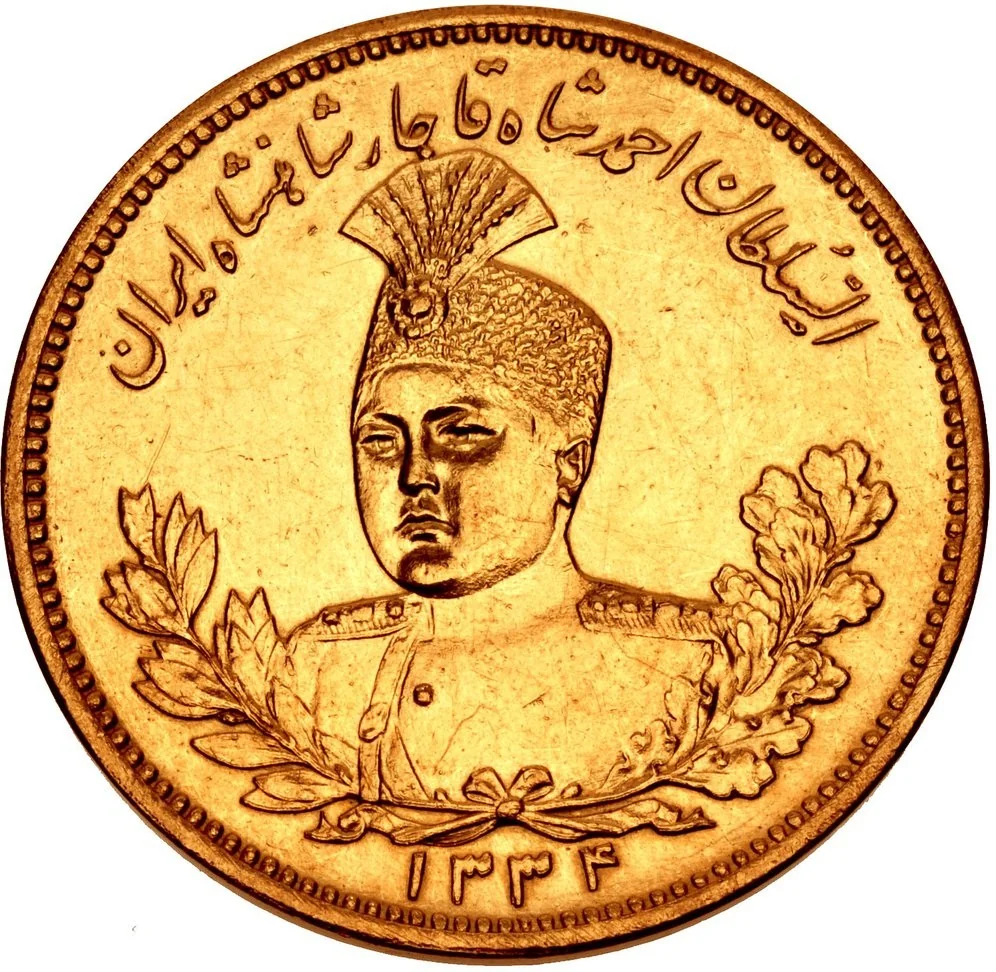
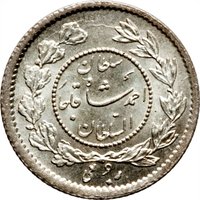
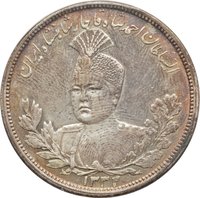
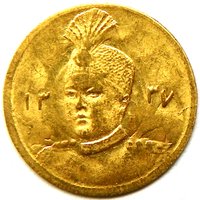
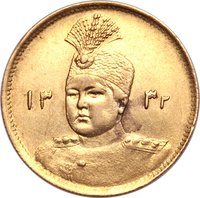
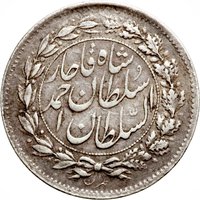
Obverse
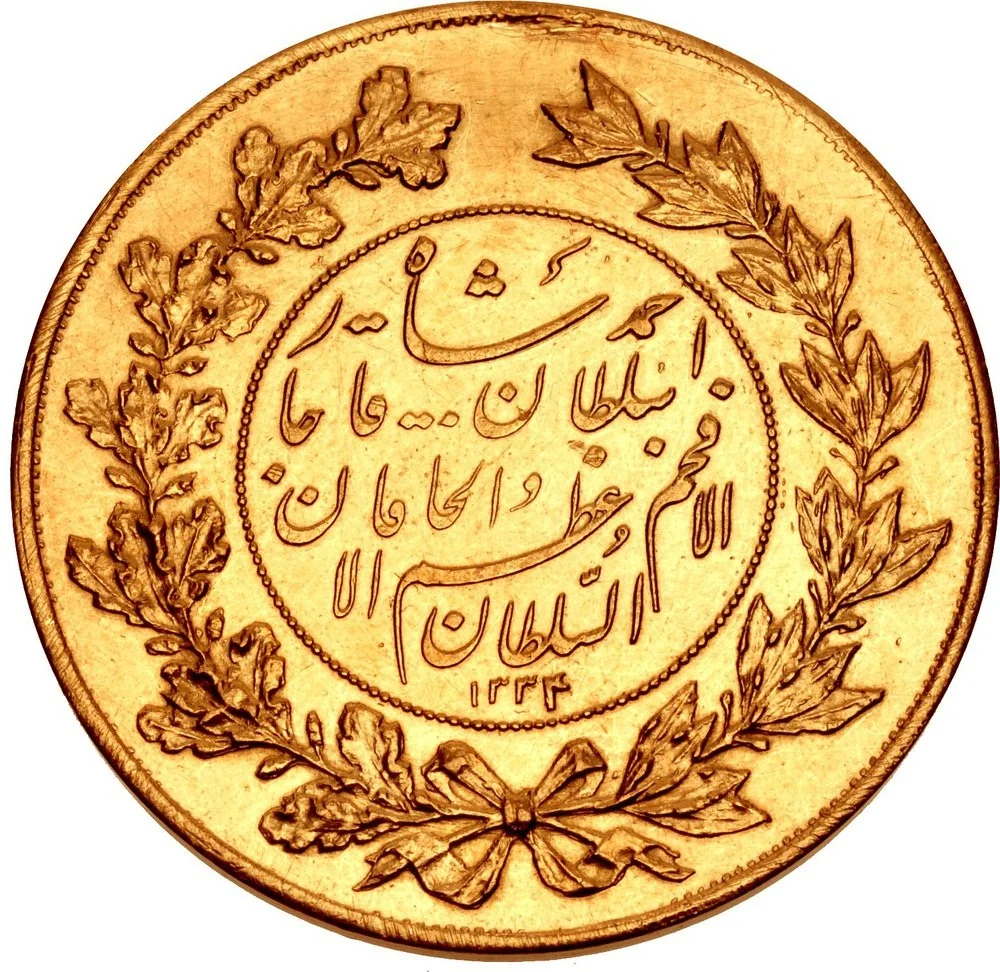
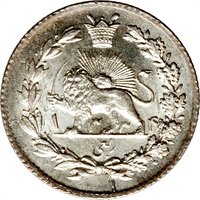
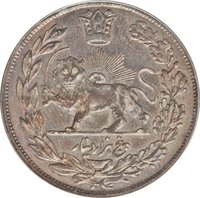
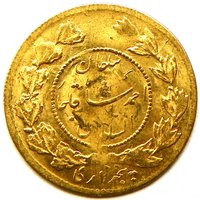
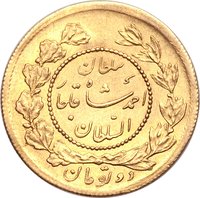
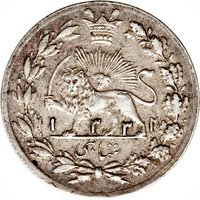
Reverse
Description:
Sultan Ahmad Shah Qajar, the great Sultan and dignified Khaqan, within a circular border and a laurel and oak wreath.
Inscription:
السُّلطان الاعظــــــم و الخاقان الافخم سلطان احمد شــــاه قاجار
۱۳۳۴
۱۳۳۴
Translation:
The Most Great Sultan and the Most Noble Khagan, Sultan Ahmad Shah Qajar
1334
1334
Edge
Reeded
Mintings
| Year | Mint Mark | Mintage | Quality | Collection |
|---|---|---|---|---|
| 1913 | — | — | ||
| 1916 | — | — | ||
| 1919 | — | — |
Historical background
In 1913, Iran’s monetary system was a complex and chaotic patchwork, emblematic of the nation’s semi-colonial status and economic fragility. The official currency was the silver qiran (also spelled kran), but its value had been severely degraded due to decades of debasement by bankrupt Qajar rulers, who minted coins with progressively lower silver content to finance state expenditures. This practice destroyed public trust in the coinage and led to a wide discrepancy between the nominal and intrinsic value of the silver coins in circulation. Alongside the qiran, the copper shahi and gold toman (equal to 10 qirans) were used, but without a fixed, stable relationship between the three metals, causing constant fluctuation and confusion in everyday transactions.
Compounding this domestic instability was the overwhelming influence of foreign currencies, particularly the Russian ruble and the British pound sterling, which circulated freely, especially in their respective spheres of influence. These strong foreign currencies were often preferred for large transactions and foreign trade, undermining Iranian sovereignty and hindering the development of a unified national economy. The Imperial Bank of Persia (British-owned) and the Banque d'Escompte de Perse (Russian-owned) further dominated the financial landscape, issuing their own banknotes which competed with, and were often more trusted than, the state’s own depreciated coinage.
This monetary anarchy created severe obstacles for both domestic commerce and international trade, as merchants faced immense difficulty in calculating prices and exchange rates. The situation underscored the Qajar government’s administrative weakness and its inability to control its own fiscal policy. The crisis would ultimately pave the way for major reforms in the 1920s and 1930s under Reza Shah Pahlavi, who established a central bank and introduced a modern, unified national currency to finally end the monetary disarray of the pre-war era.
Compounding this domestic instability was the overwhelming influence of foreign currencies, particularly the Russian ruble and the British pound sterling, which circulated freely, especially in their respective spheres of influence. These strong foreign currencies were often preferred for large transactions and foreign trade, undermining Iranian sovereignty and hindering the development of a unified national economy. The Imperial Bank of Persia (British-owned) and the Banque d'Escompte de Perse (Russian-owned) further dominated the financial landscape, issuing their own banknotes which competed with, and were often more trusted than, the state’s own depreciated coinage.
This monetary anarchy created severe obstacles for both domestic commerce and international trade, as merchants faced immense difficulty in calculating prices and exchange rates. The situation underscored the Qajar government’s administrative weakness and its inability to control its own fiscal policy. The crisis would ultimately pave the way for major reforms in the 1920s and 1930s under Reza Shah Pahlavi, who established a central bank and introduced a modern, unified national currency to finally end the monetary disarray of the pre-war era.
Series: 1913 Iran circulation coins
✨ Legendary