

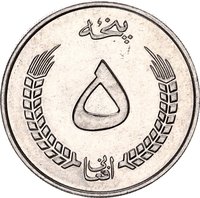
5 Afghanis – Afghanistan
Afghanistan
Context
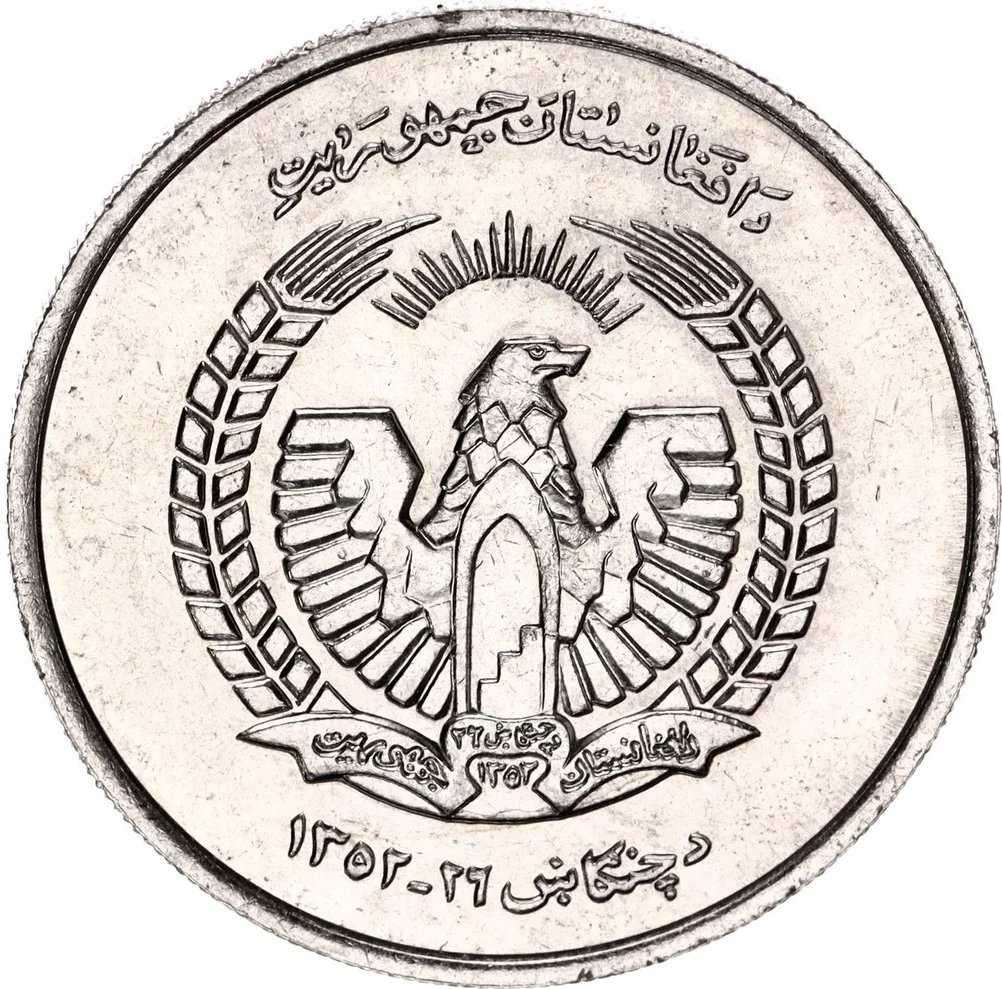
Year: 1973
Iranian - Persian Year: 1352
Issuer: Afghanistan 
Period:
(1973—1978)
Currency:
(1923—2003)
Demonetized: Yes
Total mintage: 34,750,000
Material
References
KM: #Click to copy to clipboard977
Numista: #8091
Value
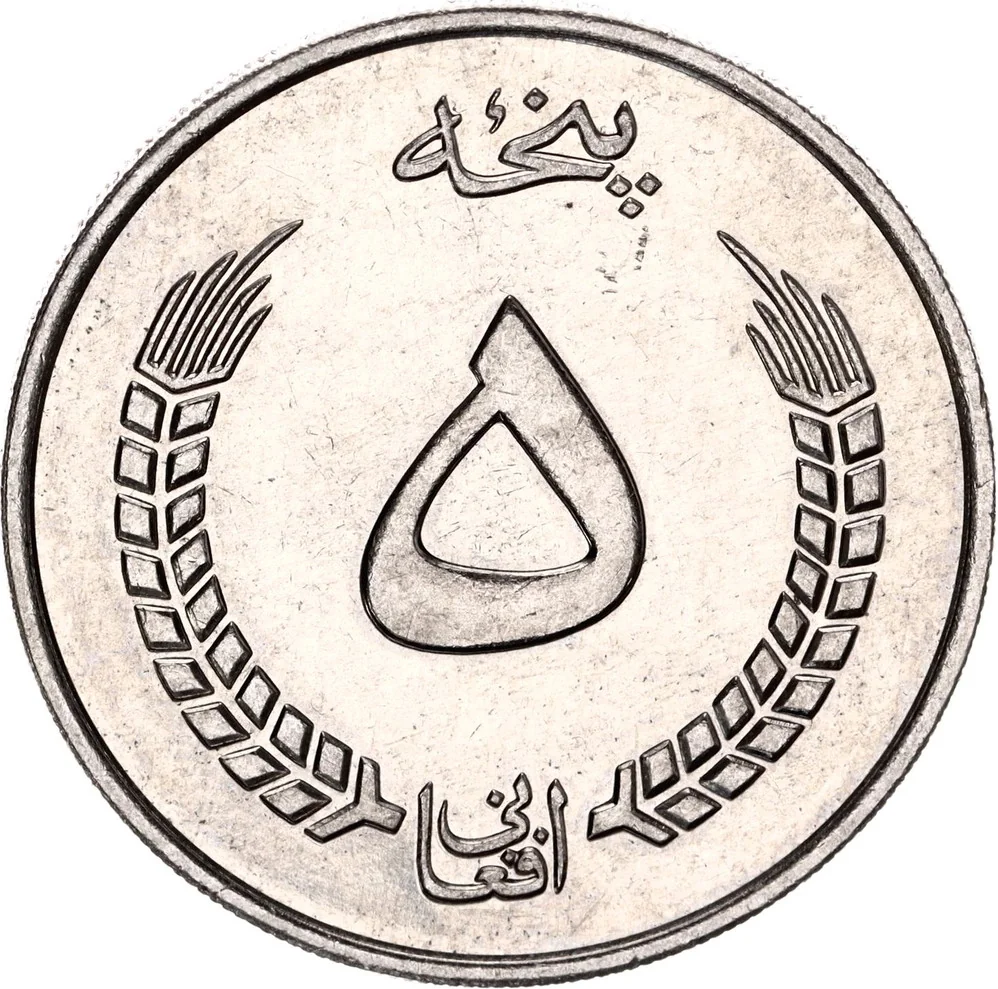
Exchange value: 5 AFA
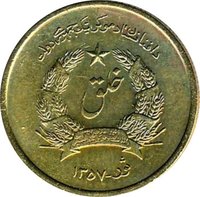
Obverse
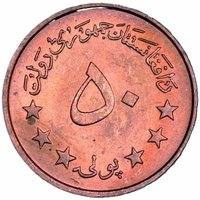
Reverse
Edge
Milled
Mints
| Name | Mark |
|---|---|
| Royal Mint | — |
Mintings
| Year | Mint Mark | Mintage | Quality | Collection |
|---|---|---|---|---|
| 1973 | — | 34,750,000 |
Historical background
In 1973, Afghanistan's currency situation was characterized by relative stability under a centralized monetary system, yet it existed within a fragile economic structure heavily dependent on agriculture and foreign aid. The Afghan afghani (AFA) was managed by Da Afghanistan Bank, the nation's central bank, which maintained a fixed exchange rate pegged to the U.S. dollar. This peg, established in the early 1960s, provided predictability for international trade but required careful management of the country's limited foreign exchange reserves, which came primarily from exports like cotton, fruit, and natural gas.
The broader economic context was one of gradual modernization under the monarchy, though the country remained among the world's poorest. Government budgets were consistently in deficit, financed largely through foreign loans and grants from both Cold War powers, the Soviet Union and the United States. This external dependency meant that while the currency itself was stable on paper, the underlying economy lacked diversification and industrial depth, making it vulnerable to external shocks and political shifts.
Crucially, this monetary stability was abruptly disrupted by the political events of 1973. In July, former Prime Minister Mohammed Daoud Khan seized power in a bloodless coup, overthrowing King Zahir Shah and declaring Afghanistan a republic. While immediate changes to the currency were not enacted that year, Daoud's coup marked the end of the monarchy's decades-long rule and set the country on a new political path. This shift would eventually lead to greater economic reliance on the Soviet Union, foreshadowing the profound instability and devaluation of the afghani that would follow in the coming decades of conflict.
The broader economic context was one of gradual modernization under the monarchy, though the country remained among the world's poorest. Government budgets were consistently in deficit, financed largely through foreign loans and grants from both Cold War powers, the Soviet Union and the United States. This external dependency meant that while the currency itself was stable on paper, the underlying economy lacked diversification and industrial depth, making it vulnerable to external shocks and political shifts.
Crucially, this monetary stability was abruptly disrupted by the political events of 1973. In July, former Prime Minister Mohammed Daoud Khan seized power in a bloodless coup, overthrowing King Zahir Shah and declaring Afghanistan a republic. While immediate changes to the currency were not enacted that year, Daoud's coup marked the end of the monarchy's decades-long rule and set the country on a new political path. This shift would eventually lead to greater economic reliance on the Soviet Union, foreshadowing the profound instability and devaluation of the afghani that would follow in the coming decades of conflict.
🌱 Common