

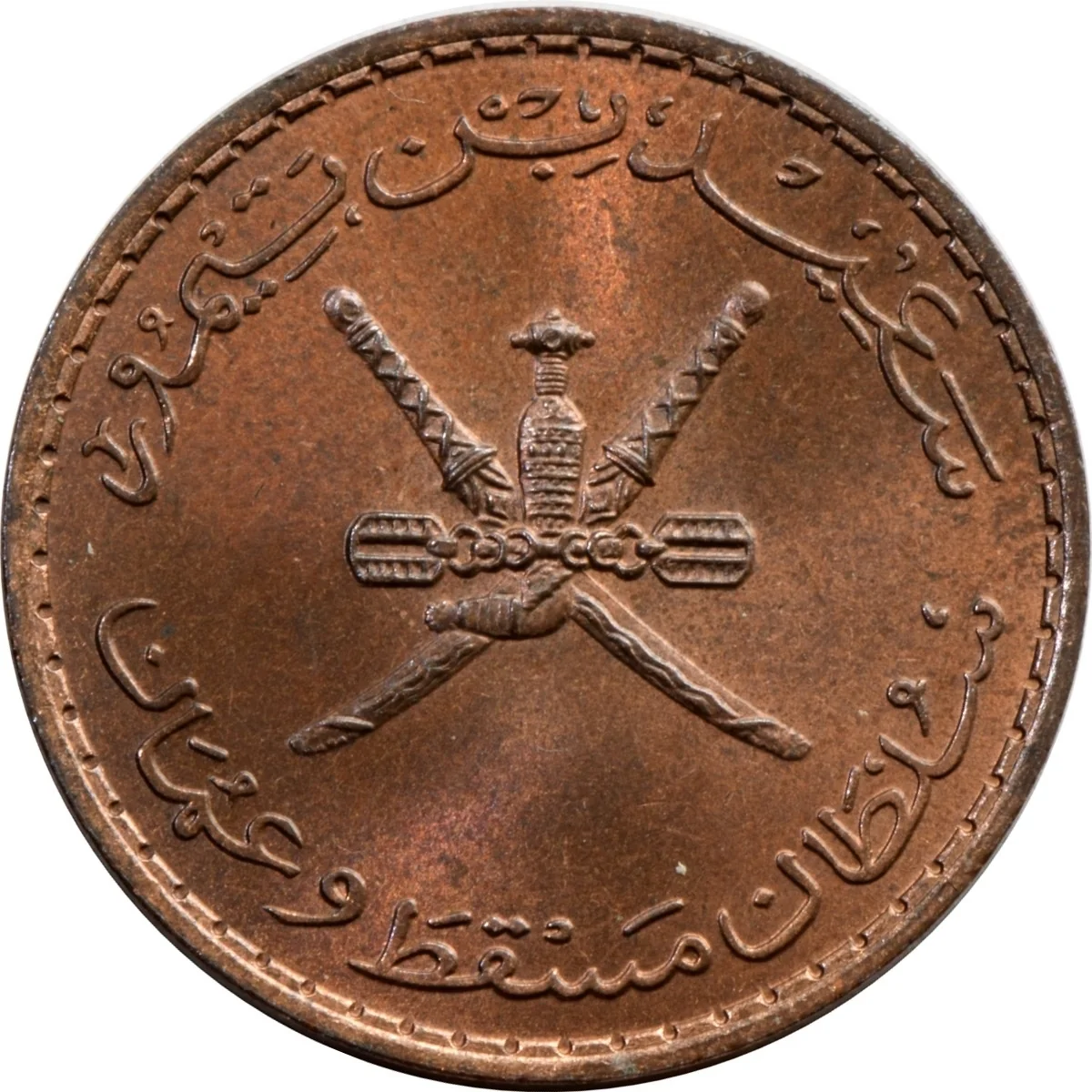
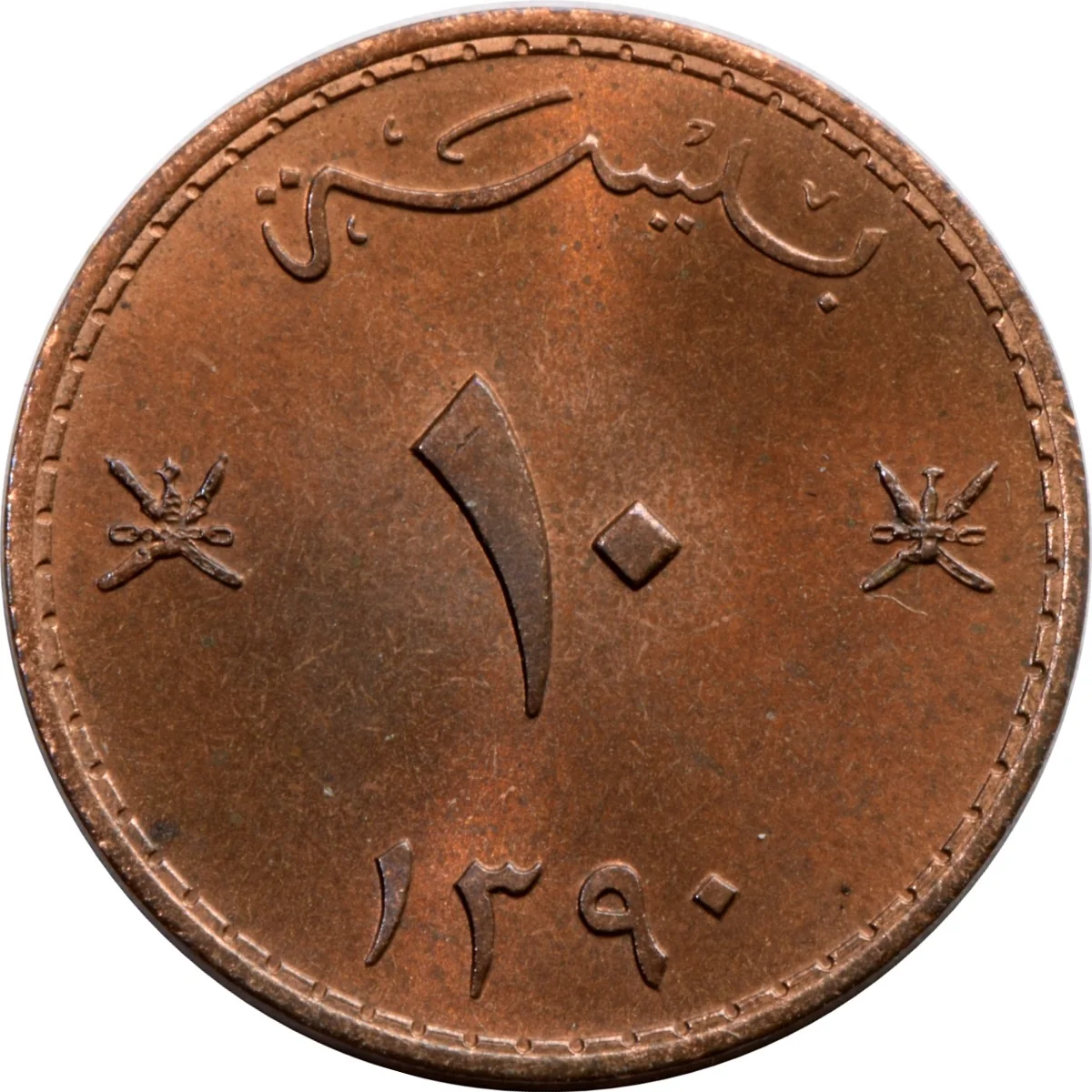
10 baisa – Muscat and Oman
Add to wishlist
Oman
Context
Year: 1970
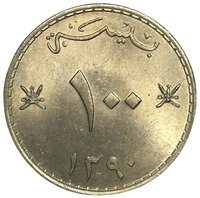
Islamic (Hijri) Year:: 1390
Country: Oman
Issuer: Muscat and Oman
Ruler: Said bin Taimur
Currency:
(since 1970)
Demonetized: Yes
Total mintage: 5,500
Material
References
KM: #
Numista: #8087
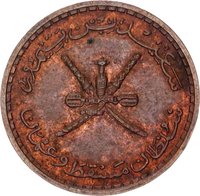
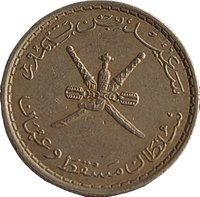
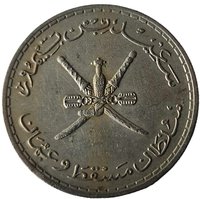
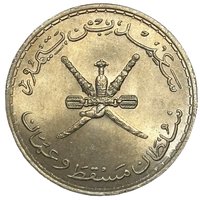
Obverse
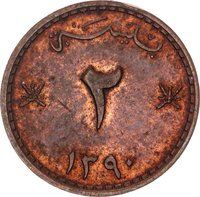
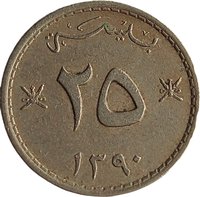
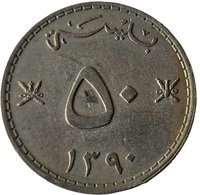
Reverse
Edge
Plain
Categories
| Symbols> Coat of Arms |
| Object> Cold weapons |
Mints
| Name | Mark |
|---|---|
| Royal Mint | — |
Mintings
| Year | Mint Mark | Mintage | Quality | Collection |
|---|---|---|---|---|
| 1970 | — | — | Proof | |
| 1970 | — | 5,500 |
Historical background
In 1970, the currency situation in Muscat and Oman reflected the country's profound isolation and economic underdevelopment under Sultan Said bin Taimur. The primary circulating currency was the Gulf rupee (XPGR), a currency issued by the Government of India (and later the Reserve Bank of India) for use in the Persian Gulf. Its use was a legacy of historical trade ties and British Indian influence, but it was a foreign currency, underscoring Oman's lack of a sovereign monetary system. Alongside the Gulf rupee, the Maria Theresa thaler (MT$)—an 18th-century Austrian silver coin—remained in widespread use, particularly in interior regions, for its trusted silver content. British gold sovereigns and Indian rupees also circulated, creating a complex and fragmented monetary environment.
This multi-currency system was symptomatic of a stagnant economy and restrictive governance. Sultan Said bin Taimur maintained extreme financial austerity, with state revenues almost entirely dependent on limited customs duties and fees. There were no banks, no formal financial institutions, and no development projects to stimulate the economy. The use of antique silver coins and foreign notes highlighted the absence of modern economic infrastructure and the state's inability to project financial authority or facilitate growth beyond coastal trading points.
The situation changed dramatically on July 23, 1970, when Sultan Qaboos bin Said deposed his father in a bloodless coup. A key priority of his new modernizing government was to establish monetary sovereignty as a foundation for national unity and economic progress. Consequently, later that same year, the Omani rial (OMR) was introduced, replacing the Gulf rupee at a rate of 1 rial = 21 rupees. Pegged to the US dollar, the new currency was a decisive step in consolidating the state's authority, unifying the country's economy, and signaling Oman's entry into the modern world and the global financial system.
This multi-currency system was symptomatic of a stagnant economy and restrictive governance. Sultan Said bin Taimur maintained extreme financial austerity, with state revenues almost entirely dependent on limited customs duties and fees. There were no banks, no formal financial institutions, and no development projects to stimulate the economy. The use of antique silver coins and foreign notes highlighted the absence of modern economic infrastructure and the state's inability to project financial authority or facilitate growth beyond coastal trading points.
The situation changed dramatically on July 23, 1970, when Sultan Qaboos bin Said deposed his father in a bloodless coup. A key priority of his new modernizing government was to establish monetary sovereignty as a foundation for national unity and economic progress. Consequently, later that same year, the Omani rial (OMR) was introduced, replacing the Gulf rupee at a rate of 1 rial = 21 rupees. Pegged to the US dollar, the new currency was a decisive step in consolidating the state's authority, unifying the country's economy, and signaling Oman's entry into the modern world and the global financial system.
🌱 Common