

1 Penny – United Kingdom
United Kingdom
Context
Years: 1825–1827
Issuer: United Kingdom 
Ruler: George IV
Currency:
(1158—1970)
Demonetization: 31 August 1971
Total mintage: 8,439,700
Material
References
KM: #Click to copy to clipboard693
Numista: #8083
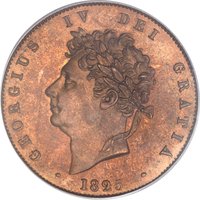
Obverse
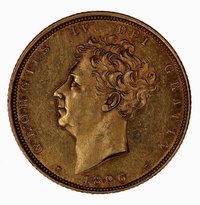
Description:
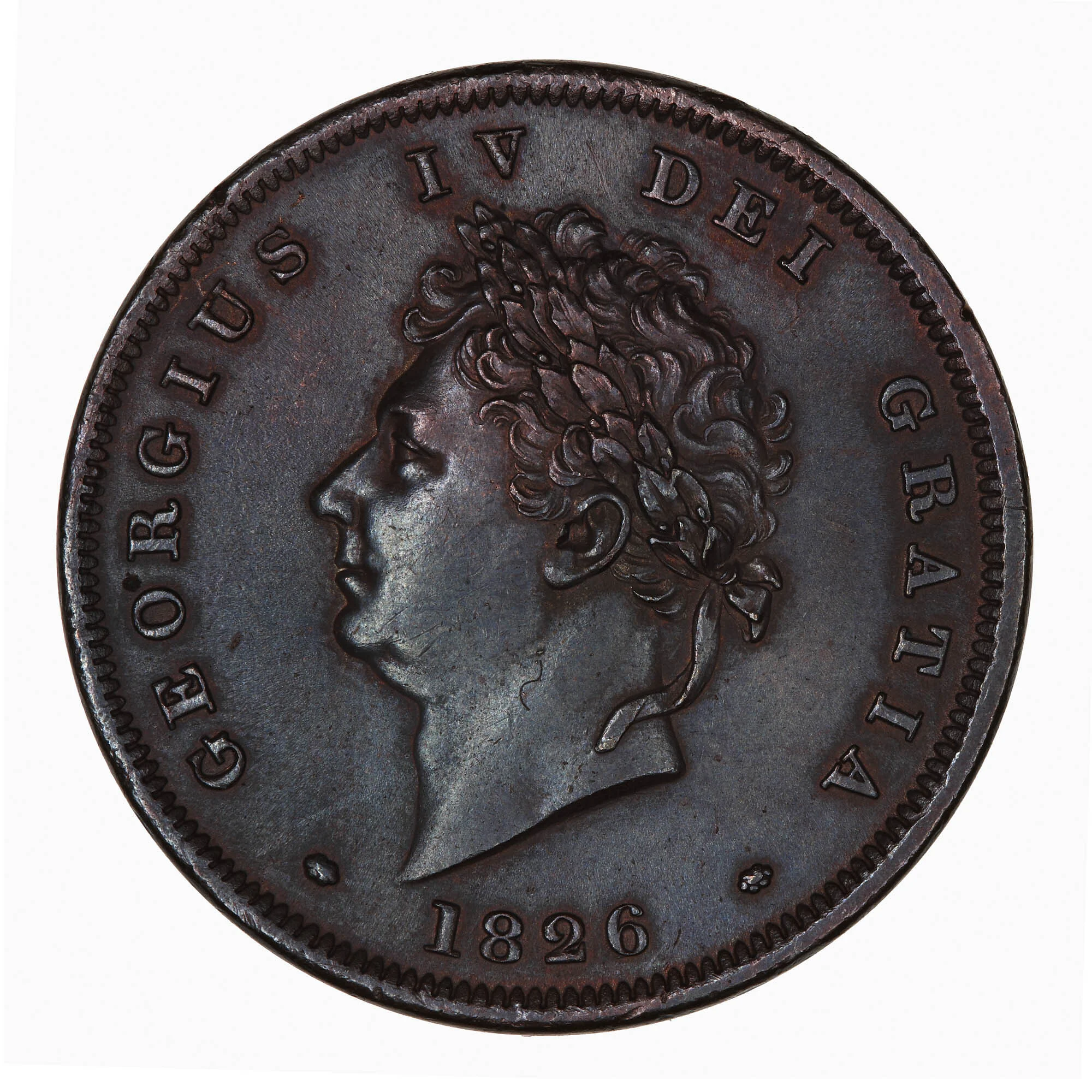
George IV facing left, surrounded by legend, date beneath.
Inscription:
GEORGIUS IV DEI GRATIA
· 1825 ·
· 1825 ·
Translation:
George IV by the Grace of God
· 1825 ·
· 1825 ·
Script: Latin
Language: Latin
Engraver: William Wyon
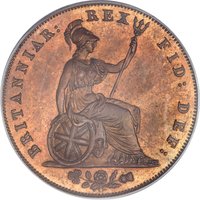
Reverse
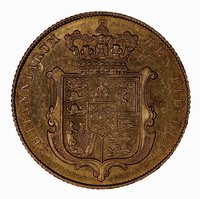
Description:
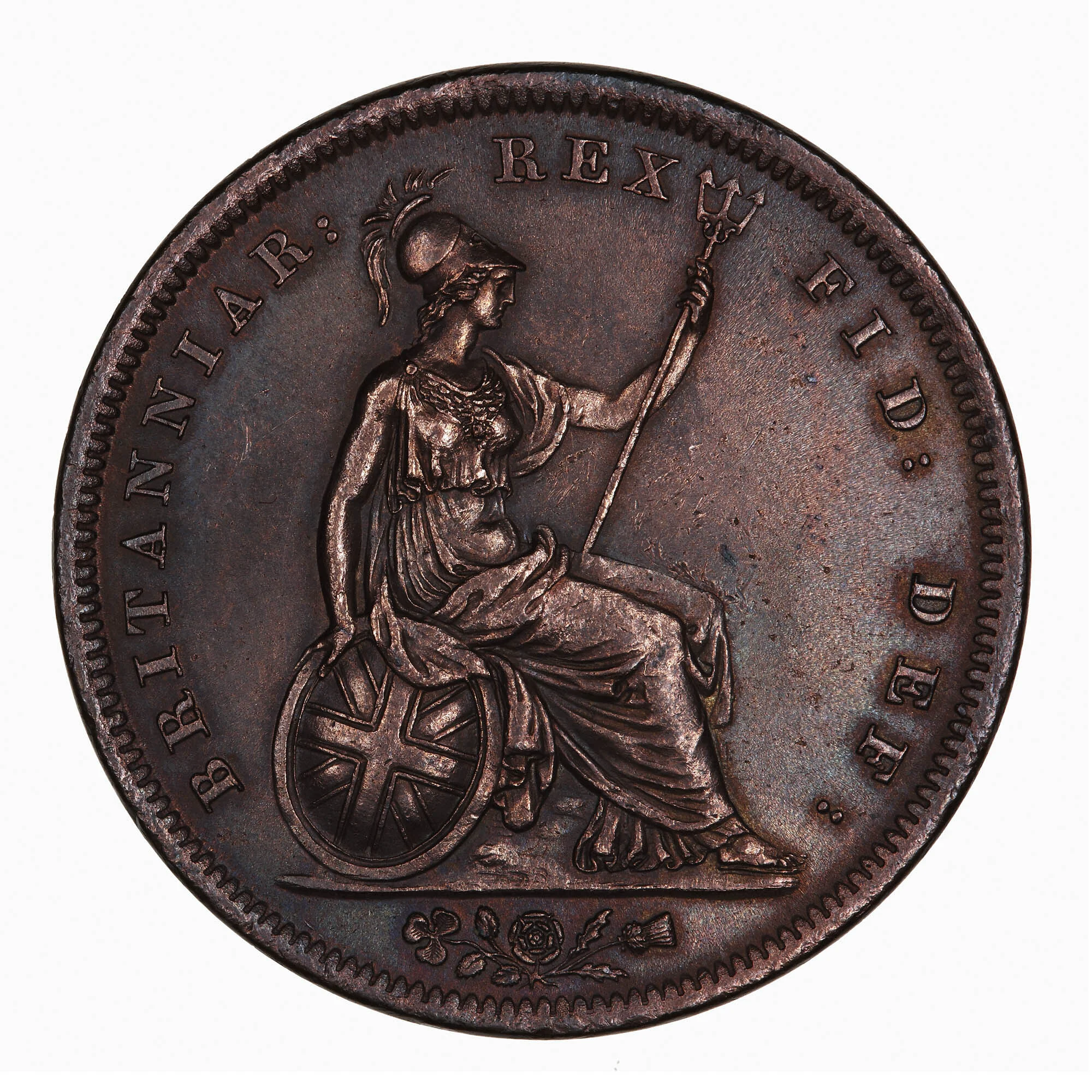
Britannia seated right, holding trident and shield with Union flag. Legend around, national flowers in exergue.
Inscription:
BRITANNIAR: REX FID: DEF:
Translation:
King of the Britains, Defender of the Faith
Script: Latin
Language: Latin
Engraver: William Wyon
Edge
Plain
Mints
| Name | Mark |
|---|---|
| Royal Mint (Tower Hill) | — |
Mintings
| Year | Mint Mark | Mintage | Quality | Collection |
|---|---|---|---|---|
| 1825 | — | 1,075,200 | ||
| 1825 | — | — | Proof | |
| 1826 | — | 5,913,000 | ||
| 1826 | — | — | Proof | |
| 1827 | — | 1,451,500 |
Historical background
In 1825, the United Kingdom operated under a bimetallic system, but was effectively on a gold standard following the 1819 resumption of cash payments, which required the Bank of England to redeem its notes for gold at the pre-war parity. This transition, mandated by the 1819 Act for the Resumption of Cash Payments and completed in 1821, ended the restriction period (1797-1821) during which banknotes were inconvertible. The return to gold at the old, high parity caused significant deflationary pressure and economic distress, as the money supply contracted and prices fell. Furthermore, the currency was complex and fragmented, consisting of gold sovereigns, Bank of England notes (which were legal tender), and a vast array of often unreliable provincial banknotes issued by hundreds of country banks.
The year itself was marked by a severe financial crisis, culminating in December 1825. The root causes lay in a speculative investment boom, particularly in Latin American mining companies following the region's independence movements. This was fueled by easy credit from country banks that had over-issued their notes. When the speculative bubble burst, a wave of panic led to a run on banks for gold. Dozens of country banks failed, as they could not convert their notes into the required gold specie. The crisis was so acute that the Bank of England's own gold reserves were dangerously depleted, nearly leading to its suspension of payments once more.
The crisis of 1825 had profound consequences for the UK's monetary structure. It exposed the dangers of a decentralised and poorly regulated note-issuing system. In response, the government took significant steps towards monetary consolidation. The Bank Charter Act of 1826 allowed the Bank of England to open branches in major provincial cities to displace local notes and, crucially, banned the issuance of small-denomination banknotes (under £5) by country banks. This paved the way for the dominance of Bank of England notes and gold coin in everyday circulation, setting a precedent for the more rigid gold standard framework that would be fully cemented by the Bank Charter Act of 1844.
The year itself was marked by a severe financial crisis, culminating in December 1825. The root causes lay in a speculative investment boom, particularly in Latin American mining companies following the region's independence movements. This was fueled by easy credit from country banks that had over-issued their notes. When the speculative bubble burst, a wave of panic led to a run on banks for gold. Dozens of country banks failed, as they could not convert their notes into the required gold specie. The crisis was so acute that the Bank of England's own gold reserves were dangerously depleted, nearly leading to its suspension of payments once more.
The crisis of 1825 had profound consequences for the UK's monetary structure. It exposed the dangers of a decentralised and poorly regulated note-issuing system. In response, the government took significant steps towards monetary consolidation. The Bank Charter Act of 1826 allowed the Bank of England to open branches in major provincial cities to displace local notes and, crucially, banned the issuance of small-denomination banknotes (under £5) by country banks. This paved the way for the dominance of Bank of England notes and gold coin in everyday circulation, setting a precedent for the more rigid gold standard framework that would be fully cemented by the Bank Charter Act of 1844.
🌱 Common