

100 kwanzas (Angola's Independence) – Angola
Add to wishlist
Circulating commemorative coins
Commemoration: 40th Anniversary of Angola's Independence
Angola
Obverse
Description:
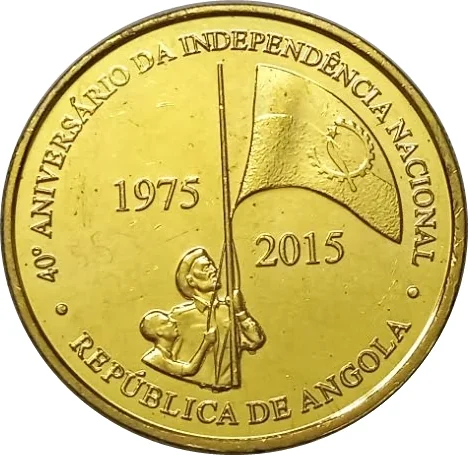
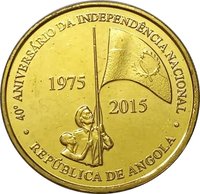
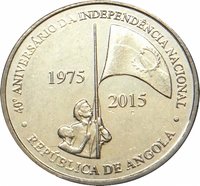
A soldier and peasant raise the flag, flanked by a legend and dates.
Inscription:
40* ANIVERSARIO DA INDEPENDENCIA NACIONAL 1975 2015 REPUBLICA DE ANGOLA
Translation:
40th Anniversary of National Independence 1975 2015 Republic of Angola
Script: Latin
Language: Portuguese
Reverse
Description:
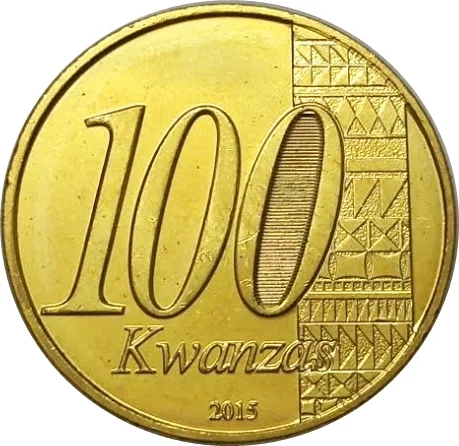
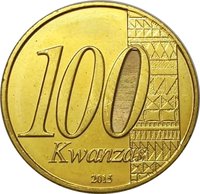
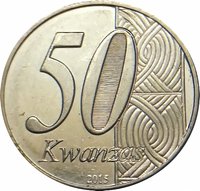
Center value with hologram "100" in the second zero, date below.
Inscription:
100
Kwanzas
2015
Kwanzas
2015
Script: Latin
Edge
Partially reeded
Categories
| Event> Independence |
| Symbol> Flag |
Mintings
| Year | Mint Mark | Mintage | Quality | Collection |
|---|---|---|---|---|
| 2015 | — | 50,000,000 |
Historical background
In 2015, Angola faced a severe currency crisis driven by the dramatic collapse in global oil prices, which began in mid-2014. As an economy overwhelmingly dependent on oil exports for over 95% of its foreign exchange earnings and about 70% of government revenue, the price plunge created an immediate and profound fiscal and external shock. Foreign reserves dwindled rapidly as dollar inflows slowed, severely constraining the Angolan central bank's (BNA) ability to defend the fixed exchange rate of the kwanza (AOA) against the US dollar. This created a growing disparity between the official rate and the black-market rate, where the kwanza was trading at a significant discount.
The government's response was a combination of stringent capital controls and gradual devaluation. To preserve reserves, the BNA severely restricted access to dollars for imports, leading to shortages of essential goods and stifling the non-oil private sector, which relied on imported materials. In June 2015, the BNA abandoned the dollar peg in favor of a managed float, implicitly devaluing the kwanza by approximately 25% overnight. However, this failed to close the gap with the parallel market or restore confidence, as the central bank continued to manage the currency tightly rather than let it find a market-clearing level.
Consequently, the year was marked by economic hardship, rising inflation (which accelerated to over 14% by year-end), and a liquidity crunch. The currency instability exposed the deep structural vulnerabilities of Angola's oil-dependent economy and highlighted the unsustainable fiscal policies of the preceding high-price era. The 2015 crisis set the stage for a deeper and more prolonged recession in the following years, forcing the government to eventually seek an International Monetary Fund (IMF) program in 2018 to stabilize the macroeconomic situation.
The government's response was a combination of stringent capital controls and gradual devaluation. To preserve reserves, the BNA severely restricted access to dollars for imports, leading to shortages of essential goods and stifling the non-oil private sector, which relied on imported materials. In June 2015, the BNA abandoned the dollar peg in favor of a managed float, implicitly devaluing the kwanza by approximately 25% overnight. However, this failed to close the gap with the parallel market or restore confidence, as the central bank continued to manage the currency tightly rather than let it find a market-clearing level.
Consequently, the year was marked by economic hardship, rising inflation (which accelerated to over 14% by year-end), and a liquidity crunch. The currency instability exposed the deep structural vulnerabilities of Angola's oil-dependent economy and highlighted the unsustainable fiscal policies of the preceding high-price era. The 2015 crisis set the stage for a deeper and more prolonged recession in the following years, forcing the government to eventually seek an International Monetary Fund (IMF) program in 2018 to stabilize the macroeconomic situation.
🌱 Common