

200 Kwanzas – Angola
Circulating commemorative coins
Commemoration: Peace and National Reconciliation
Angola
Obverse
Description:
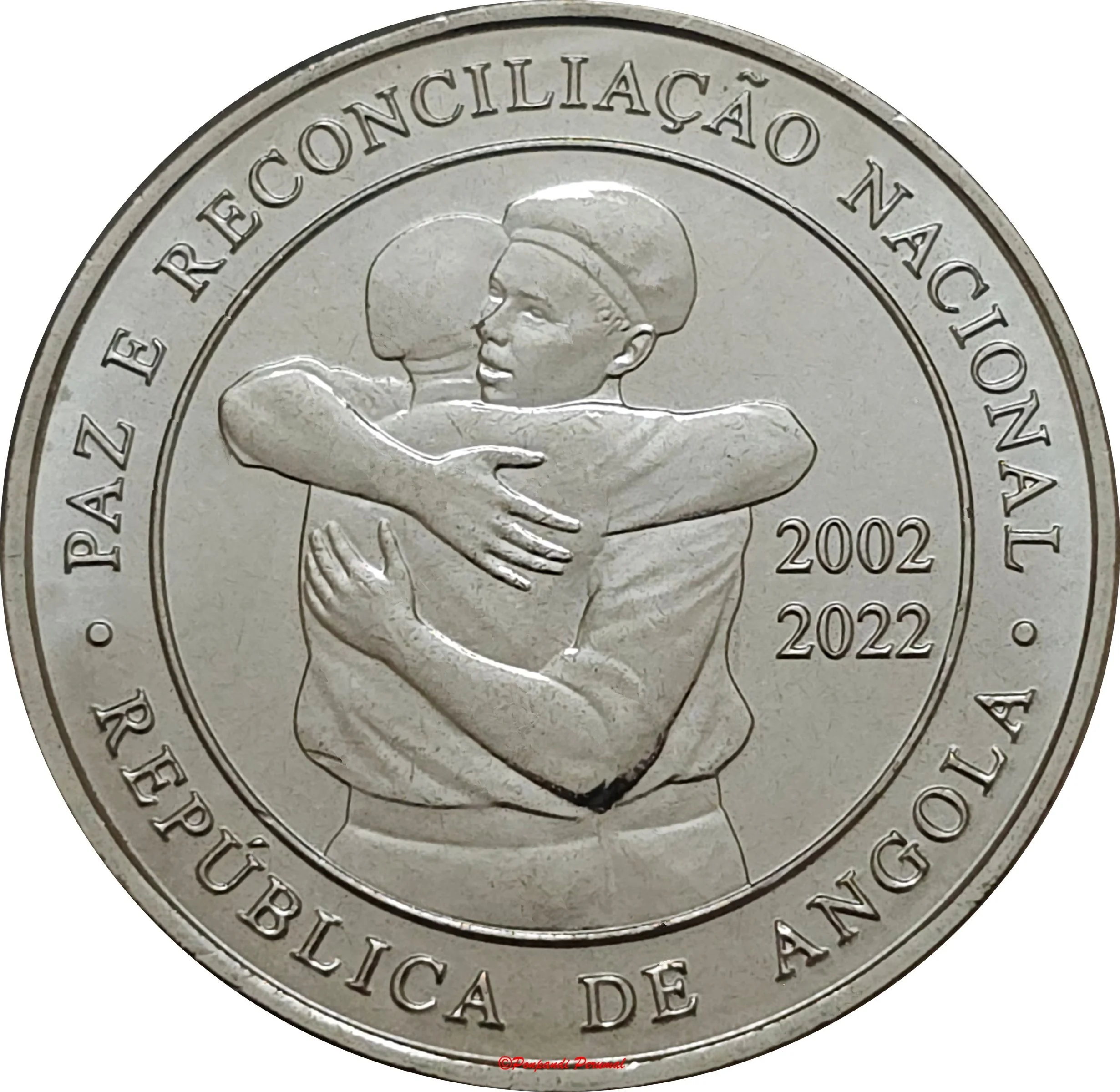
Two embracing at center.
Inscription:
PAZ E RECONCIALIZAÇÃO NACIONAL
2002
2022
REPÚBLICA DE ANGOLA
2002
2022
REPÚBLICA DE ANGOLA
Translation:
Peace and National Reconciliation
2002
2022
Republic of Angola
2002
2022
Republic of Angola
Script: Latin
Language: Portuguese
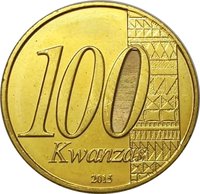
Reverse
Edge
Alternatively reeded and smooth
Mints
| Name | Mark |
|---|---|
| Moscow Mint | — |
Mintings
| Year | Mint Mark | Mintage | Quality | Collection |
|---|---|---|---|---|
| 2022 | — | 25,000,000 |
Historical background
In 2022, Angola's currency situation was characterized by a continued, though slowing, process of liberalization and a significant recovery in the value of the kwanza (AOA) after years of steep depreciation. Following a major reform in 2018 that moved from a fixed to a floating exchange rate, the kwanza had lost substantial value. However, 2022 saw a dramatic reversal, with the currency appreciating approximately 25% against the US dollar, making it one of the world's best-performing currencies that year. This surge was driven primarily by soaring global oil prices—Angola's main export—which boosted foreign exchange reserves and government revenues, while the central bank maintained a relatively tight monetary policy.
Despite this appreciation, underlying challenges persisted. The economy remained heavily dollarized, with many large transactions and real estate prices still pegged to the US dollar, limiting the kwanza's domestic credibility. Furthermore, the official exchange rate did not fully reflect market conditions due to limited liquidity and accessibility in the formal foreign exchange market. This discrepancy encouraged a parallel black market for dollars, where premiums were often charged, creating a dual-exchange-rate system that complicated business operations and foreign investment.
Looking forward, the currency strength in 2022 provided temporary fiscal relief but also highlighted Angola's ongoing vulnerability to volatile commodity prices and the incomplete structural reforms needed to diversify its oil-dependent economy. The central bank faced the dual challenge of managing inflation—which remained high—and maintaining stability, while the government aimed to use the windfall from higher oil prices to support strategic imports and reduce public debt, rather than build permanent buffers against future oil price shocks.
Despite this appreciation, underlying challenges persisted. The economy remained heavily dollarized, with many large transactions and real estate prices still pegged to the US dollar, limiting the kwanza's domestic credibility. Furthermore, the official exchange rate did not fully reflect market conditions due to limited liquidity and accessibility in the formal foreign exchange market. This discrepancy encouraged a parallel black market for dollars, where premiums were often charged, creating a dual-exchange-rate system that complicated business operations and foreign investment.
Looking forward, the currency strength in 2022 provided temporary fiscal relief but also highlighted Angola's ongoing vulnerability to volatile commodity prices and the incomplete structural reforms needed to diversify its oil-dependent economy. The central bank faced the dual challenge of managing inflation—which remained high—and maintaining stability, while the government aimed to use the windfall from higher oil prices to support strategic imports and reduce public debt, rather than build permanent buffers against future oil price shocks.
🌟 Uncommon