

Obverse
Description:
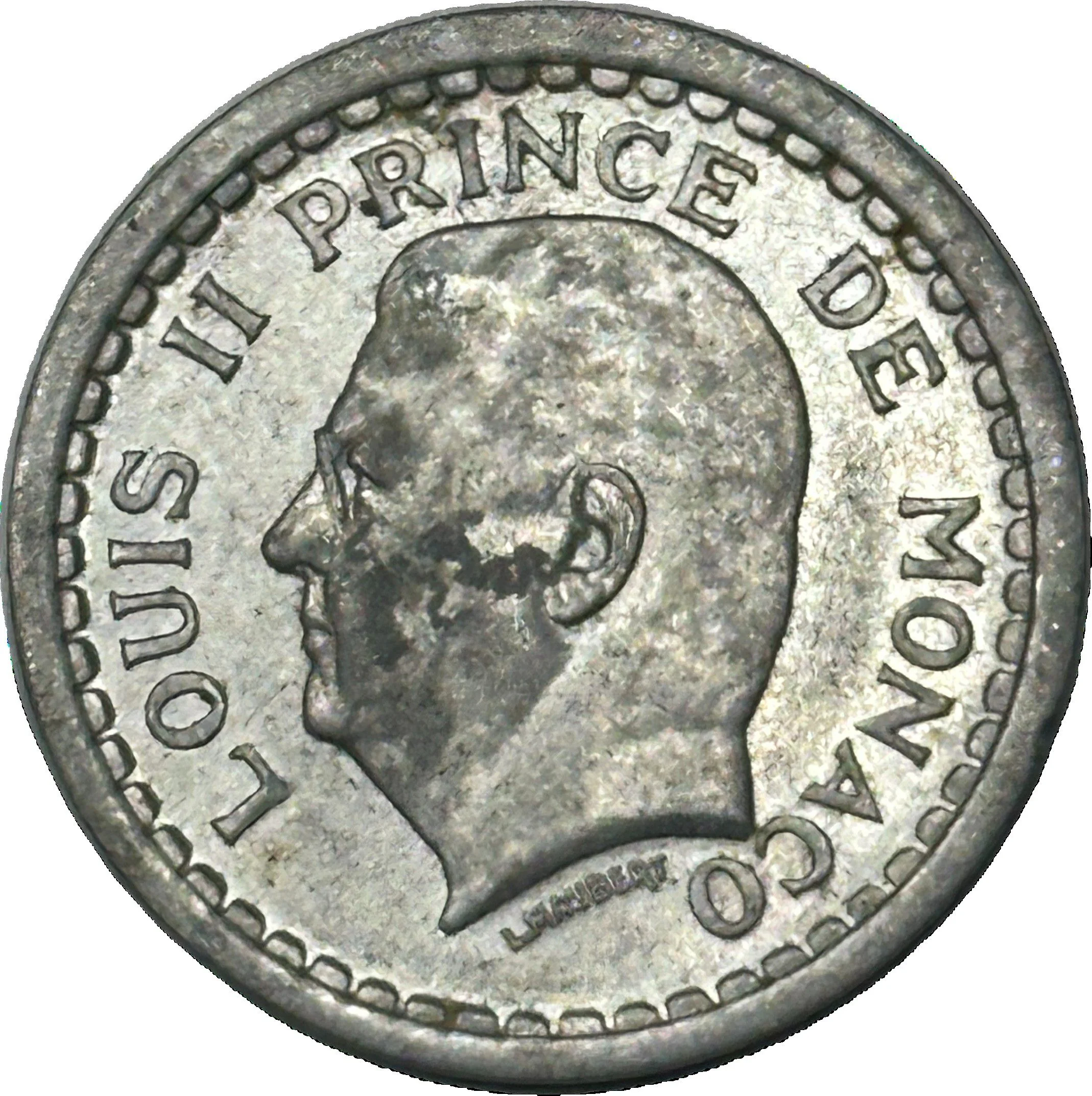
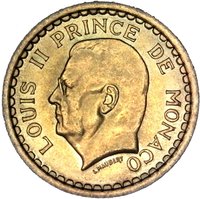
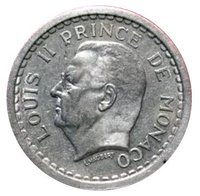
Louis II, left-facing bust
Inscription:
LOUIS II PRINCE DE MONACO
L. MAUBERT
L. MAUBERT
Translation:
Louis II Prince of Monaco
L. Maubert
L. Maubert
Script: Latin
Language: French
Engraver: Louis Maubert
Reverse
Description:
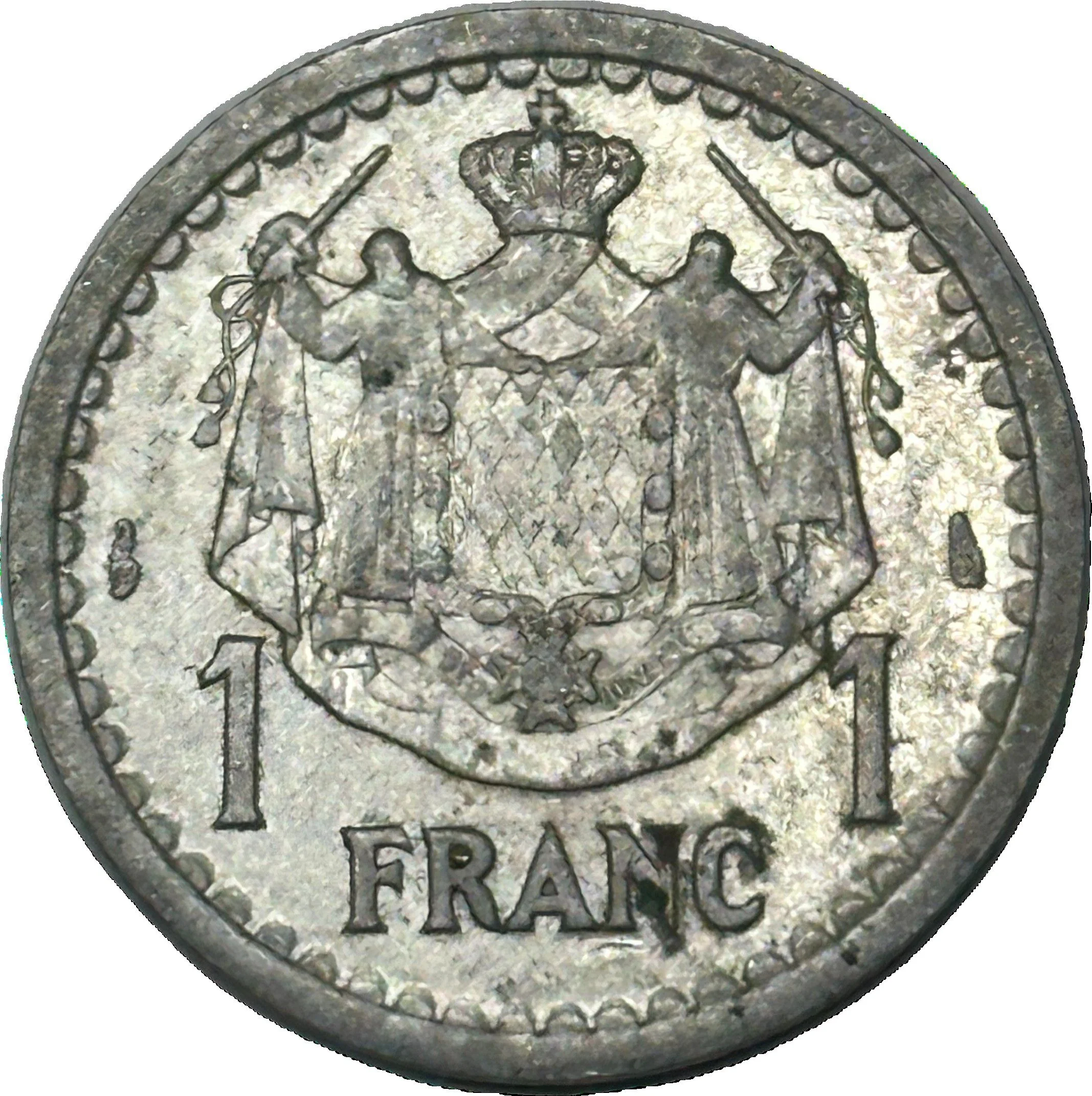
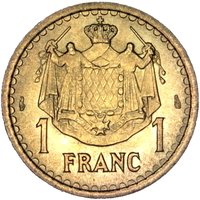
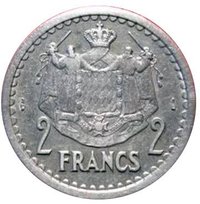
Arms with crown and mantle, value beneath.
Inscription:
1 FRANC 1
DEO JUVANTE
DEO JUVANTE
Translation:
One Franc One
With God's Help
With God's Help
Script: Latin
Engraver: Louis Maubert
Edge
Plain
Categories
| Person> Monarch |
| Symbols> Coat of Arms |
Mints
| Name | Mark |
|---|---|
| Monnaie de Paris | — |
Mintings
| Year | Mint Mark | Mintage | Quality | Collection |
|---|---|---|---|---|
| 1943 | — | 2,500,000 |
Historical background
In 1943, Monaco was under the military occupation of Fascist Italy, which had invaded in November 1942, displacing the previous Vichy French administration. This occupation placed the principality within the complex and coercive monetary sphere of the Axis powers in wartime Europe. The Italian lira was imposed as legal tender alongside the French franc, reflecting Italy's political and economic control. This created a dual-currency environment where the occupying forces dictated exchange rates and monetary policy to serve their own needs, primarily to fund the costs of the occupation and extract resources.
The local economy, heavily reliant on tourism and luxury services which had collapsed due to the war, faced severe inflation and shortages. The forced circulation of the lira, coupled with the general scarcity of goods across war-torn Europe, led to a depreciating value of currency and the rise of a thriving black market. Here, transactions increasingly occurred in tangible assets, barter, or more stable foreign currencies, as residents and refugees alike sought to preserve value amidst economic uncertainty and the arbitrary financial dictates of the occupiers.
This situation shifted abruptly in September 1943 following Italy's armistice with the Allies, which triggered a violent German Nazi takeover of Monaco. The German occupation then imposed the Reichsmark and further exploitative financial measures, intensifying the economic hardship. Thus, the currency situation in 1943 was defined by two successive and oppressive foreign occupations, each imposing its own monetary system and contributing to the principality's profound economic dislocation and suffering during the war.
The local economy, heavily reliant on tourism and luxury services which had collapsed due to the war, faced severe inflation and shortages. The forced circulation of the lira, coupled with the general scarcity of goods across war-torn Europe, led to a depreciating value of currency and the rise of a thriving black market. Here, transactions increasingly occurred in tangible assets, barter, or more stable foreign currencies, as residents and refugees alike sought to preserve value amidst economic uncertainty and the arbitrary financial dictates of the occupiers.
This situation shifted abruptly in September 1943 following Italy's armistice with the Allies, which triggered a violent German Nazi takeover of Monaco. The German occupation then imposed the Reichsmark and further exploitative financial measures, intensifying the economic hardship. Thus, the currency situation in 1943 was defined by two successive and oppressive foreign occupations, each imposing its own monetary system and contributing to the principality's profound economic dislocation and suffering during the war.
🌱 Very Common