

5 Centimes – Belgium
Belgium
Context
Years: 1894–1901
Issuer: Belgium 
Ruler: Leopold II
Currency:
(1832—2001)
Demonetized: Yes
Total mintage: 9,474,414
Material
References
KM: #Click to copy to clipboard40
Numista: #8025
Value
Exchange value: 0.05 BEF
Obverse
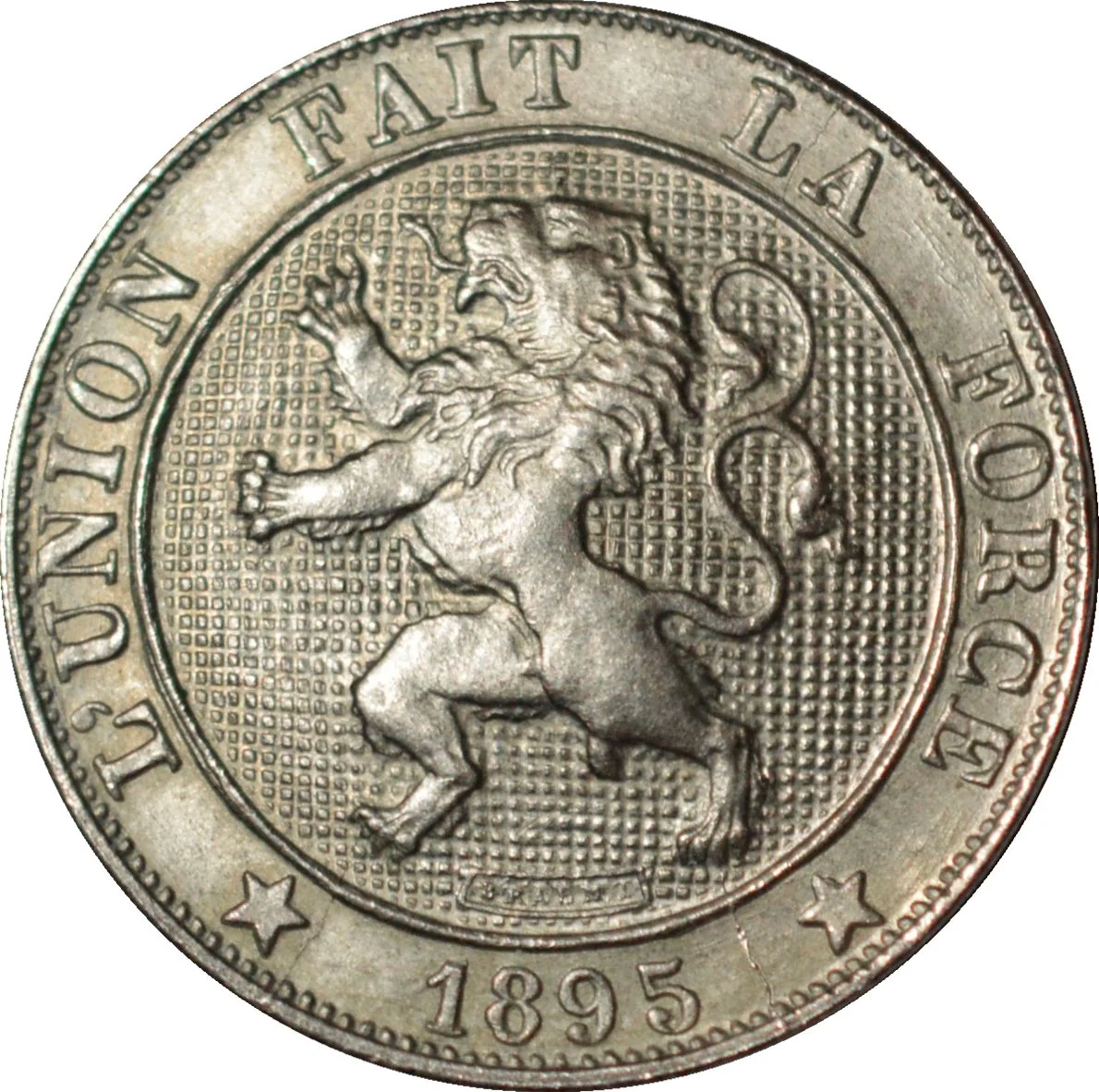
Description:
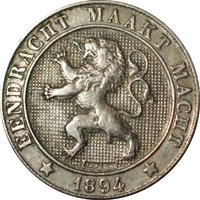
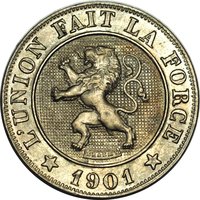
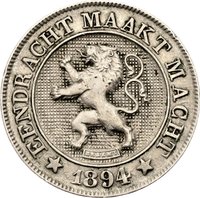
Rampant lion in circle. French legend around, date between stars below.
Inscription:
L'UNION FAIT LA FORCE
BRAEMT
★ 1895 ★
BRAEMT
★ 1895 ★
Translation:
Union makes strength
BRAEMT
★ 1895 ★
BRAEMT
★ 1895 ★
Script: Latin
Language: French
Engraver: Joseph-Pierre Braemt
Reverse
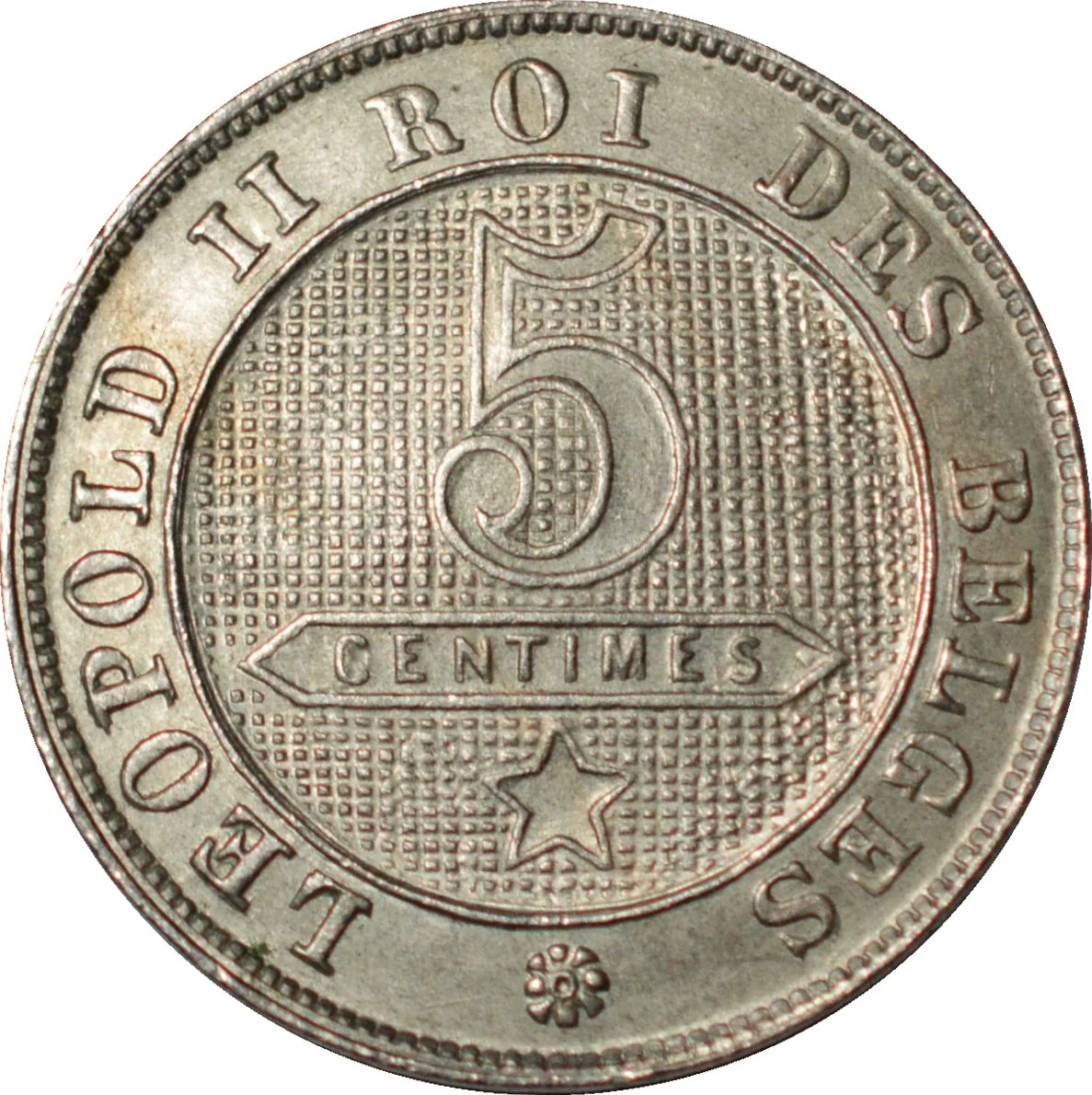
Description:
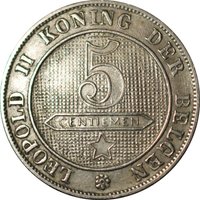
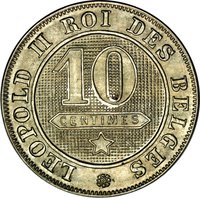
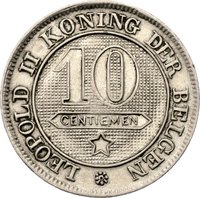
Checkered circle with star, surrounded by text.
Inscription:
❁ LEOPOLD II ROI DES BELGES
5
CENTIMES
★
5
CENTIMES
★
Translation:
Leopold II King of the Belgians
5
Centimes
5
Centimes
Script: Latin
Language: French
Engraver: Joseph-Pierre Braemt
Edge
Plain
Mints
| Name | Mark |
|---|---|
| Royal Mint of Belgium | — |
Mintings
| Year | Mint Mark | Mintage | Quality | Collection |
|---|---|---|---|---|
| 1894 | — | 3,110,953 | ||
| 1895 | — | 3,693,250 | ||
| 1898 | — | 1,004,083 | ||
| 1900 | — | 1,666,128 | ||
| 1901 | — | — |
Historical background
In 1894, Belgium operated under a bimetallic monetary system, legally defined by the Latin Monetary Union (LMU) to which it was a founding member. This framework, established in 1865, fixed the values of gold and silver coins (like the 20-franc gold piece and 5-franc silver piece) at a set ratio, making them legal tender across member nations. However, by the 1890s, this system was under severe international strain due to the global depreciation of silver, which caused the more valuable gold coins to be hoarded or exported, effectively pushing Belgium toward a de facto gold standard.
The domestic currency situation was marked by a scarcity of circulating gold coinage and a public reliance on banknotes issued by the National Bank of Belgium and silver token coins. This created periodic liquidity concerns and public inconvenience. A significant legislative response came in 1873 with the "Loi de surévaluation de l'or" (Law on the Overvaluation of Gold), which aimed to stem the outflow of gold by slightly adjusting its legal value, but the fundamental pressures remained. The year 1894 itself saw ongoing parliamentary debates and expert commissions analyzing whether to formally abandon bimetallism and adopt a pure gold standard, a move heavily influenced by the economic dominance of nations like Britain which already used gold.
Consequently, Belgium's currency in 1894 existed in a transitional and somewhat unstable state. While the Latin Union's bimetallic laws were still officially in force, market forces had already rendered them impractical. The government and financial institutions were grappling with the inevitable shift to gold, a process that would culminate in the formal suspension of silver convertibility in 1878 (for large coins) and Belgium's eventual, full transition to the gold standard with the Monetary Law of 1895, the groundwork for which was being decisively laid throughout 1894.
The domestic currency situation was marked by a scarcity of circulating gold coinage and a public reliance on banknotes issued by the National Bank of Belgium and silver token coins. This created periodic liquidity concerns and public inconvenience. A significant legislative response came in 1873 with the "Loi de surévaluation de l'or" (Law on the Overvaluation of Gold), which aimed to stem the outflow of gold by slightly adjusting its legal value, but the fundamental pressures remained. The year 1894 itself saw ongoing parliamentary debates and expert commissions analyzing whether to formally abandon bimetallism and adopt a pure gold standard, a move heavily influenced by the economic dominance of nations like Britain which already used gold.
Consequently, Belgium's currency in 1894 existed in a transitional and somewhat unstable state. While the Latin Union's bimetallic laws were still officially in force, market forces had already rendered them impractical. The government and financial institutions were grappling with the inevitable shift to gold, a process that would culminate in the formal suspension of silver convertibility in 1878 (for large coins) and Belgium's eventual, full transition to the gold standard with the Monetary Law of 1895, the groundwork for which was being decisively laid throughout 1894.
Series: 1894 Belgium circulation coins
🌱 Common