

50 Francs – Belgian Congo
Context
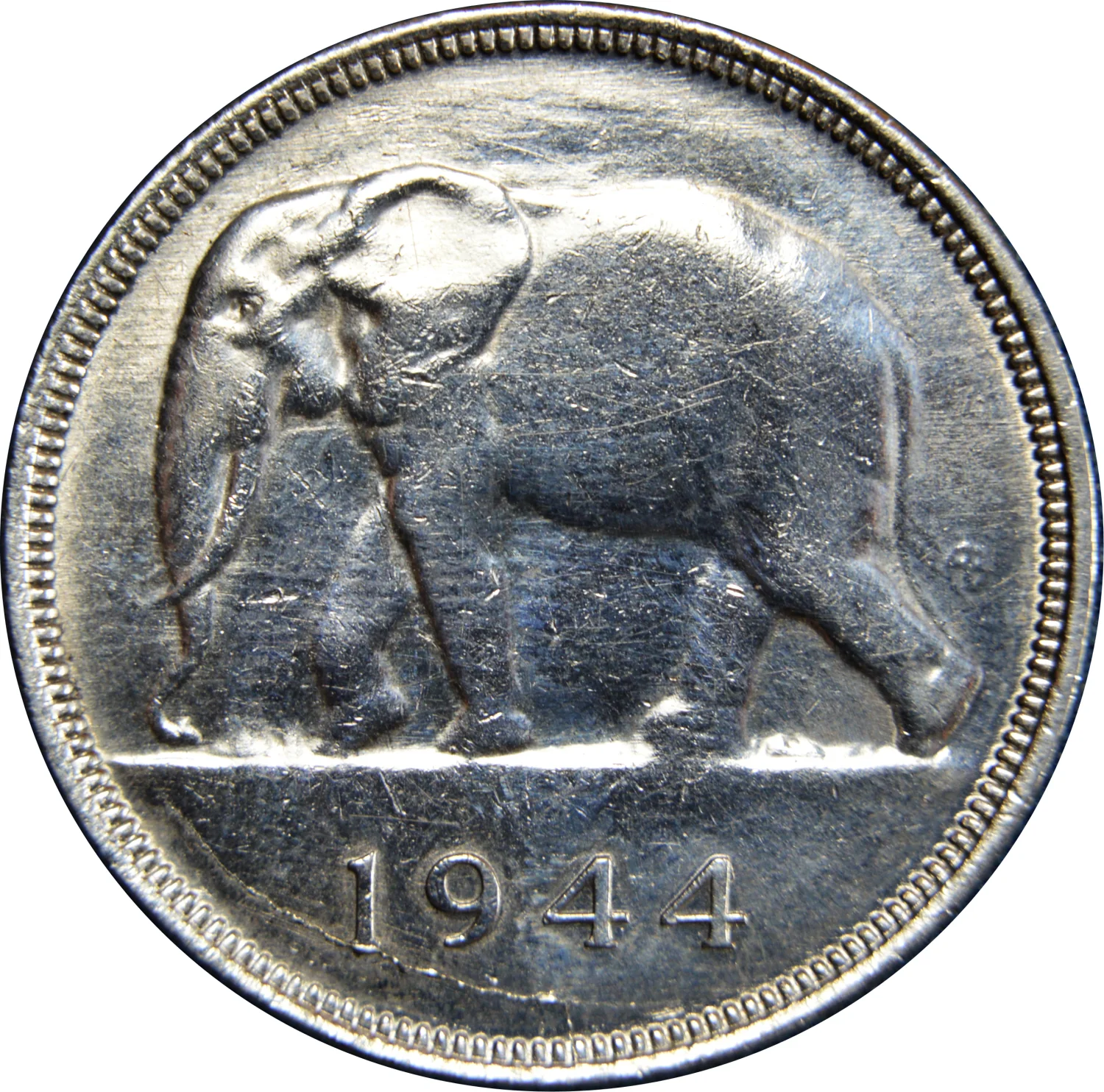
Year: 1944
Country: Rwanda and Urundi Belgian Congo
Issuer: Belgian Congo
Issuing organization: Bank of the Belgian Congo
Ruler: Leopold III
Currency:
(1908—1960)
Demonetized: Yes
Total mintage: 1,000,000
Material
References
KM: #Click to copy to clipboard27
Numista: #8015
Value
Bullion value: $30.05
Obverse
Reverse
Description:
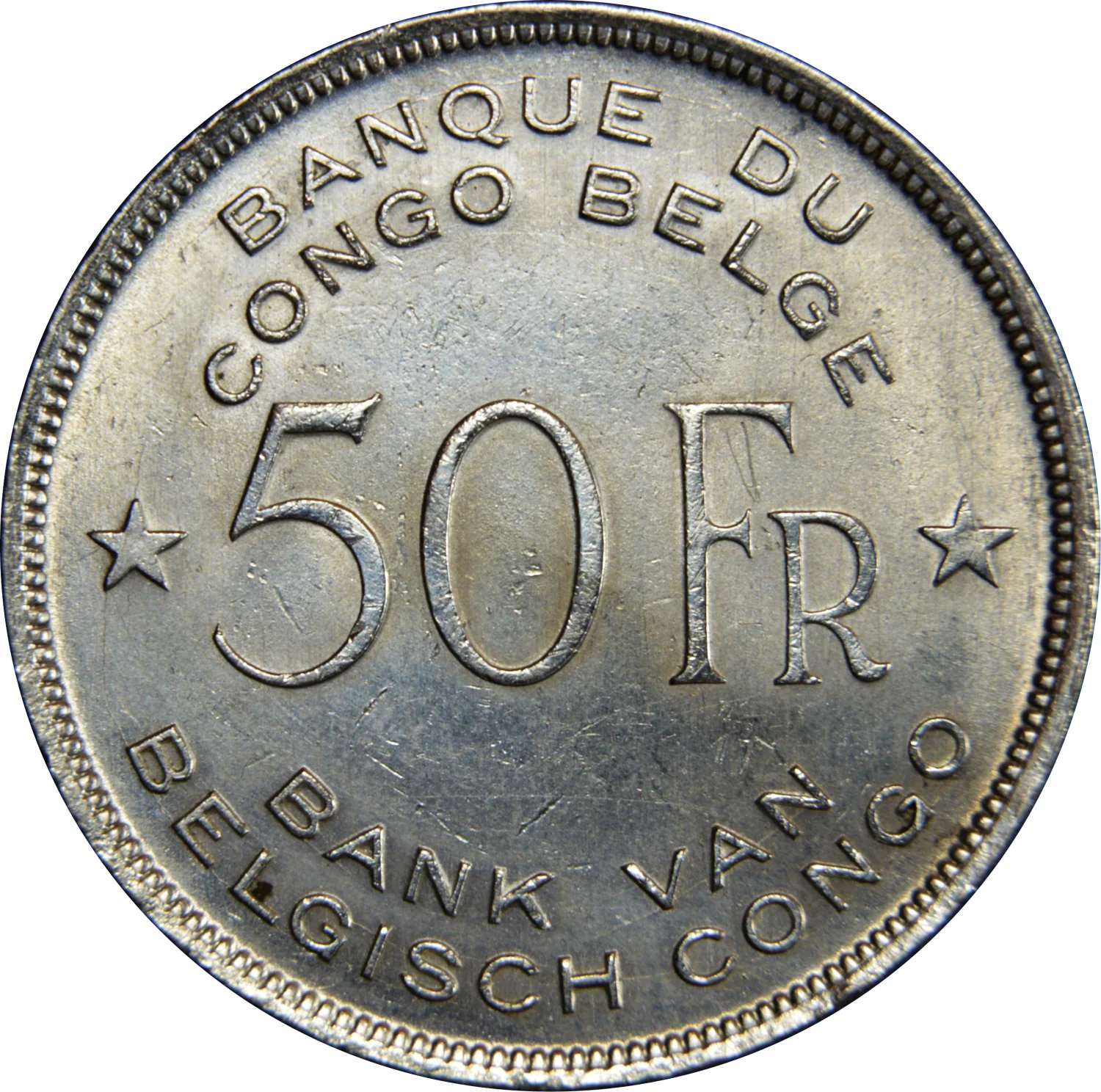
Two-star face value, with French text above and Dutch below the issuing establishment.
Inscription:
BANQUE DU CONGO BELGE
* 50 FR *
BANK VAN BELGISCH CONGO
* 50 FR *
BANK VAN BELGISCH CONGO
Translation:
Bank of the Belgian Congo
* 50 FR *
Bank of the Belgian Congo
* 50 FR *
Bank of the Belgian Congo
Script: Latin
Engraver: Armand Bonnetain
Edge
Milled
Mints
| Name | Mark |
|---|---|
| Pretoria | — |
Mintings
| Year | Mint Mark | Mintage | Quality | Collection |
|---|---|---|---|---|
| 1944 | — | 1,000,000 |
Historical background
In 1944, the currency situation in the Belgian Congo was a complex and tightly controlled system, fundamentally shaped by its role within the Allied war effort. The colony operated under a currency board system, with the Congolese franc (CF) pegged at parity to the Belgian franc. However, the German occupation of Belgium in 1940 severed this direct link, placing the colony's substantial financial and mineral resources under the authority of the Belgian government-in-exile in London. To prevent Axis access to its wealth and to align with Allied financial policy, the Congo was integrated into the Sterling Area. This meant the Congolese franc's value was effectively pegged to the British pound sterling, and its foreign exchange reserves were held in London, ensuring all international transactions served Allied interests.
The colony’s economy was booming due to unprecedented demand for its strategic resources, particularly copper, uranium (used in the Manhattan Project), rubber, and palm oil. This generated huge trade surpluses and substantial foreign currency earnings, primarily in sterling and US dollars. However, strict exchange controls, administered by the Office des Chèques Postaux et de Virements (Office of Postal Checks and Transfers), prevented capital flight and ensured these earnings were pooled for the Allied cause. Internally, this wartime boom increased the money supply, leading to inflationary pressures, especially in urban centers, as imported consumer goods became scarce due to wartime shipping constraints.
Thus, the 1944 currency landscape was one of paradoxical strength and constraint. The Congolese franc was externally robust, backed by substantial sterling reserves and critical contributions to the Allied war economy. Yet, this financial stability was imposed through a rigid, colonial-administered system that prioritized the metropole's and Allies' needs over local economic development. The situation underscored the Congo's vital importance to the war effort, while its controlled currency regime reinforced its dependent colonial economic structure.
The colony’s economy was booming due to unprecedented demand for its strategic resources, particularly copper, uranium (used in the Manhattan Project), rubber, and palm oil. This generated huge trade surpluses and substantial foreign currency earnings, primarily in sterling and US dollars. However, strict exchange controls, administered by the Office des Chèques Postaux et de Virements (Office of Postal Checks and Transfers), prevented capital flight and ensured these earnings were pooled for the Allied cause. Internally, this wartime boom increased the money supply, leading to inflationary pressures, especially in urban centers, as imported consumer goods became scarce due to wartime shipping constraints.
Thus, the 1944 currency landscape was one of paradoxical strength and constraint. The Congolese franc was externally robust, backed by substantial sterling reserves and critical contributions to the Allied war economy. Yet, this financial stability was imposed through a rigid, colonial-administered system that prioritized the metropole's and Allies' needs over local economic development. The situation underscored the Congo's vital importance to the war effort, while its controlled currency regime reinforced its dependent colonial economic structure.
🌱 Fairly Common