

20 francs – France
Add to wishlist
France
Context
Years: 1832–1848
Issuer: France
Ruler: Louis Philippe I
Currency:
(1795—1959)
Demonetization: 25 June 1928
Total mintage: 6,760,369
Material
References
KM: #
Numista: #8001
Value
Bullion value: $903.76
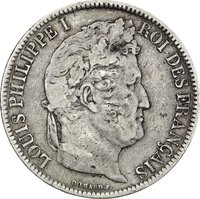
Obverse
Description:
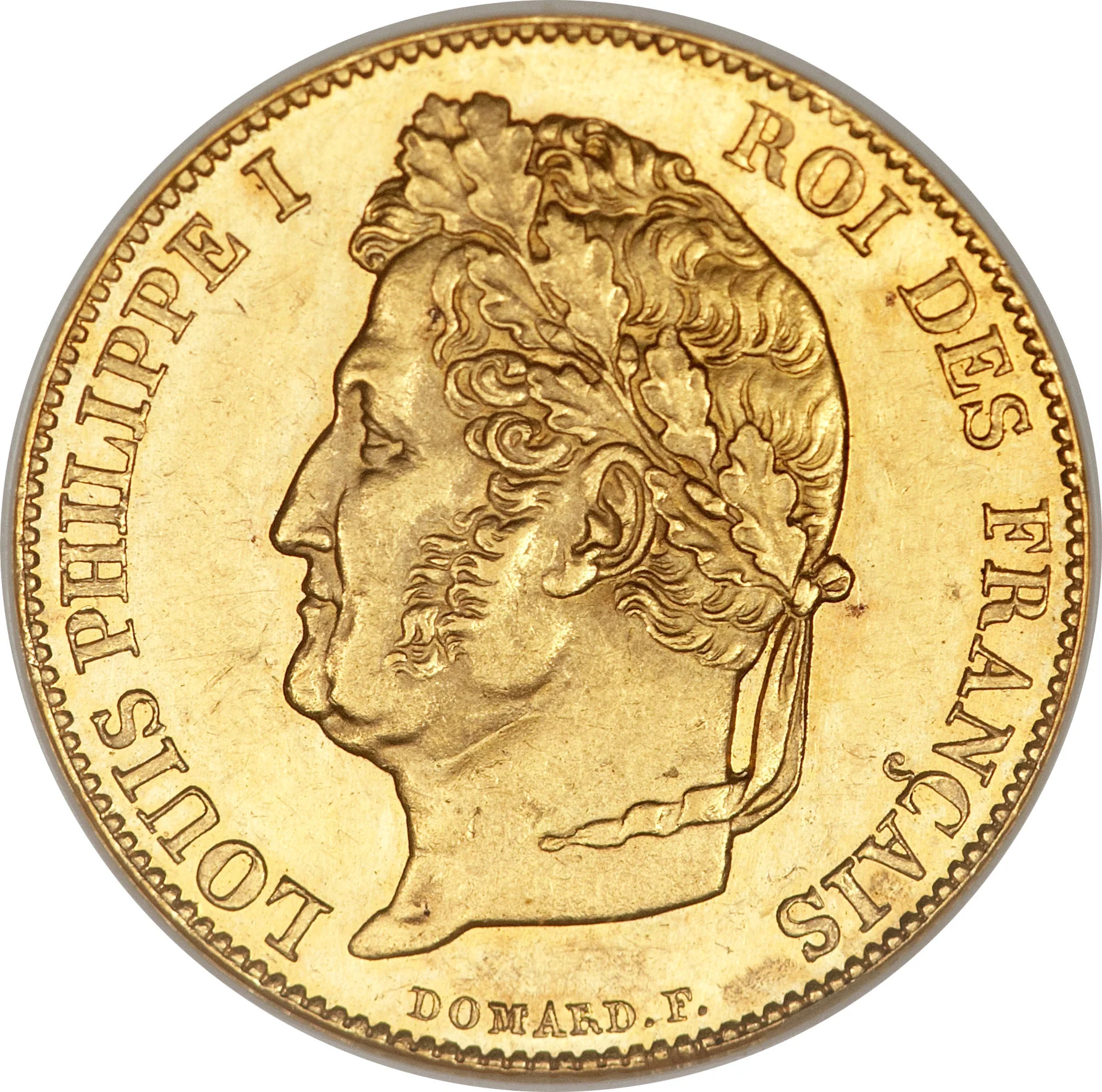
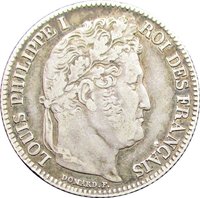
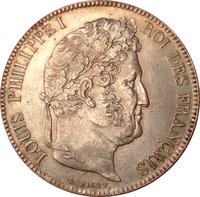
Louis Philippe facing left.
Inscription:
LOUIS PHILIPPE I ROI DES FRANCAIS
Translation:
LOUIS PHILIPPE I KING OF THE FRENCH
Script: Latin
Language: French
Engraver: Joseph-François Domard
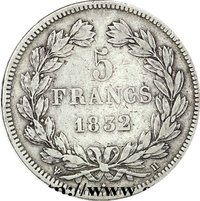
Reverse
Description:
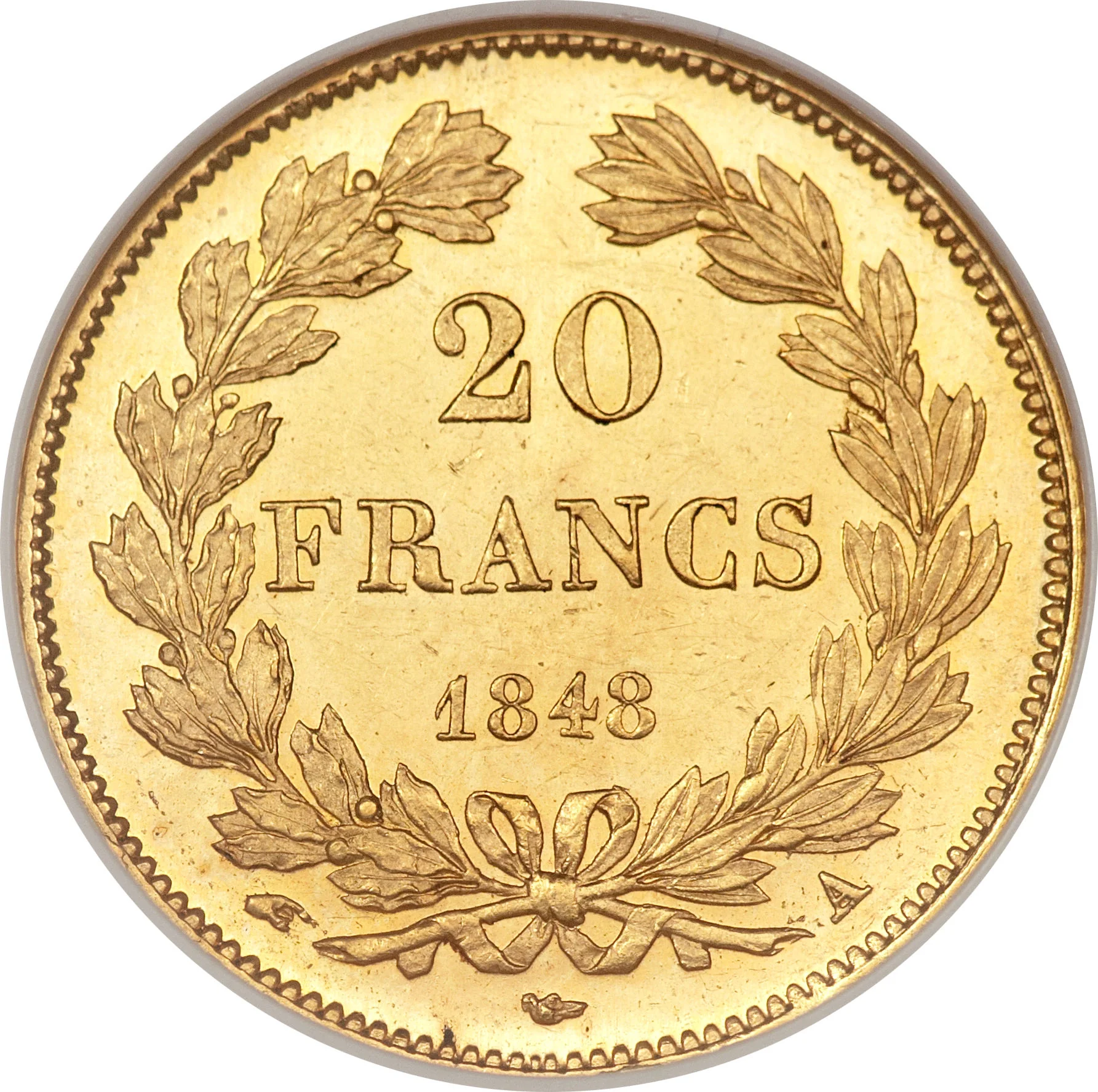
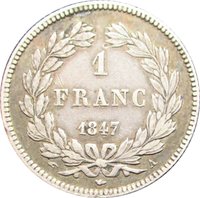
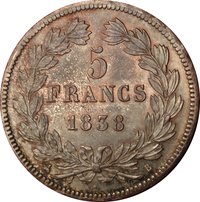
Laurel-wreathed denomination
Inscription:
20
FRANCS
1840
FRANCS
1840
Script: Latin
Engraver: Joseph-François Domard
Edge
Mints
| Name | Mark |
|---|---|
| Bayonne | — |
| Monnaie de Paris | A |
| Rouen | B |
| Bayonne | L |
| Lille | W |
Mintings
| Year | Mint Mark | Mintage | Quality | Collection |
|---|---|---|---|---|
| 1832 | T | — | ||
| 1832 | W | 27,139 | ||
| 1832 | A | 6,294 | ||
| 1832 | B | 14,946 | ||
| 1833 | A | 206,954 | ||
| 1833 | B | 155,197 | ||
| 1833 | W | 31,634 | ||
| 1834 | A | 743,453 | ||
| 1834 | B | 77,112 | ||
| 1834 | L | 20,824 | ||
| 1834 | W | 41,204 | ||
| 1835 | A | 96,538 | ||
| 1835 | B | 25,878 | ||
| 1835 | L | — | ||
| 1835 | W | 29,882 | ||
| 1836 | A | 138,767 | ||
| 1836 | W | 10,315 | ||
| 1837 | A | 34,262 | ||
| 1837 | W | 10,459 | ||
| 1838 | A | 173,322 | ||
| 1838 | W | 12,355 | ||
| 1839 | A | 1,010,512 | ||
| 1839 | W | 21,691 | ||
| 1840 | A | 2,043,736 | ||
| 1840 | W | 4,508 | ||
| 1841 | A | 609,341 | ||
| 1841 | W | 8,482 | ||
| 1842 | W | 21,600 | ||
| 1842 | A | 70,666 | ||
| 1843 | A | 105,687 | ||
| 1843 | W | 35,295 | ||
| 1844 | A | 102,555 | ||
| 1844 | W | 34,168 | ||
| 1845 | A | 927 | ||
| 1845 | W | 4,994 | ||
| 1846 | W | 1,402 | ||
| 1846 | A | 102,661 | ||
| 1847 | A | 284,497 | ||
| 1848 | A | 441,112 |
Historical background
In 1832, France's currency system was in a state of transition and tension, caught between the legacy of the Revolution and the demands of a modernizing economy. The official monetary unit was the franc germinal, established by Napoleon in 1803, which was a bimetallic system based on a fixed ratio between gold and silver (1 gold Napoleon = 20 silver francs). While theoretically stable, the system was strained by a chronic shortage of small-denomination coinage for everyday transactions, leading to widespread use of private token money and foreign coins, particularly in rural areas.
This metallic system coexisted uneasily with a growing reliance on paper money. The Banque de France, which held a monopoly on note issuance in Paris, saw its notes gain acceptance, but they were still largely viewed with suspicion by a public scarred by the hyperinflation of the Revolutionary assignats. Consequently, banknotes were not legal tender and were often discounted outside major commercial centers. The real financial power lay with a network of departmental banks of issue and private bankers, creating a fragmented and sometimes unstable credit environment.
The broader economic context of the July Monarchy (under King Louis-Philippe) further complicated the currency situation. A period of industrialization and railway expansion required substantial capital, yet deflationary pressures in the early 1830s, following the 1830 Revolution, increased the real burden of debt. This created political and social friction, as debtors struggled with appreciating currency values. Thus, the currency picture in 1832 was one of a nation attempting to foster economic growth with a monetary toolkit that was partly modern, partly archaic, and not fully trusted by its populace.
This metallic system coexisted uneasily with a growing reliance on paper money. The Banque de France, which held a monopoly on note issuance in Paris, saw its notes gain acceptance, but they were still largely viewed with suspicion by a public scarred by the hyperinflation of the Revolutionary assignats. Consequently, banknotes were not legal tender and were often discounted outside major commercial centers. The real financial power lay with a network of departmental banks of issue and private bankers, creating a fragmented and sometimes unstable credit environment.
The broader economic context of the July Monarchy (under King Louis-Philippe) further complicated the currency situation. A period of industrialization and railway expansion required substantial capital, yet deflationary pressures in the early 1830s, following the 1830 Revolution, increased the real burden of debt. This created political and social friction, as debtors struggled with appreciating currency values. Thus, the currency picture in 1832 was one of a nation attempting to foster economic growth with a monetary toolkit that was partly modern, partly archaic, and not fully trusted by its populace.
Series: 1832 France circulation coins
🌱 Fairly Common