

1 peso – Mexico
Add to wishlist
Mexico
Context
Years: 1866–1867
Issuer: Mexico
Ruler: Maximilian I
Currency:
(1863—1992)
Demonetized: Yes
Total mintage: 3,385,675
Material
References
KM: #
Numista: #7989
Value
Exchange value: 1 MXP
Bullion value: $61.01
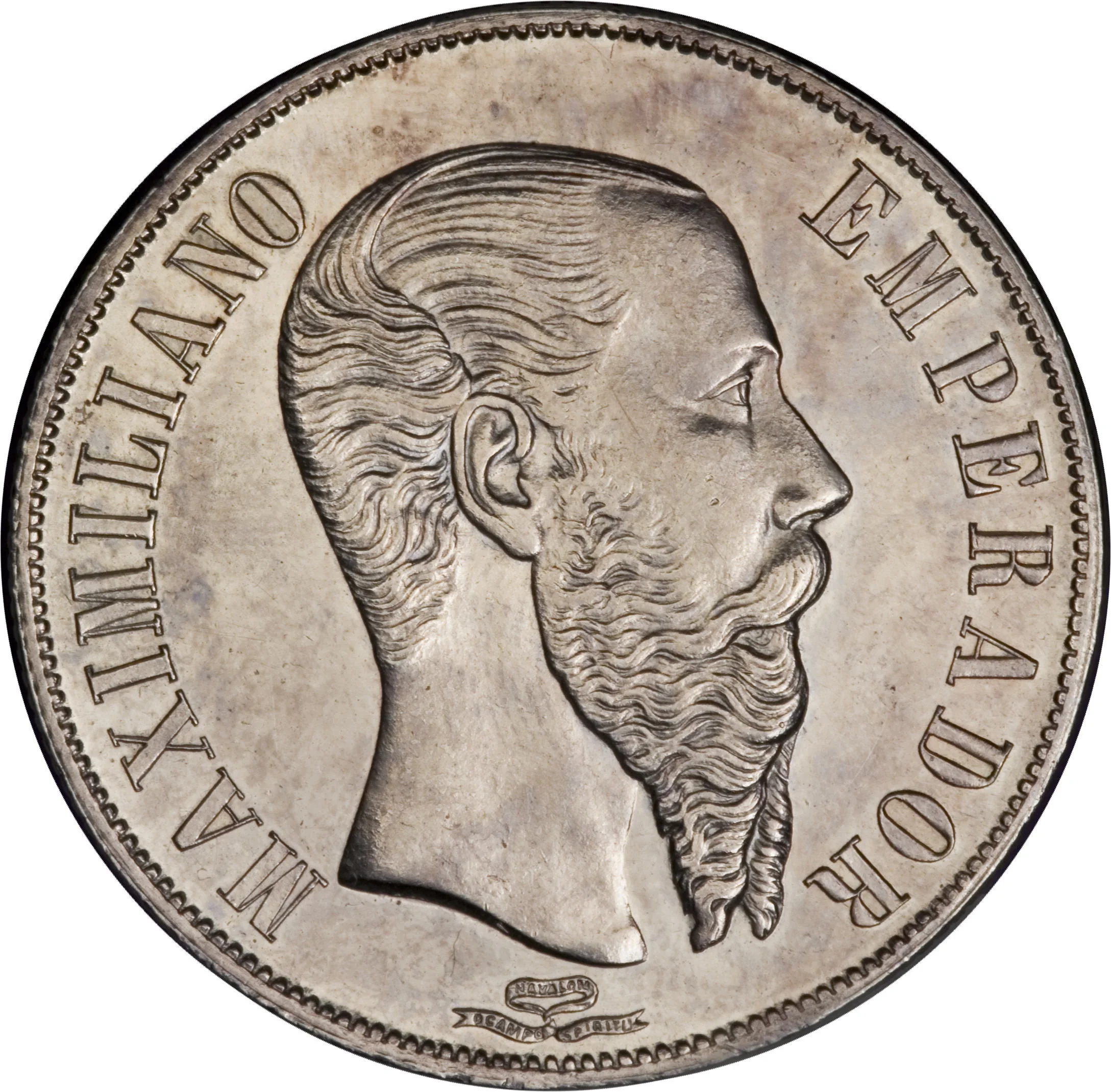
Obverse
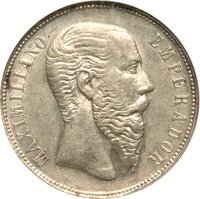
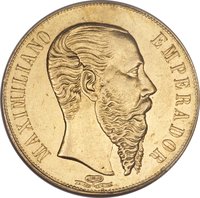
Description:
Bust right.
Inscription:
MAXIMILIANO EMPERADOR
NAVALON
OCAMPO
SPIRITU
NAVALON
OCAMPO
SPIRITU
Translation:
Emperor Maximilian
Navalon
Ocampo
By spirit
Navalon
Ocampo
By spirit
Script: Latin
Engraver: Sebastián C. Navalón
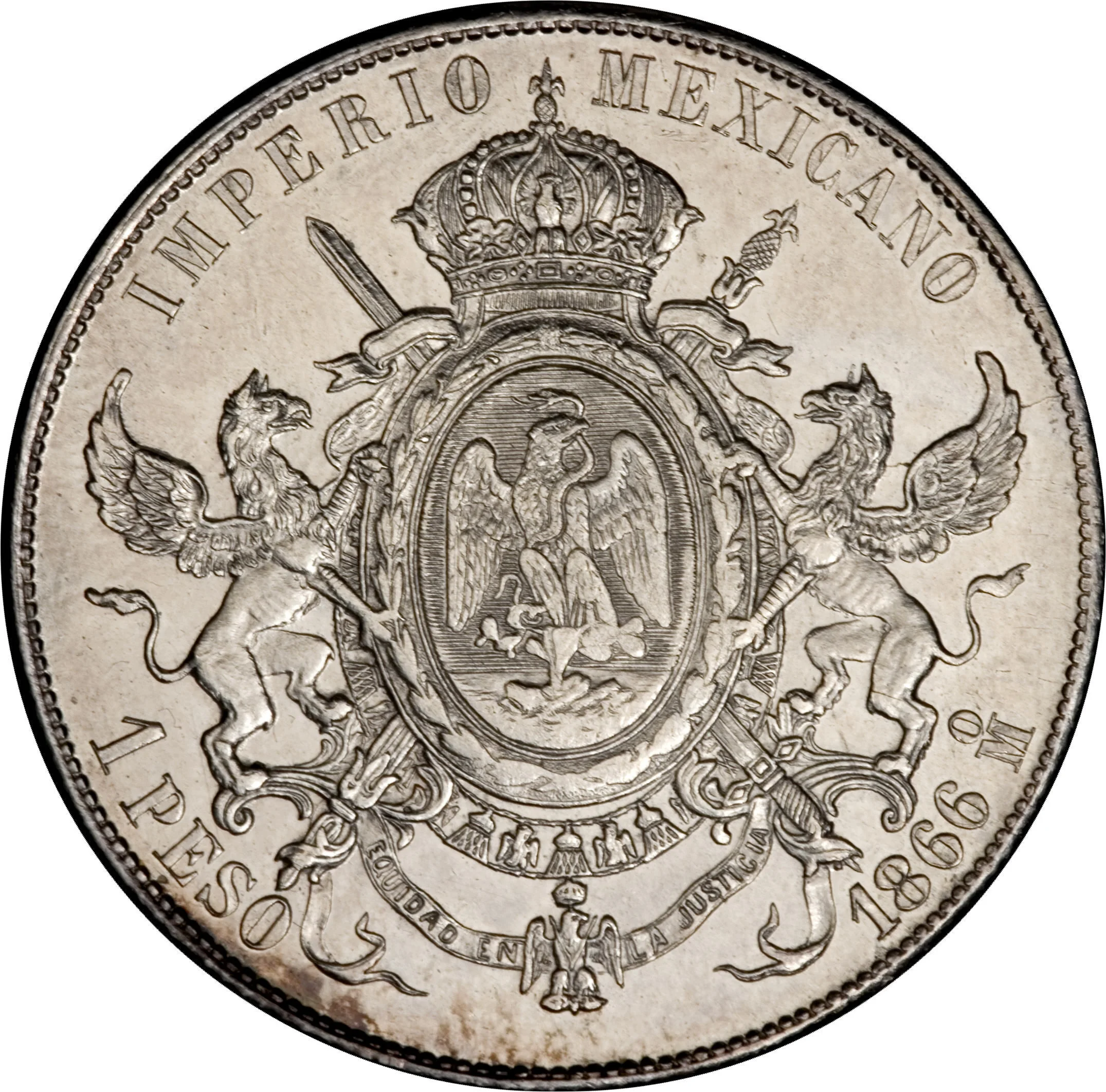
Reverse
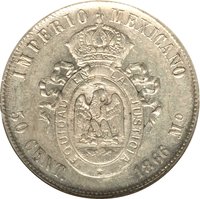
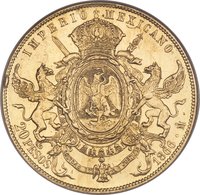
Description:
Crowned arms crossed with swords, flanked by griffons.
Inscription:
IMPERIO MEXICANO
1 PESO
1866 Mo
EQUIDAD EN LA JUSTICIA
1 PESO
1866 Mo
EQUIDAD EN LA JUSTICIA
Script: Latin
Engraver: Sebastián C. Navalón
Edge
Reeded
Mints
| Name | Mark |
|---|---|
| Casa de Moneda de Guanajuato | Go |
| Mexican Mint | Mo |
| San Luís Potosí | Pi |
Historical background
In 1866, Mexico's currency situation was one of profound instability and crisis, directly tied to the political and military turmoil of the French Intervention and the reign of Emperor Maximilian I. The nation was fractured between the republican government of Benito Juárez, which controlled the north, and the French-backed Second Mexican Empire in the center. This political division led to a complete fragmentation of the monetary system. Both regimes, desperate to finance their war efforts, issued their own competing currencies with little to no backing, leading to a proliferation of paper money, coins from various states, and even private tokens that flooded the market.
The imperial government in Mexico City, under severe financial strain, heavily relied on issuing billetes imperiales (imperial notes). These notes rapidly depreciated due to over-issuance and a lack of public confidence, becoming virtually worthless outside areas under strict French military control. Meanwhile, the Juárez government, operating from a mobile capital, also printed its own paper currency and struggled to maintain its value. The result was a catastrophic loss of purchasing power for ordinary citizens, rampant inflation, and a widespread retreat to barter or the use of older, silver Spanish colonial and early republican coins (like pesos and reales) for any significant transaction, as these retained intrinsic value.
Ultimately, the currency chaos of 1866 reflected the collapse of central authority and the devastating economic cost of the civil war. The sheer volume of unbacked paper money destroyed public trust in government-issued currency. This financial disintegration would only begin to resolve with the impending military collapse of the Empire in 1867, after which the restored Republic of Juárez faced the monumental task of unifying and stabilizing the nation's monetary system from the ruins left by years of conflict and competing sovereignties.
The imperial government in Mexico City, under severe financial strain, heavily relied on issuing billetes imperiales (imperial notes). These notes rapidly depreciated due to over-issuance and a lack of public confidence, becoming virtually worthless outside areas under strict French military control. Meanwhile, the Juárez government, operating from a mobile capital, also printed its own paper currency and struggled to maintain its value. The result was a catastrophic loss of purchasing power for ordinary citizens, rampant inflation, and a widespread retreat to barter or the use of older, silver Spanish colonial and early republican coins (like pesos and reales) for any significant transaction, as these retained intrinsic value.
Ultimately, the currency chaos of 1866 reflected the collapse of central authority and the devastating economic cost of the civil war. The sheer volume of unbacked paper money destroyed public trust in government-issued currency. This financial disintegration would only begin to resolve with the impending military collapse of the Empire in 1867, after which the restored Republic of Juárez faced the monumental task of unifying and stabilizing the nation's monetary system from the ruins left by years of conflict and competing sovereignties.
🌟 Uncommon