

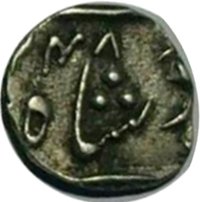
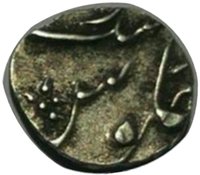
1 Rupee – Bombay Presidency
India

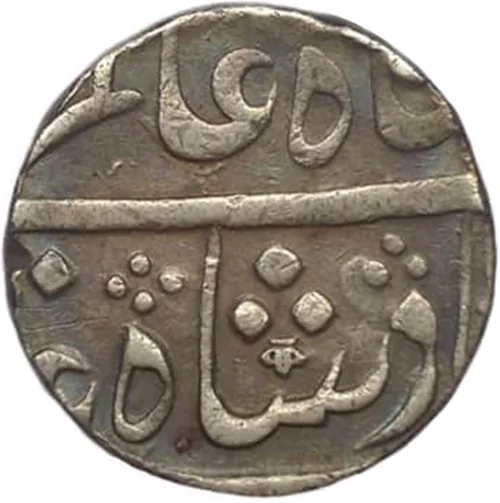
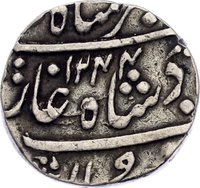
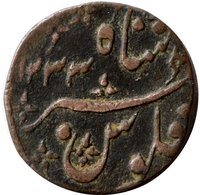
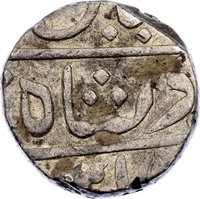
Obverse
Description:
Sikka Mubarak: Shah Alam, the victorious emperor.
Inscription:
شاه عالم
بادشاه غازي
سكه مبارك
بادشاه غازي
سكه مبارك
Translation:
King Alam
Victorious Emperor
Auspicious Coin
Victorious Emperor
Auspicious Coin
Language: Persian
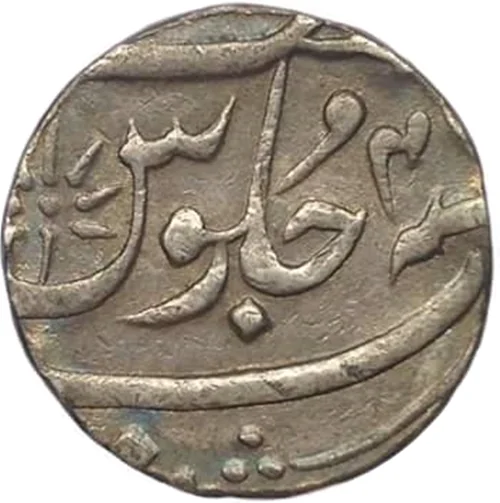
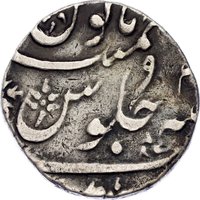
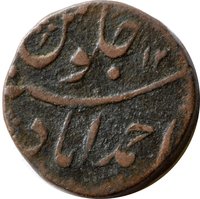
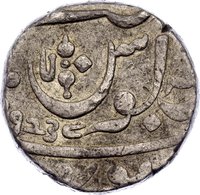
Reverse
Description:
Zarb Surat, AH 46, RY 4[6].
Inscription:
ممنت مانوس
سنة [٦]۴ جلوس
ضرب سورت
سنة [٦]۴ جلوس
ضرب سورت
Translation:
Momin Manus
Year [6]4 of the Reign
Struck at Surat
Year [6]4 of the Reign
Struck at Surat
Language: Arabic
Edge
Plain
Mintings
| Year | Mint Mark | Mintage | Quality | Collection |
|---|---|---|---|---|
| — | — | — |
Historical background
In 1818, the Bombay Presidency’s currency situation was chaotic and fragmented, reflecting the region’s recent political consolidation. Following the defeat of the Maratha Confederacy and the annexation of its territories, the East India Company’s administration inherited a complex monetary landscape. Multiple circulating mediums coexisted: the Company’s own silver rupee (influenced by the Mughal standard), various local silver and copper coins from former Maratha rulers, and a plethora of older Portuguese, Arab, and Mughal issues. This lack of uniformity severely hampered trade and revenue collection, as exchange rates fluctuated wildly and the value of coins depended heavily on their weight, metal purity, and origin.
The primary challenge was the absence of a standard unit of account. Transactions were conducted in a confusing array of rupees, including the Company's "Bombay Rupee," the heavier "Surat Rupee," and the "Chandori" rupee from the newly acquired Deccan territories. Furthermore, the system was bimetallic, relying on both silver and copper, with no fixed legal ratio between them. This often led to instability, as market shifts in the value of one metal against the other could cause shortages of one coin type and hoarding of another, disrupting the local economy and causing public inconvenience.
Recognizing this disorder as an impediment to administrative control and economic integration, the Company authorities in Bombay began serious efforts toward standardization. The period immediately after 1818 set the stage for major reforms, culminating in the Coinage Act of 1835 that established a uniform British Indian rupee across the subcontinent. Thus, the situation in 1818 represents a critical transitional moment—from a patchwork of feudal and regional currencies toward a centralized, colonial monetary system designed to facilitate governance and commerce across the expanding Presidency.
The primary challenge was the absence of a standard unit of account. Transactions were conducted in a confusing array of rupees, including the Company's "Bombay Rupee," the heavier "Surat Rupee," and the "Chandori" rupee from the newly acquired Deccan territories. Furthermore, the system was bimetallic, relying on both silver and copper, with no fixed legal ratio between them. This often led to instability, as market shifts in the value of one metal against the other could cause shortages of one coin type and hoarding of another, disrupting the local economy and causing public inconvenience.
Recognizing this disorder as an impediment to administrative control and economic integration, the Company authorities in Bombay began serious efforts toward standardization. The period immediately after 1818 set the stage for major reforms, culminating in the Coinage Act of 1835 that established a uniform British Indian rupee across the subcontinent. Thus, the situation in 1818 represents a critical transitional moment—from a patchwork of feudal and regional currencies toward a centralized, colonial monetary system designed to facilitate governance and commerce across the expanding Presidency.
✨ Legendary