

Obverse
Description:
Heraldic eagle centered, lettering around beaded rim.
Inscription:
EINIGKEIT UND RECHT UND FREIHEIT *
Translation:
Unity and Justice and Freedom *
Script: Latin
Language: German
Engraver: Josef Wackerle
Reverse
Description:
Large central denomination, date, and mintmark. Lettering encircles the beaded rim.
Inscription:
DEUTSCHES REICH
500
MARK
1923
A
500
MARK
1923
A
Translation:
GERMAN REICH
500
MARK
1923
A
500
MARK
1923
A
Script: Latin
Language: German
Engraver: Josef Wackerle
Edge
Reeded
Mints
| Name | Mark |
|---|---|
| Berlin | A |
| Munich | D |
| Muldenhütten | E |
| Staatliche Münze Baden-Württemberg | F |
| Staatliche Münze Baden-Württemberg | G |
| Hamburgische Münze | J |
Mintings
Historical background
The hyperinflation that ravaged Germany in 1923 was the catastrophic culmination of political and economic pressures following the First World War. The Weimar Republic, burdened by the colossal reparations demanded by the Treaty of Versailles, chose to finance its deficits not through taxes but by printing money. This practice began during the war itself but accelerated dramatically after 1921, as the government struggled to meet reparations payments and fund domestic spending, including the costly occupation of the Ruhr by French and Belgian troops in January 1923. With its industrial heartland paralyzed by a policy of passive resistance, the government printed ever more money to pay striking workers, flooding the economy with rapidly devaluing paper marks.
The result was an economic and social nightmare of unprecedented scale. Inflation spiraled into hyperinflation, with prices doubling not annually or monthly, but hourly. Currency became worthless, with people needing wheelbarrows full of banknotes to buy basic goods like bread or a newspaper. Savings, pensions, and life insurance were obliterated overnight, devastating the middle class and eroding social stability. Barter replaced cash transactions, and the very fabric of the economy unraveled as production stalled and speculation replaced productive work.
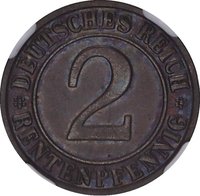
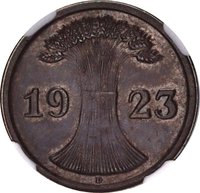
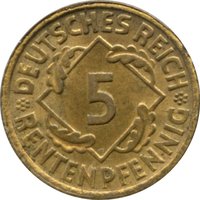
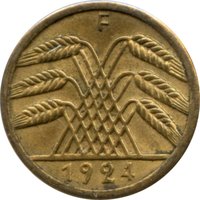
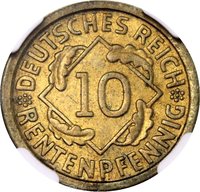
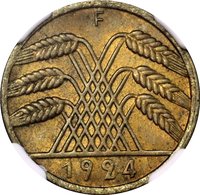
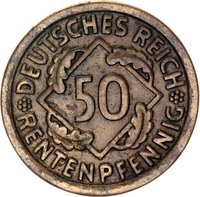
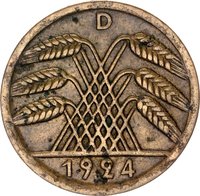
The crisis was finally halted in November 1923 with the introduction of the Rentenmark, a new currency backed by a theoretical mortgage on German land and industry. This bold act of psychological stabilization, led by Chancellor Gustav Stresemann and Finance Minister Hans Luther, restored confidence almost immediately. The period left deep scars, however, fostering widespread bitterness, political radicalization, and a profound distrust of democratic institutions, which extremist parties like the Nazis would later exploit to devastating effect.
The result was an economic and social nightmare of unprecedented scale. Inflation spiraled into hyperinflation, with prices doubling not annually or monthly, but hourly. Currency became worthless, with people needing wheelbarrows full of banknotes to buy basic goods like bread or a newspaper. Savings, pensions, and life insurance were obliterated overnight, devastating the middle class and eroding social stability. Barter replaced cash transactions, and the very fabric of the economy unraveled as production stalled and speculation replaced productive work.
The crisis was finally halted in November 1923 with the introduction of the Rentenmark, a new currency backed by a theoretical mortgage on German land and industry. This bold act of psychological stabilization, led by Chancellor Gustav Stresemann and Finance Minister Hans Luther, restored confidence almost immediately. The period left deep scars, however, fostering widespread bitterness, political radicalization, and a profound distrust of democratic institutions, which extremist parties like the Nazis would later exploit to devastating effect.
Series: 1923 Germany circulation coins

🌱 Very Common