

10 Rubles – Russian Federation
Russia
Context
Year: 2015
Country: Russia 
Issuer: Russian Federation
Issuing organization: Central Bank of Russia
Period:
(since 1991)
Currency:
(since 1998)
Total mintage: 10,000,000
Material
References
Value
Exchange value: 10 RUB
Inflation-adjusted value: 24.24 RUB
Obverse
Description:
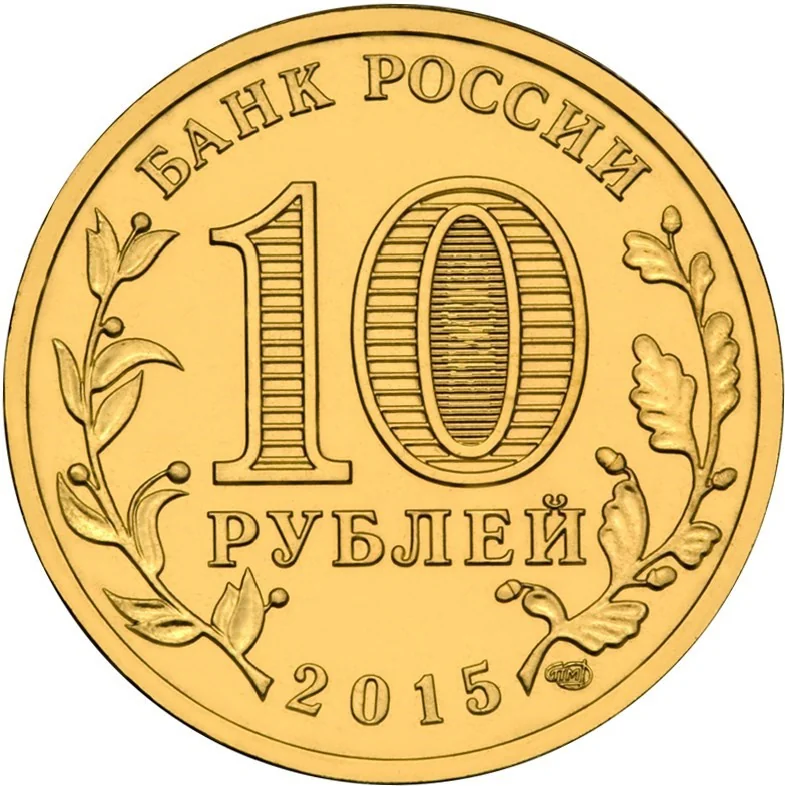
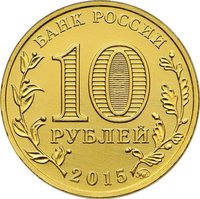
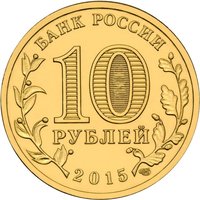
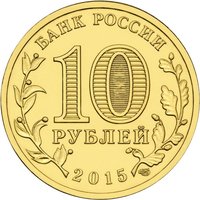
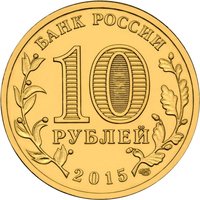
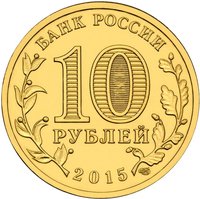
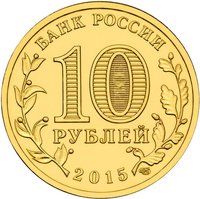
The center features "10 РУБЛЕЙ". Inside the "0" are hidden images of "10" and "РУБ" that appear when tilted. Around the rim: "БАНК РОССИИ" on top, "2015" on the bottom, with stylized laurel and oak branches on the left and right.
Inscription:
БАНК РОССИИ
10
РУБЛЕЙ
2015 СПМД
10
РУБЛЕЙ
2015 СПМД
Translation:
BANK OF RUSSIA
10
ROUBLES
2015 SPMD
10
ROUBLES
2015 SPMD
Script: Cyrillic
Language: Russian
Designer and engraver: Alexander Vasilyevich Baklanov
Reverse
Description:
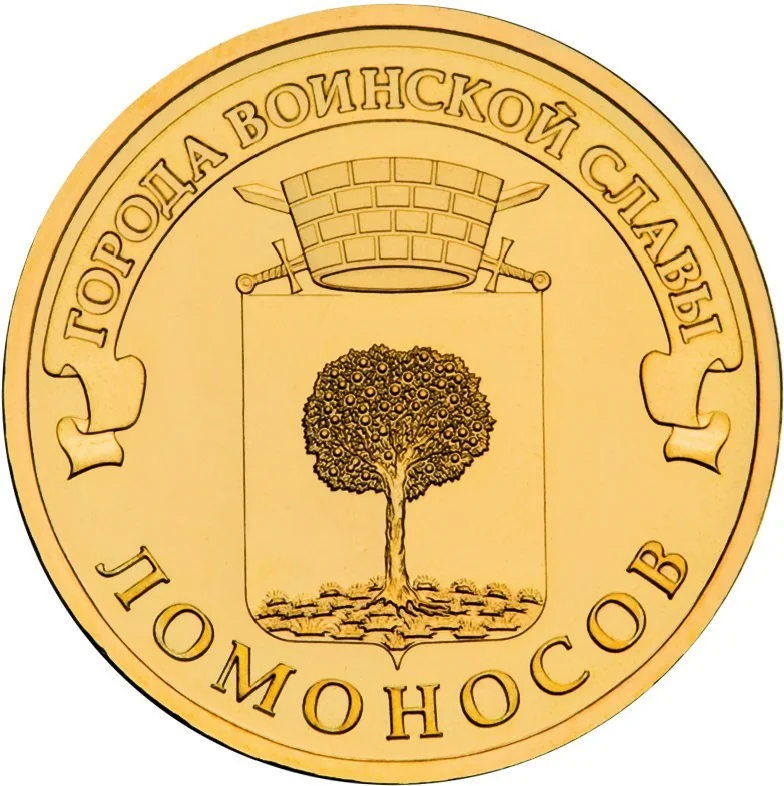
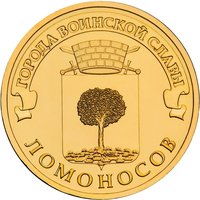
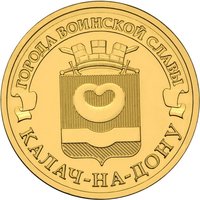
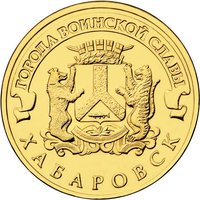
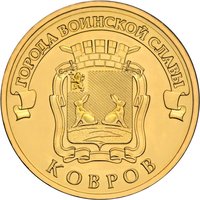
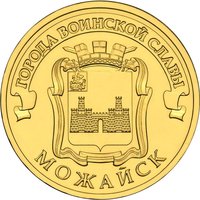
Lomonosov's coat of arms, above it on a ribbon: "ГОРОДА ВОИНСКОЙ СЛАВЫ", below along the rim: "ЛОМОНОСОВ".
Inscription:
ГОРОДА ВОИНСКОЙ СЛАВЫ
ЛОМОНОСОВ
ЛОМОНОСОВ
Translation:
CITIES OF MILITARY GLORY
LOMONOSOV
LOMONOSOV
Script: Cyrillic
Language: Russian
Designer: Andrey Anatolyevich Brynza
Edge
6 sections with 5 corrugations and 6 sections with 7 corrugations alternated with 12 smooth sections
Mints
| Name | Mark |
|---|---|
| Saint Petersburg | (СПМД) |
Mintings
| Year | Mint Mark | Mintage | Quality | Collection |
|---|---|---|---|---|
| 2015 | СПМД | 10,000,000 |
Historical background
In 2015, the Russian Federation faced a severe currency crisis, marked by a dramatic depreciation of the ruble and a rapid depletion of foreign reserves. This was primarily the result of two simultaneous external shocks: a sharp collapse in global oil prices, which halved the value of Russia's key export, and the impact of economic sanctions imposed by Western nations following the annexation of Crimea in 2014. These sanctions restricted Russian entities' access to international capital markets and advanced technology, crippling investment and exacerbating capital flight, which reached an estimated $150 billion in 2014-2015.
The Central Bank of Russia (CBR) responded with a controversial shift in policy. After spending nearly $90 billion in foreign reserves in late 2014 in a failed attempt to defend the ruble, it moved to a free float in November 2014 and dramatically raised its key interest rate to 17% in December 2014. While this high rate helped stabilize the currency by making ruble assets more attractive and curbing inflation, it also severely stifled economic activity, pushing the economy into a deep recession with GDP contracting by 2% in 2015. Inflation soared to over 15%, drastically eroding household purchasing power.
The situation stabilized by the second half of 2015, but at a significant cost. The ruble settled at roughly half its pre-crisis value against the US dollar, and the Russian economy entered a period of "stagflation" characterized by recession and high inflation. The crisis forced a painful macroeconomic adjustment, reducing imports and government spending. While it underscored the vulnerability of Russia's resource-dependent economy to commodity price swings and geopolitical isolation, it also accelerated a policy of "import substitution" and increased economic focus on alliances with non-Western partners, setting the stage for the country's longer-term financial strategy.
The Central Bank of Russia (CBR) responded with a controversial shift in policy. After spending nearly $90 billion in foreign reserves in late 2014 in a failed attempt to defend the ruble, it moved to a free float in November 2014 and dramatically raised its key interest rate to 17% in December 2014. While this high rate helped stabilize the currency by making ruble assets more attractive and curbing inflation, it also severely stifled economic activity, pushing the economy into a deep recession with GDP contracting by 2% in 2015. Inflation soared to over 15%, drastically eroding household purchasing power.
The situation stabilized by the second half of 2015, but at a significant cost. The ruble settled at roughly half its pre-crisis value against the US dollar, and the Russian economy entered a period of "stagflation" characterized by recession and high inflation. The crisis forced a painful macroeconomic adjustment, reducing imports and government spending. While it underscored the vulnerability of Russia's resource-dependent economy to commodity price swings and geopolitical isolation, it also accelerated a policy of "import substitution" and increased economic focus on alliances with non-Western partners, setting the stage for the country's longer-term financial strategy.
Series: Towns of Martial Glory
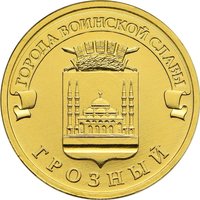
🌱 Common