

5 gulden – Netherlands
Add to wishlist
Circulating commemorative coins
Commemoration: European Football Championship 2000
Netherlands
Context
Year: 2000
Issuer: Netherlands
Ruler: Beatrix
Currency:
(1817—2001)
Demonetized: Yes
Total mintage: 2,501,000
Material
References
KM: #
Numista: #7957
Value
Exchange value: 5 NLG
Inflation-adjusted value: 8.81 NLG
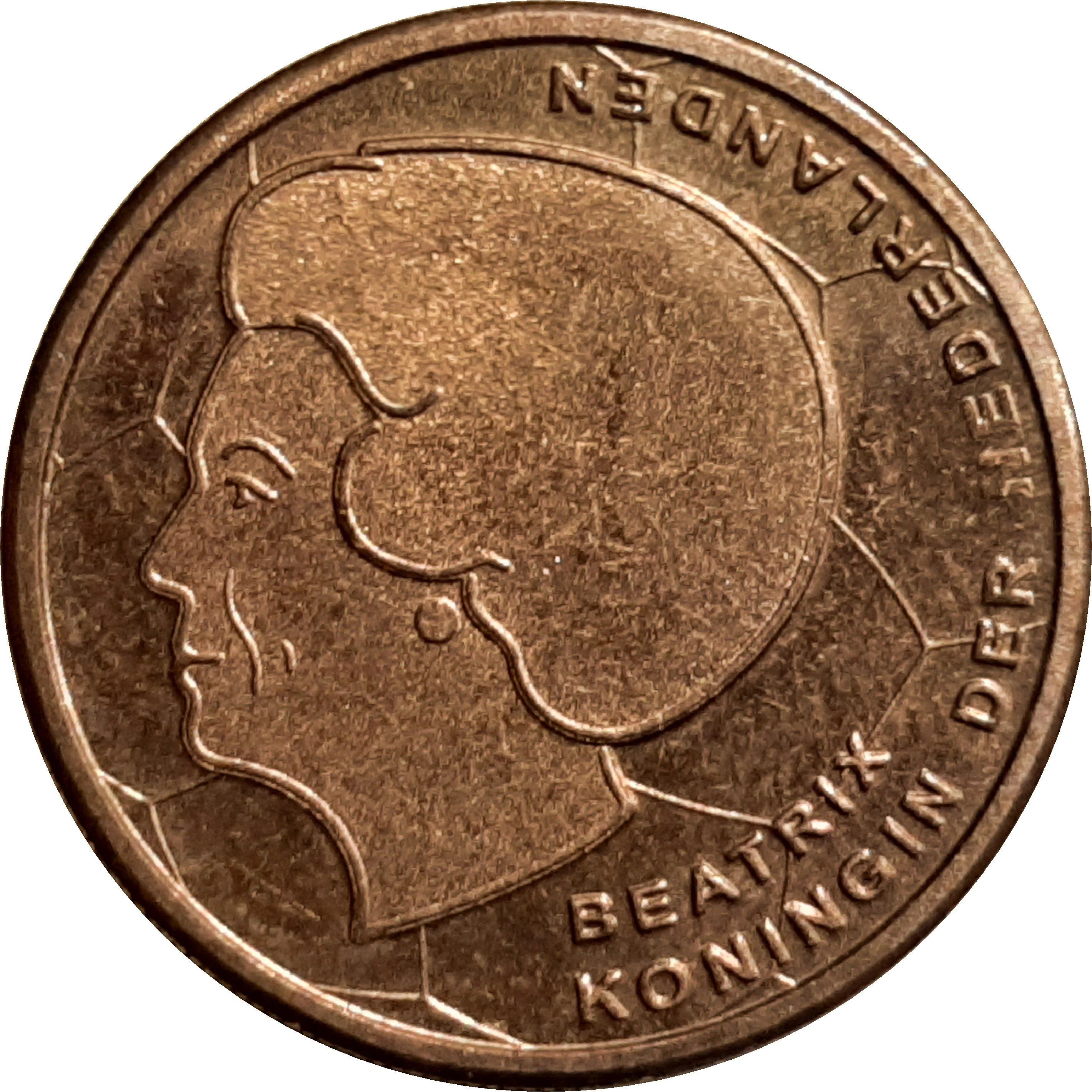
Obverse
Description:
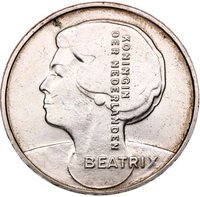
Queen Beatrix facing left, surrounded by lettering.
Inscription:
BEATRIX
KONINGIN DER NEDERLANDEN
KONINGIN DER NEDERLANDEN
Translation:
Beatrix
Queen of the Netherlands
Queen of the Netherlands
Script: Latin
Language: Dutch
Designer: Geerten Verheus
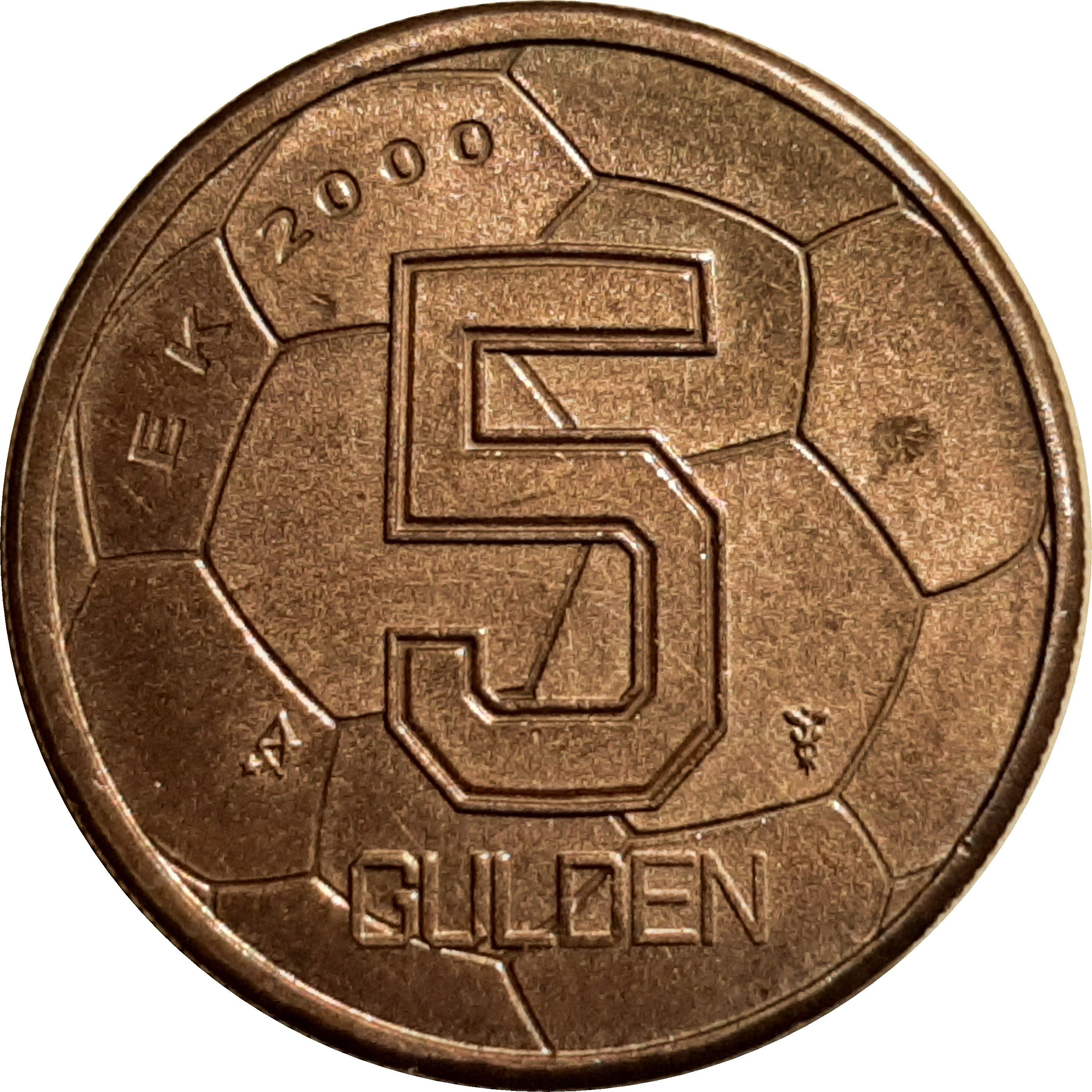
Reverse
Description:
Event name top left, denomination center, football background.
Inscription:
EK 2000
5 GULDEN
5 GULDEN
Translation:
2000
5 Guilders
5 Guilders
Script: Latin
Designer: Michael Raedecker
Edge
Reeded with inscription.
Legend:
★ GOD ★ ZIJ ★ MET ★ ONS
Translation:
God be with us
Language: Dutch
Mints
| Name | Mark |
|---|---|
| Royal Dutch Mint | — |
Mintings
| Year | Mint Mark | Mintage | Quality | Collection |
|---|---|---|---|---|
| 2000 | — | 2,500,000 | ||
| 2000 | — | 1,000 | Proof |
Historical background
In the year 2000, the Netherlands operated within a unique monetary duality. The official national currency remained the Dutch guilder (NLG), a symbol of economic stability and national identity for centuries. However, the country was in the final, decisive phase of a three-year transition towards adopting the euro, the new single European currency. The guilder's exchange rate had been irrevocably fixed on January 1, 1999, at 2.20371 guilders to one euro, as the euro was launched for electronic and financial transactions.
This period was characterized by a practical "no compulsion, no prohibition" approach. While the euro existed as scriptural money for banks and financial markets, everyday consumers continued to use guilders for all cash transactions. Prices, however, were increasingly displayed in both guilders and euros to familiarize the public with the new currency. This created a landscape of "mental conversion," where citizens and businesses were preparing for the physical introduction of euro banknotes and coins, scheduled for January 1, 2002.
The background to this situation was the Netherlands' deep commitment to European integration. As a founding member of the European Union and a participant in the Exchange Rate Mechanism, the Dutch economy was already closely aligned with German monetary policy. The decision to join the eurozone was seen as a logical step to further reduce transaction costs, eliminate exchange rate risk with key trading partners, and solidify the country's position at the core of the European project. Thus, the year 2000 was a quiet but determined countdown, marking the final chapter of the guilder before its retirement.
This period was characterized by a practical "no compulsion, no prohibition" approach. While the euro existed as scriptural money for banks and financial markets, everyday consumers continued to use guilders for all cash transactions. Prices, however, were increasingly displayed in both guilders and euros to familiarize the public with the new currency. This created a landscape of "mental conversion," where citizens and businesses were preparing for the physical introduction of euro banknotes and coins, scheduled for January 1, 2002.
The background to this situation was the Netherlands' deep commitment to European integration. As a founding member of the European Union and a participant in the Exchange Rate Mechanism, the Dutch economy was already closely aligned with German monetary policy. The decision to join the eurozone was seen as a logical step to further reduce transaction costs, eliminate exchange rate risk with key trading partners, and solidify the country's position at the core of the European project. Thus, the year 2000 was a quiet but determined countdown, marking the final chapter of the guilder before its retirement.
🌱 Common