

20 Bahts (Chulalongkorn University) – Thailand
Circulating commemorative coins
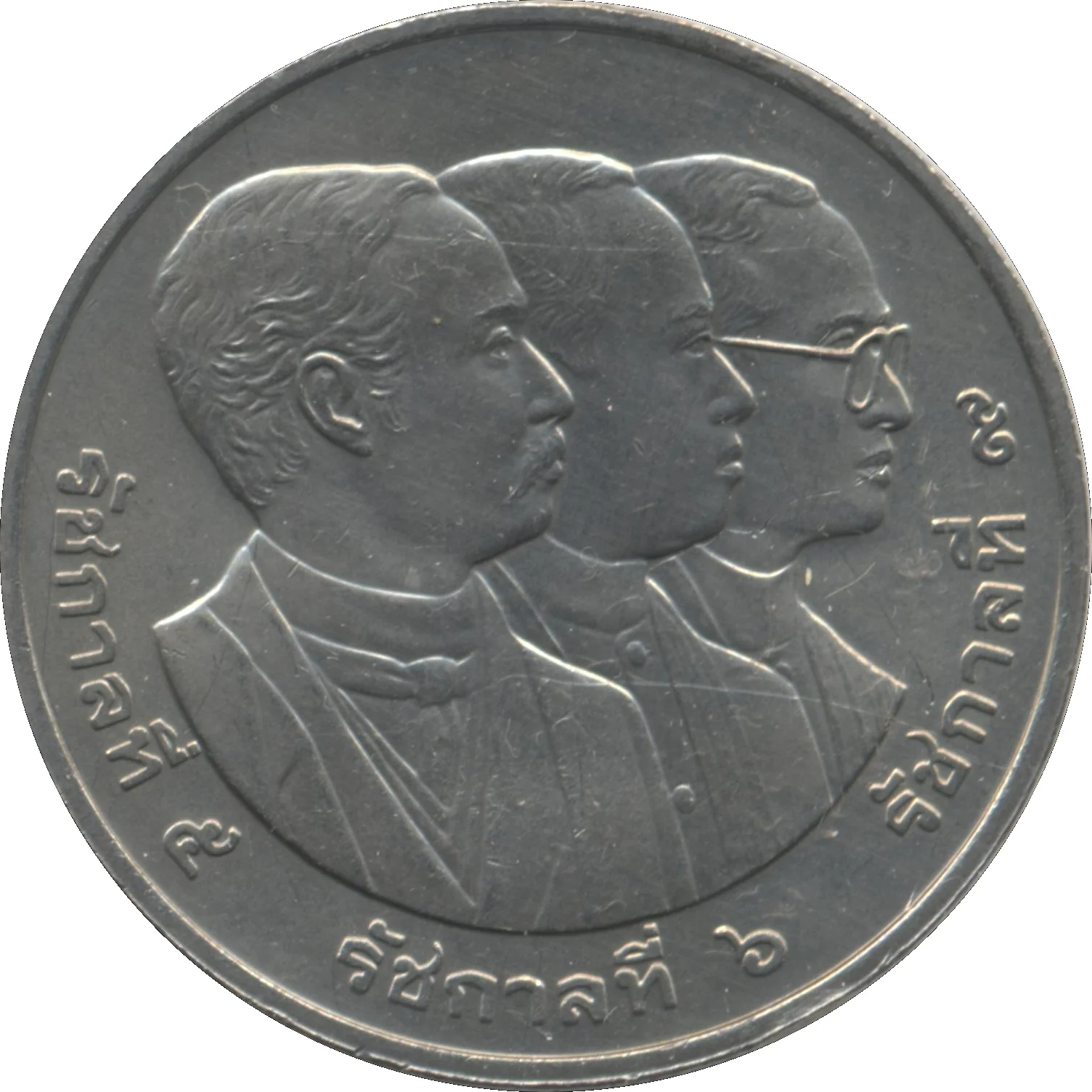
Commemoration: 84th Anniversary of Chulalongkorn University
Thailand
Context
Year: 2001
Thai Year: 2544
Issuer: Thailand 
Ruler: Bhumibol Adulyadej
Currency:
(since 1897)
Total mintage: 805,740
Material
References
Y: #Click to copy to clipboard374
Numista: #11382
Value
Exchange value: 20 THB = $0.64
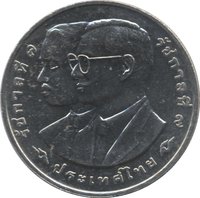
Obverse
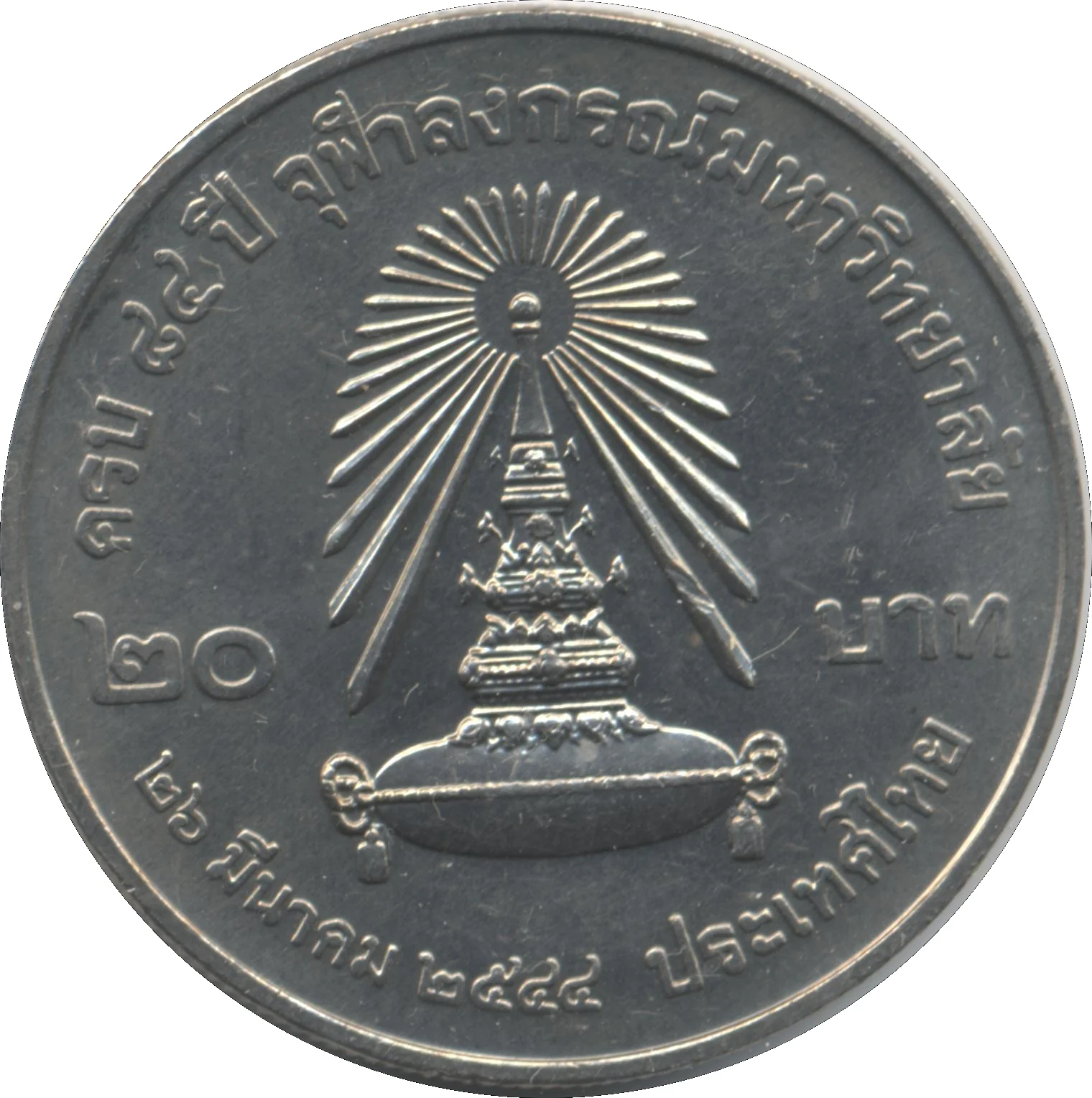
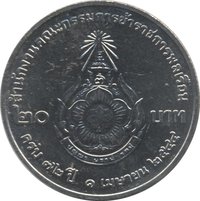
Reverse
Description:
Emblem of Chulalongkorn University: Phra Kiao coronet with rays emanating from its top jewel.
Inscription:
ครบ ๘๔ ปี จุฬาลงกรณ์มหาวิทยาลัย
๒๐ บาท
๒๖ มีนาคม ๒๕๔๔ ประเทศไทย
๒๐ บาท
๒๖ มีนาคม ๒๕๔๔ ประเทศไทย
Translation:
On the occasion of the 84th anniversary of Chulalongkorn University
20 Baht
26 March 2001, Thailand
20 Baht
26 March 2001, Thailand
Script: Thai
Language: Thai
Edge
Reeded.
Categories
| Education |
Mintings
| Year | Mint Mark | Mintage | Quality | Collection |
|---|---|---|---|---|
| 2001 | — | 800,400 | ||
| 2001 | — | 5,340 | Proof |
Historical background
In 2001, Thailand's currency situation was defined by the lingering aftermath of the 1997 Asian Financial Crisis, which had originated in the country with the collapse of the Thai baht. The crisis forced the abandonment of the long-standing fixed exchange rate peg to the US dollar, leading to a sharp devaluation that saw the baht lose more than half its value. By 2001, the currency had stabilized but remained volatile and sensitive to external shocks, trading in a managed float system overseen by the Bank of Thailand. The nation's financial system was still undergoing significant restructuring, with high levels of non-performing loans burdening the banking sector and constraining economic recovery.
The newly elected government of Prime Minister Thaksin Shinawatra, which took office in February 2001, pursued aggressively populist and expansionist domestic policies, such as debt moratoriums for farmers and a universal healthcare scheme. These measures, collectively known as "Thaksinomics," aimed to stimulate domestic demand and reduce reliance on volatile export markets. However, this fiscal stimulus raised concerns among some economists and international observers about long-term public debt sustainability and potential inflationary pressures, which could have undermined confidence in the baht.
Despite these domestic policies, the baht's value in 2001 was largely influenced by external factors, particularly the global economic slowdown following the dot-com bust and the aftermath of the 9/11 attacks in the United States. Weak global demand for electronics and other Thai exports posed a challenge. Consequently, the Bank of Thailand maintained a cautious stance, prioritizing currency stability and building up foreign reserves as a buffer against future speculation, marking a year of fragile recovery where the focus shifted from pure crisis management to navigating a path toward sustainable growth.
The newly elected government of Prime Minister Thaksin Shinawatra, which took office in February 2001, pursued aggressively populist and expansionist domestic policies, such as debt moratoriums for farmers and a universal healthcare scheme. These measures, collectively known as "Thaksinomics," aimed to stimulate domestic demand and reduce reliance on volatile export markets. However, this fiscal stimulus raised concerns among some economists and international observers about long-term public debt sustainability and potential inflationary pressures, which could have undermined confidence in the baht.
Despite these domestic policies, the baht's value in 2001 was largely influenced by external factors, particularly the global economic slowdown following the dot-com bust and the aftermath of the 9/11 attacks in the United States. Weak global demand for electronics and other Thai exports posed a challenge. Consequently, the Bank of Thailand maintained a cautious stance, prioritizing currency stability and building up foreign reserves as a buffer against future speculation, marking a year of fragile recovery where the focus shifted from pure crisis management to navigating a path toward sustainable growth.
🌟 Limited