

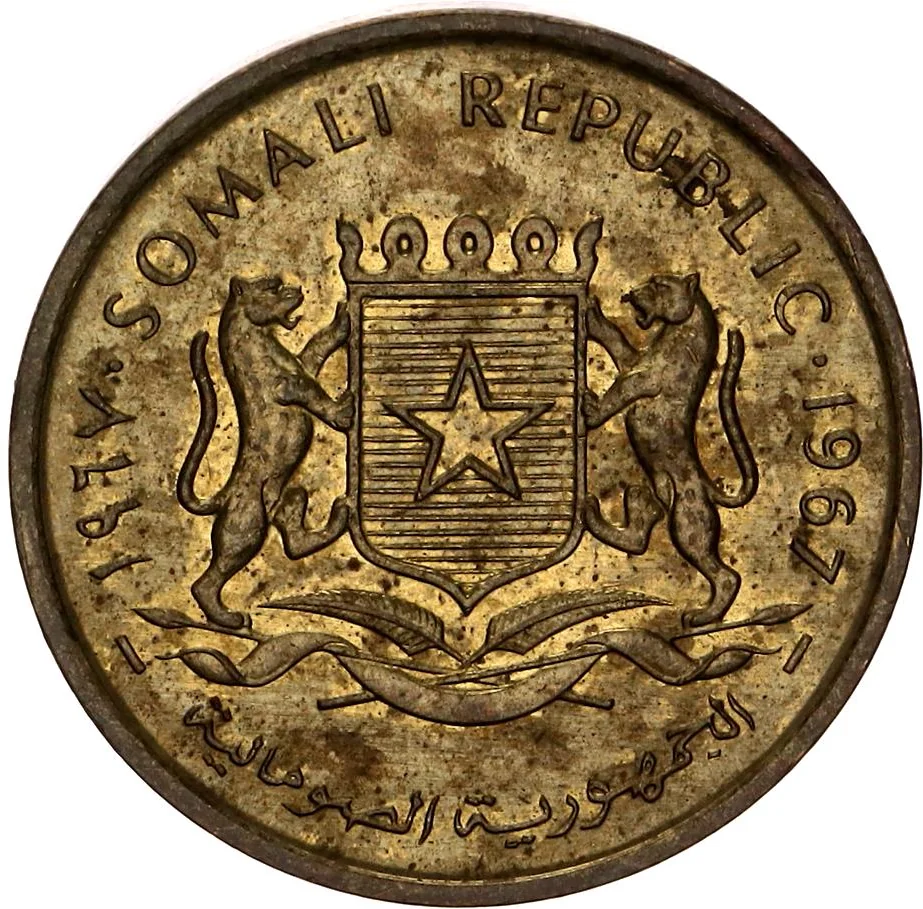
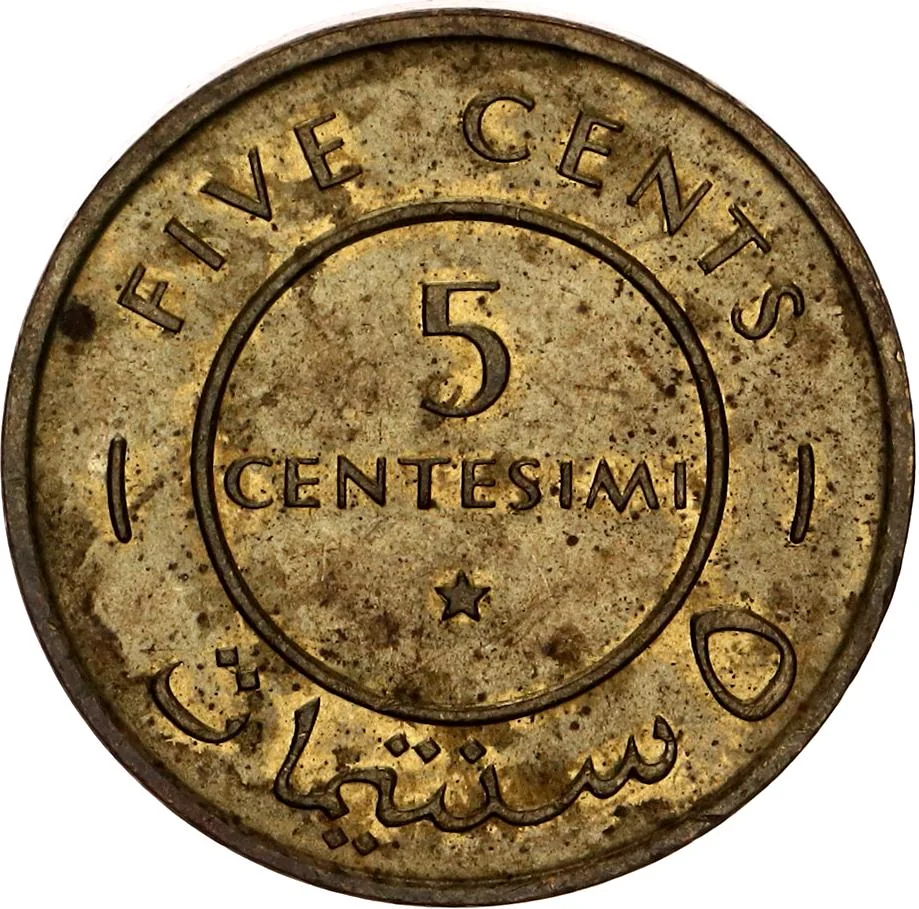
5 centesimi – Somalia
Add to wishlist
Somalia
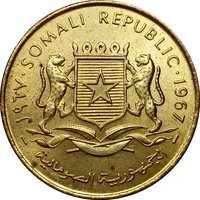
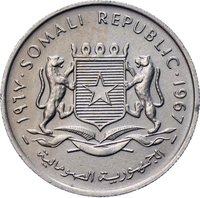
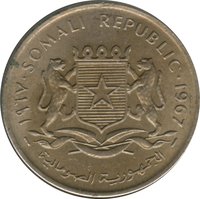
Obverse
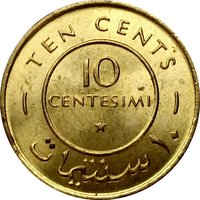
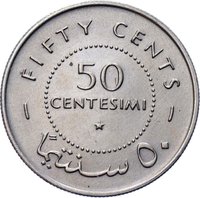
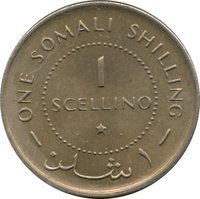
Reverse
Edge
Plain
Categories
| Animal> Feline |
| Symbols> Coat of Arms |
Mints
| Name | Mark |
|---|---|
| Royal Mint (Tower Hill) | — |
Mintings
| Year | Mint Mark | Mintage | Quality | Collection |
|---|---|---|---|---|
| 1967 | — | 10,000,000 |
Historical background
In 1967, the currency situation in Somalia was characterized by stability and institutional strength, a notable achievement for the young republic. The Somali Shilling, introduced in 1962 to replace the East African Shilling, was managed by the newly established Banca Nazionale Somala (National Bank of Somalia). This central bank, created with technical assistance from Italy, successfully maintained a fixed exchange rate pegged to the U.S. Dollar at a rate of 7.14 Somali Shillings to 1 USD, a parity it had held since its inception. This peg provided a crucial anchor for the economy, fostering confidence in both domestic and international trade.
The currency's stability was underpinned by a relatively healthy economic position. Somalia's primary exports, bananas and livestock, generated sufficient foreign exchange reserves, bolstered by strategic agreements with Italy and aid inflows. Furthermore, the nation benefited from the "Italian Trust Administration" funds, a financial settlement that provided budgetary support. Consequently, the Somali Shilling was a fully convertible currency, freely exchanged for major foreign currencies without restrictions, which was rare for many developing nations at the time.
However, this stable facade existed within a fragile political context. The administration of President Aden Abdullah Osman Daar was nearing its end, with elections scheduled for 1967 that would bring Abdirashid Ali Shermarke to power. While the currency itself was not in crisis, underlying tensions between the northern and southern regions and growing public expenditure were creating fiscal pressures. Therefore, 1967 represents the calm before the storm; the shilling was strong and trusted, but the political and economic challenges that would later unravel after the 1969 military coup—leading to eventual hyperinflation and currency collapse—were already simmering beneath the surface.
The currency's stability was underpinned by a relatively healthy economic position. Somalia's primary exports, bananas and livestock, generated sufficient foreign exchange reserves, bolstered by strategic agreements with Italy and aid inflows. Furthermore, the nation benefited from the "Italian Trust Administration" funds, a financial settlement that provided budgetary support. Consequently, the Somali Shilling was a fully convertible currency, freely exchanged for major foreign currencies without restrictions, which was rare for many developing nations at the time.
However, this stable facade existed within a fragile political context. The administration of President Aden Abdullah Osman Daar was nearing its end, with elections scheduled for 1967 that would bring Abdirashid Ali Shermarke to power. While the currency itself was not in crisis, underlying tensions between the northern and southern regions and growing public expenditure were creating fiscal pressures. Therefore, 1967 represents the calm before the storm; the shilling was strong and trusted, but the political and economic challenges that would later unravel after the 1969 military coup—leading to eventual hyperinflation and currency collapse—were already simmering beneath the surface.
Series: 1967 Somalia circulation coins
🌱 Very Common