

10 markkaa – Finland
Add to wishlist
Finland
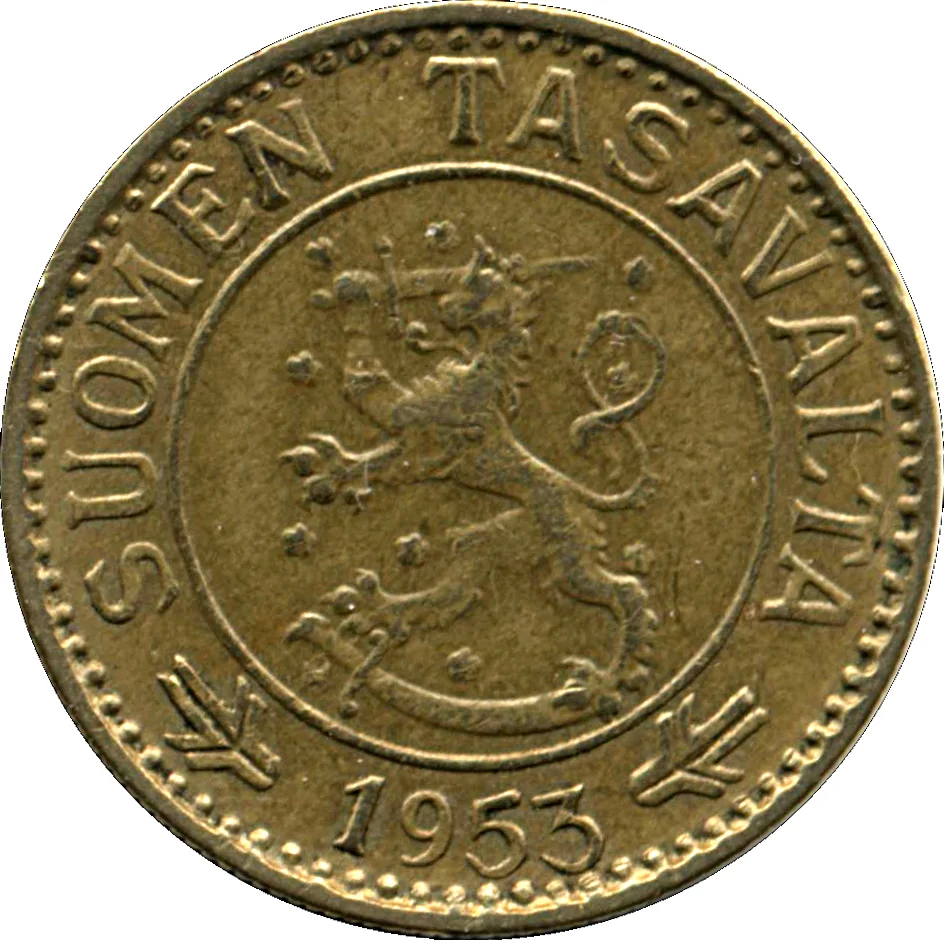
Obverse
Description:
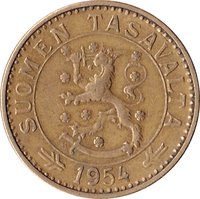
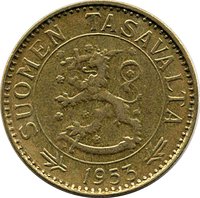
Lion rampant in circle, date beneath.
Inscription:
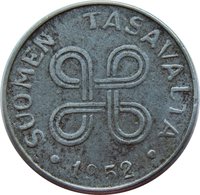
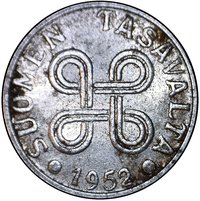
SUOMEN TASAVALTA
H
1953
H
1953
Translation:
Republic of Finland
H
1953
H
1953
Script: Latin
Language: Finnish
Engraver: Peippo Uolevi Helle
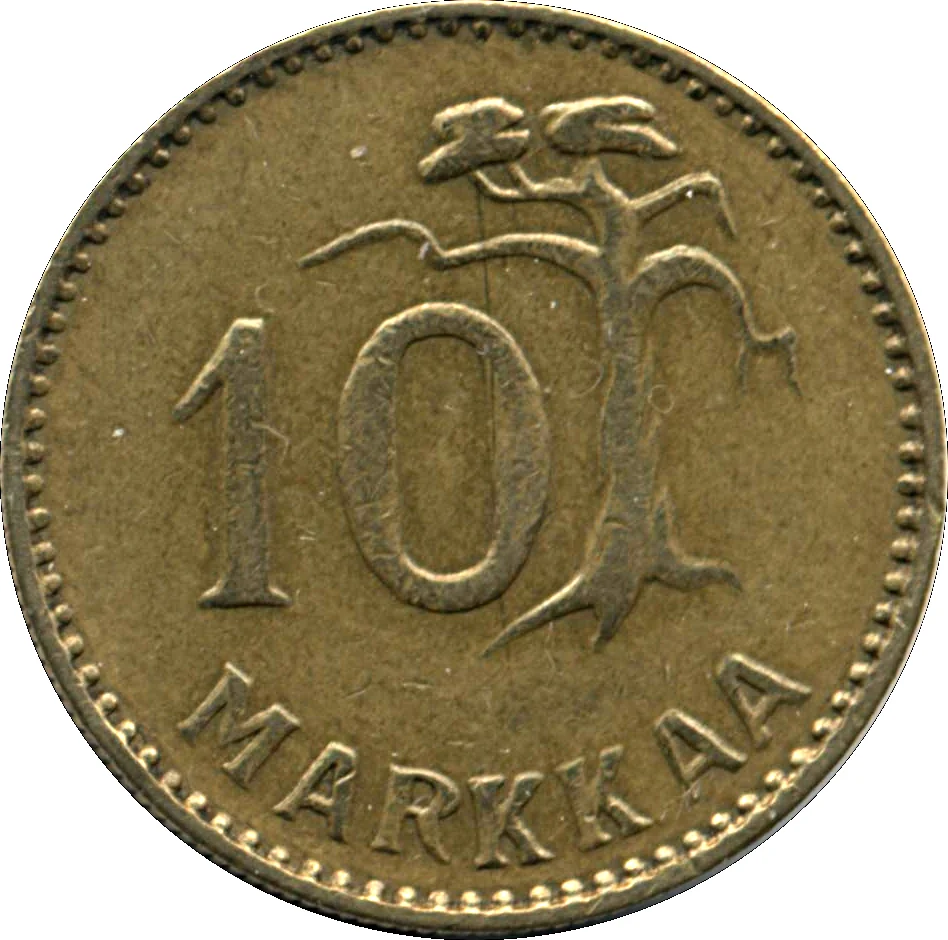
Reverse
Description:
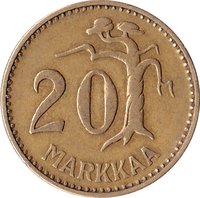
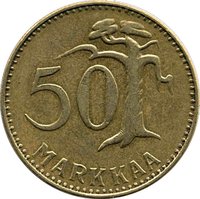
Tree root length varies.
Inscription:
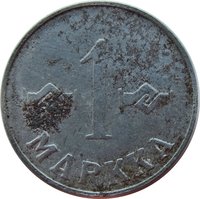
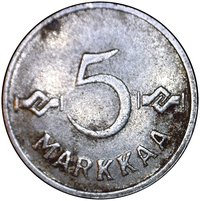
10
MARKKAA
MARKKAA
Script: Latin
Engraver: Peippo Uolevi Helle
Edge
Milled
Categories
| Object> Cold weapons |
| Animal> Feline |
| Plants> Flower |
| Plant> Tree |
| Symbols> Coat of Arms |
Mints
| Name | Mark |
|---|---|
| Mint of Finland | — |
Mintings
| Year | Mint Mark | Mintage | Quality | Collection |
|---|---|---|---|---|
| 1952 | — | 6,390,000 | ||
| 1953 | — | 22,650,000 | ||
| 1954 | — | 2,452,000 | ||
| 1955 | — | 2,342,000 | ||
| 1956 | — | 4,238,000 | ||
| 1958 | — | 3,292,000 | ||
| 1960 | — | 740,000 | ||
| 1961 | — | 3,576,000 | ||
| 1962 | — | 1,852,000 |
Historical background
In 1952, Finland’s currency situation was defined by the aftermath of World War II and a period of intensive reconstruction and stabilization. The country was operating under a strictly controlled monetary system, with the Finnish markka (markkaa) subject to foreign exchange regulations and a fixed but adjustable exchange rate. This system, managed by the Bank of Finland, was essential for rebuilding the war-torn economy, managing scarce foreign reserves, and fulfilling heavy war reparations to the Soviet Union, which were finally completed that same year.
The year itself was significant as it marked the Helsinki Olympics, a major international event that placed unique pressure on the currency system. To accommodate the influx of foreign visitors and athletes, the government temporarily introduced a special "Olympic currency" – exchange certificates for tourists – to bypass the restrictive currency controls and capture much-needed foreign exchange. This pragmatic measure highlighted the tension between a controlled domestic economy and the need to engage with the international community.
Overall, the currency landscape in 1952 reflected a transitional phase. With reparations concluded and the Olympics showcasing a modernizing nation, Finland was laying the groundwork for future economic liberalization. However, the markka remained non-convertible and tightly managed, with a definitive shift toward a more stable and open economy still several years away, ultimately leading to the introduction of a new markka (FIM) in 1963 to restore confidence after periods of inflation.
The year itself was significant as it marked the Helsinki Olympics, a major international event that placed unique pressure on the currency system. To accommodate the influx of foreign visitors and athletes, the government temporarily introduced a special "Olympic currency" – exchange certificates for tourists – to bypass the restrictive currency controls and capture much-needed foreign exchange. This pragmatic measure highlighted the tension between a controlled domestic economy and the need to engage with the international community.
Overall, the currency landscape in 1952 reflected a transitional phase. With reparations concluded and the Olympics showcasing a modernizing nation, Finland was laying the groundwork for future economic liberalization. However, the markka remained non-convertible and tightly managed, with a definitive shift toward a more stable and open economy still several years away, ultimately leading to the introduction of a new markka (FIM) in 1963 to restore confidence after periods of inflation.
Series: 1952 Finland circulation coins
🌱 Very Common