

2 rials – Iran
Add to wishlist
Iran
Context
Years: 1952–1957
Issuer: Iran
Ruler: Mohammad Reza
Currency:
(since 1932)
Demonetized: Yes
Total mintage: 35,783,000
Material
References
KM: #
Numista: #7814
Value
Exchange value: 2 IRR
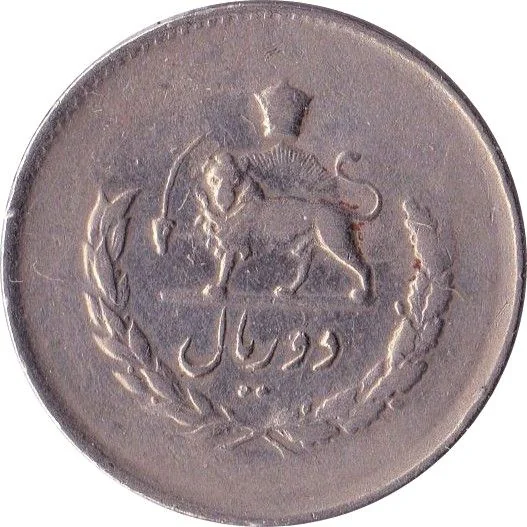
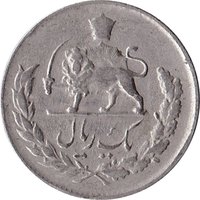
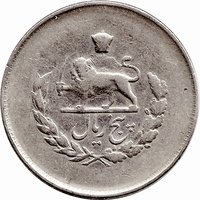
Obverse
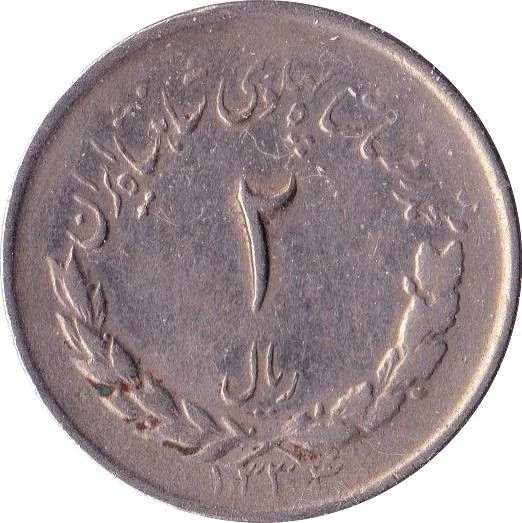
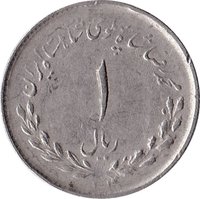
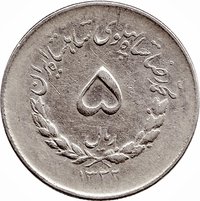
Reverse
Inscription:
محمد رضا شاه پهلوى شاهنشاه ايران
٢
ريال
١٣٣٢
٢
ريال
١٣٣٢
Translation:
Mohammad Reza Shah Pahlavi, Shahanshah of Iran
2
Rials
1332
2
Rials
1332
Language: Persian
Edge
Reeded
Mints
| Name | Mark |
|---|---|
| Tehran | — |
Mintings
| Year | Mint Mark | Mintage | Quality | Collection |
|---|---|---|---|---|
| 1952 | — | 5,335,000 | ||
| 1953 | — | 6,870,000 | ||
| 1954 | — | 13,668,000 | ||
| 1955 | — | 7,185,000 | ||
| 1956 | — | 2,400,000 | ||
| 1957 | — | 325,000 |
Historical background
In 1952, Iran's currency situation was deeply unstable and a direct reflection of the nation's profound political and economic crisis. The core issue was the British-controlled Anglo-Iranian Oil Company (AIOC), which had long dominated Iran's primary resource. Following the 1951 nationalization of the oil industry by Prime Minister Mohammad Mosaddegh, Britain imposed a severe international boycott and blockade, halting almost all of Iran's oil exports. This abruptly severed the state's main source of foreign currency revenue, crippling the government's finances and creating a massive balance-of-payments deficit.
The loss of oil income triggered a sharp decline in the value of the Iranian rial on unofficial markets and led to serious inflationary pressures. The government, deprived of its key revenue stream, began to run large budget deficits. To cover these shortfalls, the Mosaddegh administration increasingly resorted to printing money through the National Bank of Iran (Bank Melli), which further devalued the currency and fueled inflation. This monetary expansion, combined with shortages of imported goods due to the blockade, eroded purchasing power and caused significant economic hardship for the population.
Ultimately, the currency instability of 1952 was not a standalone monetary event but a symptom of the larger struggle for economic sovereignty. The financial strain weakened the government's position and contributed to the social unrest that, alongside foreign intervention, culminated in the 1953 coup against Mosaddegh. The currency crisis therefore underscored how Iran's financial health was inextricably linked to the political battle over control of its national resources.
The loss of oil income triggered a sharp decline in the value of the Iranian rial on unofficial markets and led to serious inflationary pressures. The government, deprived of its key revenue stream, began to run large budget deficits. To cover these shortfalls, the Mosaddegh administration increasingly resorted to printing money through the National Bank of Iran (Bank Melli), which further devalued the currency and fueled inflation. This monetary expansion, combined with shortages of imported goods due to the blockade, eroded purchasing power and caused significant economic hardship for the population.
Ultimately, the currency instability of 1952 was not a standalone monetary event but a symptom of the larger struggle for economic sovereignty. The financial strain weakened the government's position and contributed to the social unrest that, alongside foreign intervention, culminated in the 1953 coup against Mosaddegh. The currency crisis therefore underscored how Iran's financial health was inextricably linked to the political battle over control of its national resources.
🌱 Common